Quick answer: Central air conditioning isn't wired like a typical household circuit. NEC Article 440 requires a dedicated circuit sized using the equipment's nameplate Minimum Circuit Ampacity, overcurrent protection sized well above the compressor's running current to survive startup surge, and a disconnect switch installed within sight of the outdoor unit. In a High Desert climate where AC isn't optional for months at a time, getting this wrong doesn't just risk a code violation — it risks nuisance breaker trips during the exact heat wave you're depending on the system for.
Why Does AC Need Its Own Special Electrical Code Section?
Air conditioning compressors draw significantly more current during startup than during normal running operation — a spike that a standard circuit calculation doesn't account for. That's exactly why AC equipment falls under NEC Article 440 rather than the general branch-circuit rules that cover most household loads. Article 440 requires overcurrent protection sized at 175% of the compressor's rated current, and up to 225% if needed to avoid nuisance tripping during startup — a meaningfully different standard than the 125% safety margin used for most other circuits.
What's a Dedicated Circuit, and Why Can't AC Share One?
Central AC requires its own dedicated circuit, run at 208/230V, sized specifically to the equipment's nameplate Minimum Circuit Ampacity (MCA) — a value the manufacturer has already calculated to include the required safety margin. Sharing this circuit with any other load isn't just a code violation, it's a recipe for nuisance breaker trips exactly when a Hesperia summer pushes the system hardest, which is the worst possible time for your AC to stop working.
What's the Disconnect Requirement Most Homeowners Never Notice?
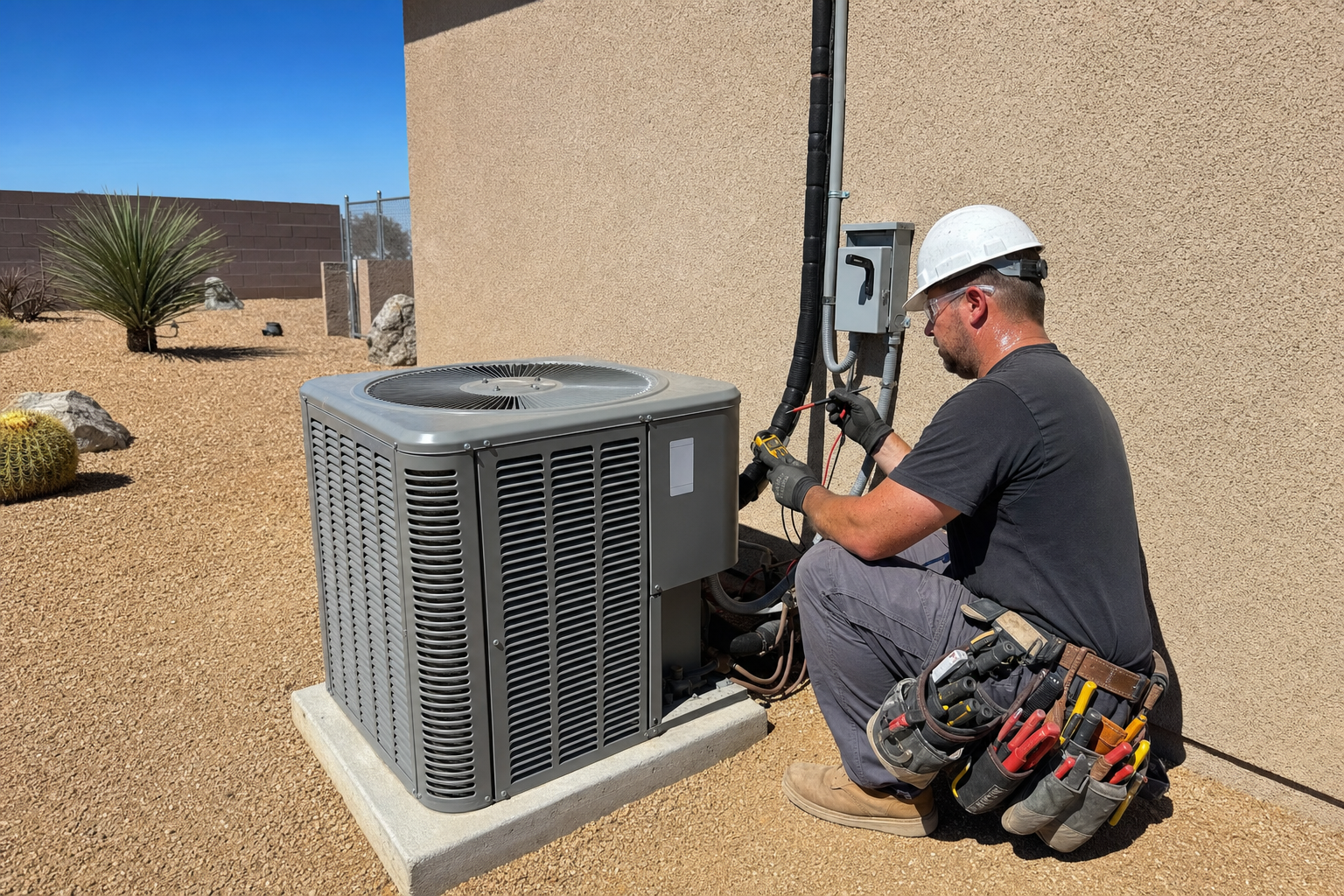
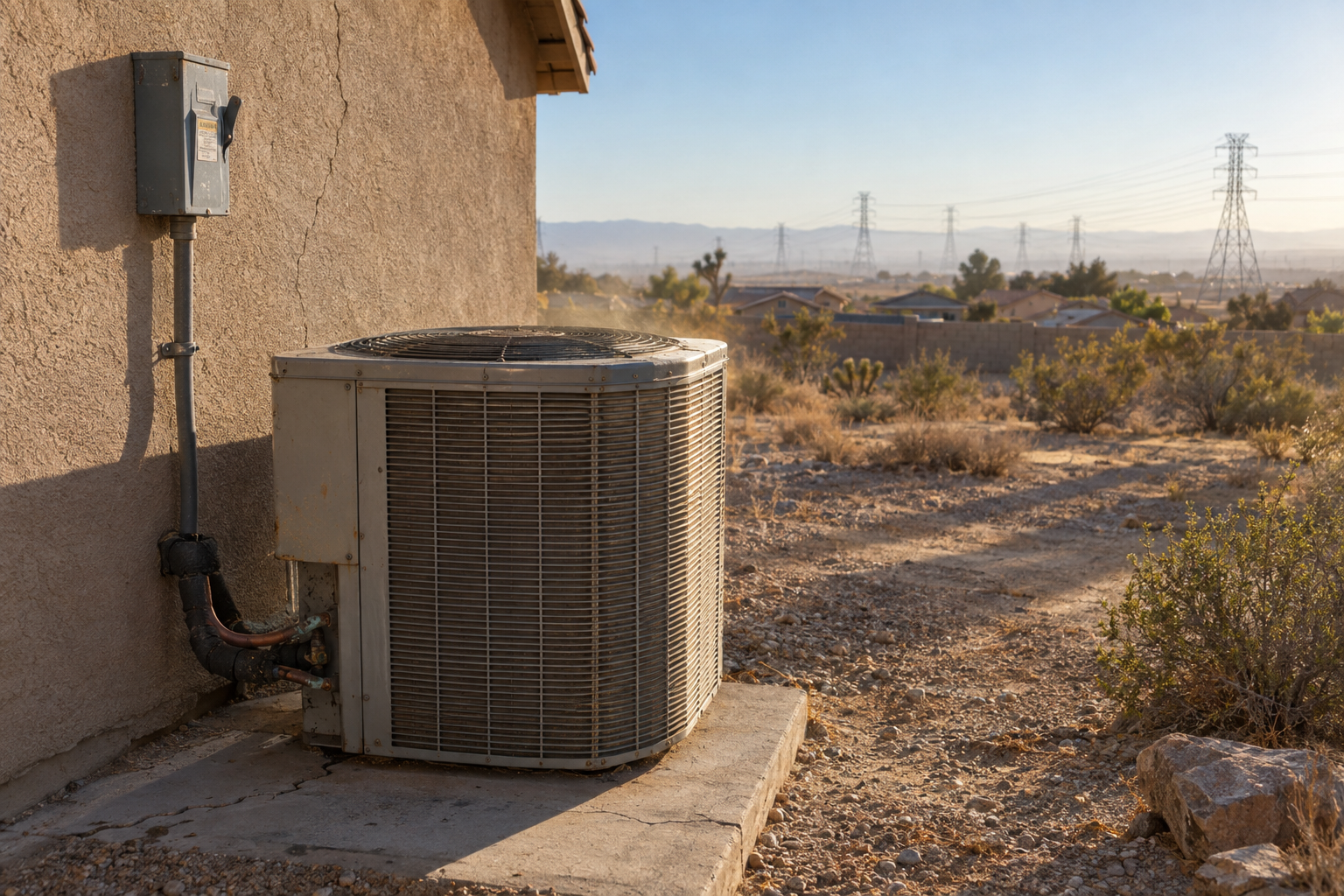
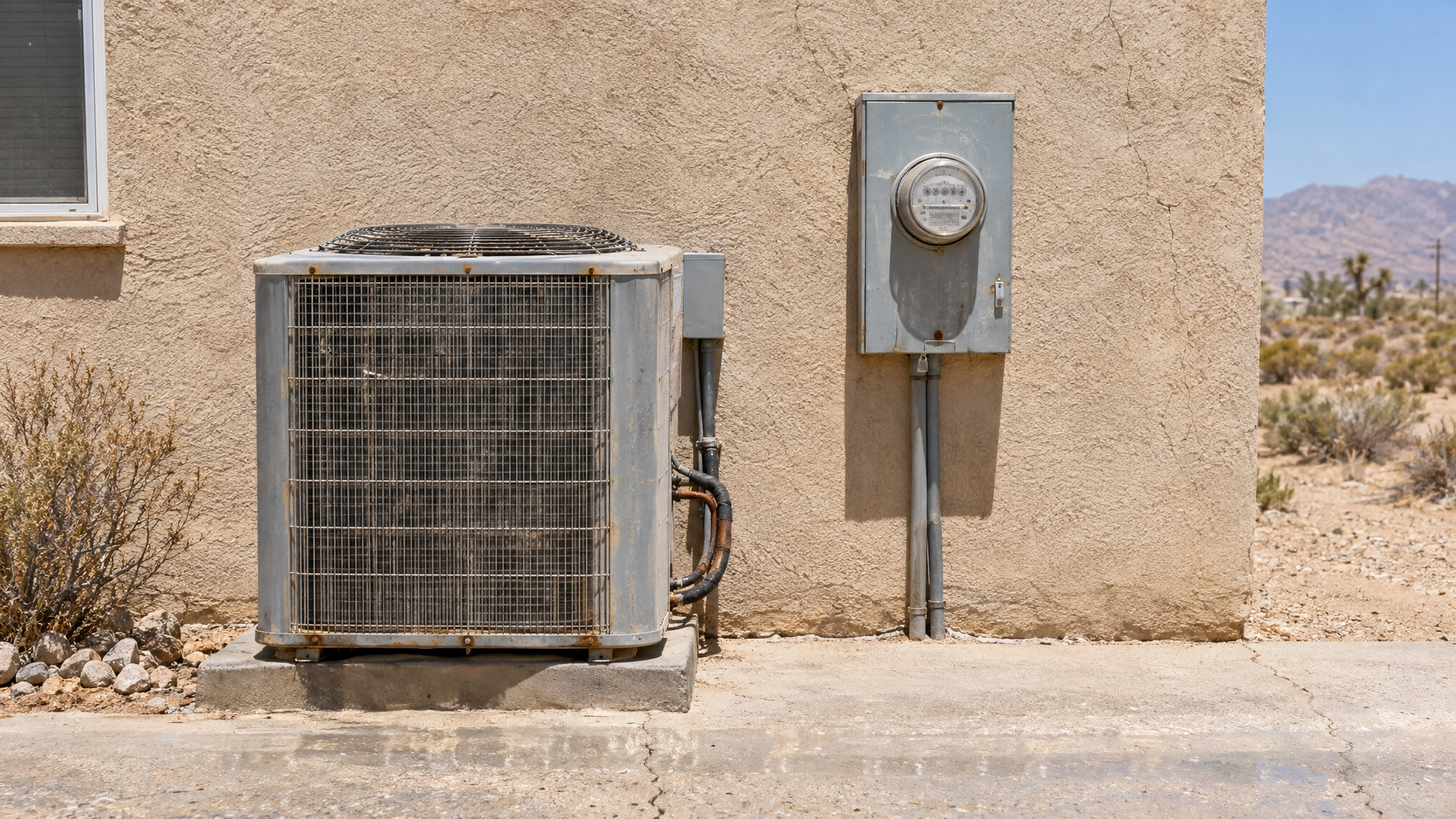
Every central AC installation requires a readily accessible disconnect switch installed within sight of the outdoor condenser unit — generally no more than 50 feet away — allowing power to be safely cut for service or emergency shutoff without having to go back inside to the panel. This is a genuine safety requirement, not a formality: a technician servicing your unit needs a fast, reliable way to isolate power at the equipment itself.
Why Do Hesperia's Older Homes Often Need a Panel Upgrade Before a New AC Unit?
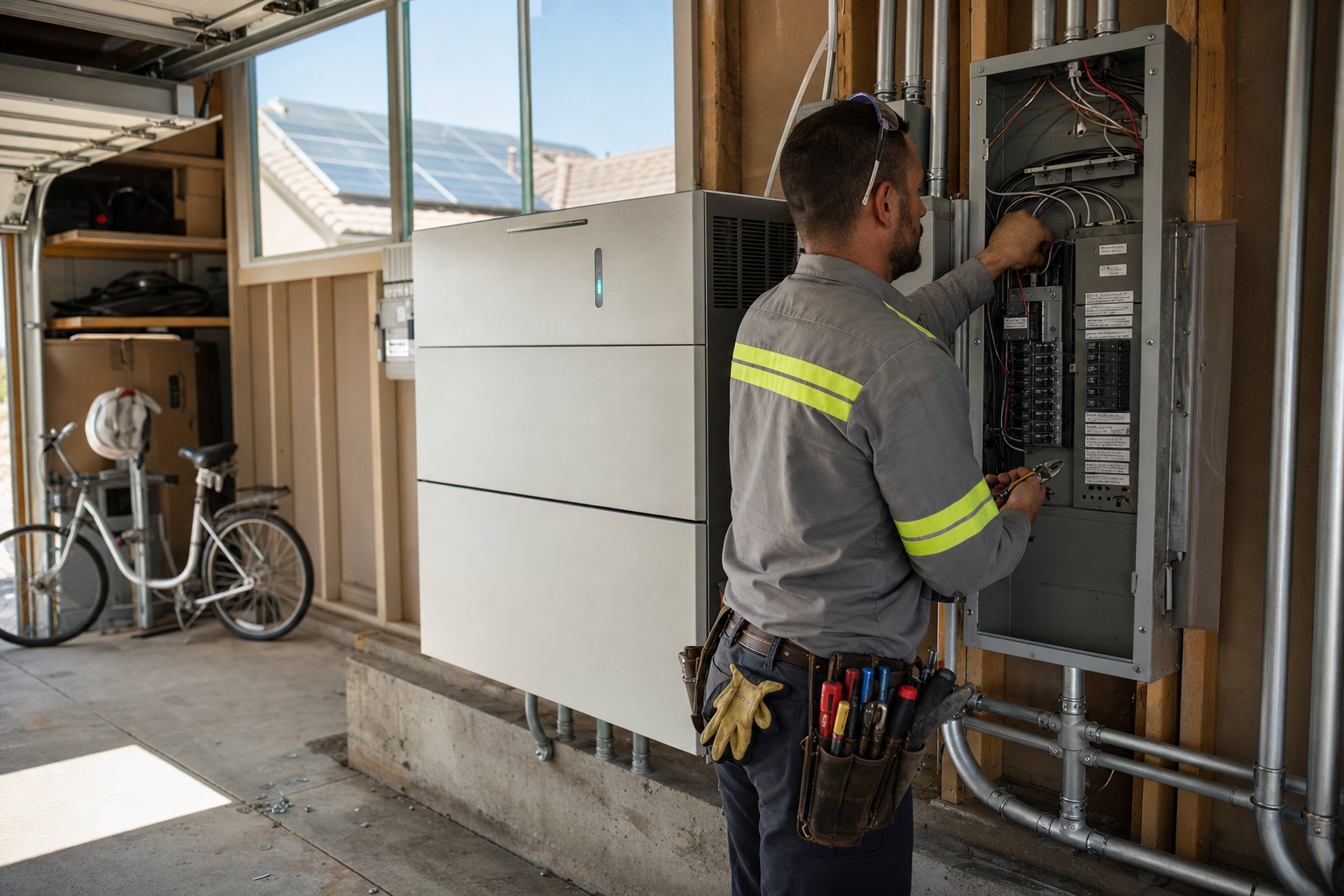
Many older High Desert homes were built with panels sized for the electrical demands of decades ago, well before central air conditioning was standard or before homes added EV chargers, pool equipment, and other modern loads on top of it. Adding a new or upgraded AC system to an already-tight panel can reveal a capacity problem that wasn't obvious until the load calculation is actually run. This is exactly the kind of project our
panel upgrade guide covers — worth assessing before, not after, you've already purchased new AC equipment.
What Happens If Your AC Circuit Is Undersized?
An undersized circuit or improperly rated overcurrent protection typically shows up as nuisance breaker trips during startup, or in worse cases, overheating in the wiring itself — a genuine fire risk, not just an inconvenience. If your AC has started tripping breakers more often, especially during the hottest parts of the day when the compressor works hardest, that's worth having evaluated rather than just resetting the breaker and hoping it doesn't happen again.
What Does AC Electrical Work Cost in Hesperia?
- New dedicated 230V AC circuit installation: $400–$900 depending on distance from panel
- Outdoor disconnect switch installation: $150–$300
- Panel upgrade if needed to support new AC load: $2,500–$4,200
- Full electrical scope for new central AC installation: quoted per project based on existing panel capacity and run distance
FAQ
Can my central AC share a circuit with another appliance?
No. Central AC requires its own dedicated circuit under NEC Article 440, sized specifically to the equipment's nameplate rating.
Why does my AC breaker trip when the unit starts up?
This can indicate an undersized circuit or improperly rated overcurrent protection. AC compressors draw significantly more current on startup than during normal running, which is why Article 440 requires sizing well above the running amperage.
Do I need a disconnect switch near my outdoor AC unit?
Yes. Code requires a readily accessible disconnect switch within sight of the outdoor condenser, generally within 50 feet, allowing safe power isolation for service.
Will I need a panel upgrade to install new central AC?
It depends on your existing panel's age and capacity. Many older Hesperia homes need an upgrade to safely support a new or larger AC system alongside existing loads.
Is it dangerous if my AC circuit is undersized?
Yes, potentially. Beyond nuisance breaker trips, an undersized circuit can lead to overheating in the wiring, which is a genuine fire risk.
Get your AC electrical sized and installed correctly before the next heat wave.
Call Hesperia Electrical at (760) 905-9997 for a free assessment.