Quick answer: Any pool, spa, or hot tub — including inflatable and above-ground models — falls under NEC Article 680, which requires GFCI protection on essentially every pool-related circuit and equipotential bonding of all metal components near the water. The 2023 code update expanded GFCI requirements to cover all single-phase pool pump motors regardless of horsepower, and for the first time explicitly addresses storable pools. If your High Desert pool or pump predates that update, it may not actually be compliant.
Why Does Pool Electrical Code Matter More in the High Desert Than Almost Anywhere?
Hesperia, Victorville, and Adelanto sit in the Mojave Desert, and pools here aren't a luxury item the way they might be elsewhere — they're a practical response to summers that routinely push past 100°F. That means the High Desert has an unusually high concentration of pools relative to home value, spanning everything from permanent in-ground installations to the inflatable and soft-sided above-ground pools families set up every summer specifically to survive the heat. NEC Article 680 applies to all of it, and water plus electricity is exactly the combination the code exists to make safe.
What Is Equipotential Bonding, and Why Does Every Metal Part Near Your Pool Need It?
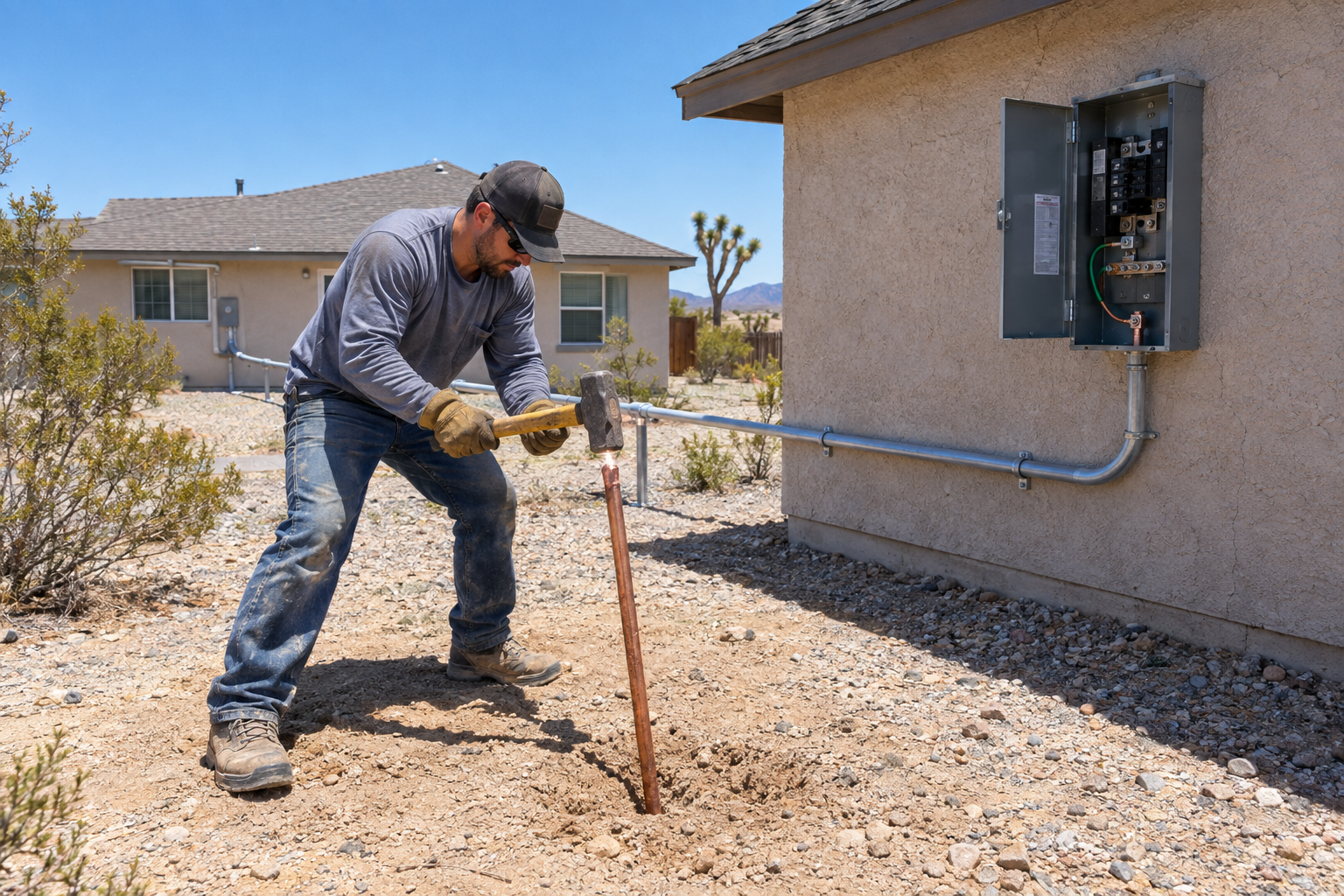
Equipotential bonding means connecting all conductive metal components within 5 feet of the pool — the pump housing, metal ladders, handrails, and equipment enclosures — using a solid #8 AWG copper conductor, so that everything sits at the same electrical potential. Without it, a fault in one piece of equipment could create a dangerous voltage gradient in the water or on nearby metal surfaces, even with GFCI protection in place. Bonding and GFCI protection serve different purposes and both are required — bonding equalizes potential to prevent shock, while GFCI protection detects a fault and shuts off power before it becomes dangerous.
What Changed Under the 2023 NEC (and Why Older Desert Pools May Not Meet It)?
This is the update worth knowing about if your pool or pump is more than a few years old. Previous code editions required GFCI protection for pool pump motors only above certain horsepower thresholds. Under the current NEC, GFCI protection is required for all single-phase pool pump motors from 120V to 240V, regardless of horsepower — closing a real gap where smaller pump motors on older residential pools could legally operate without GFCI protection. If your pool equipment was installed under an older code cycle, it's worth having it evaluated, particularly if you're already planning any electrical work nearby, like a
panel upgrade or new circuit.
Does Your Inflatable or Above-Ground Pool Actually Need Electrical Work?
Yes, and this catches a lot of desert homeowners off guard. The current code explicitly extends GFCI protection requirements to storable pools — inflatable, soft-sided, and other temporary models — not just permanent in-ground installations. Cord-connected pumps for these pools need integral GFCI protection built into the plug itself, and it's worth confirming this before you plug an older pump into a standard outdoor outlet, especially one that isn't itself GFCI protected. A pool doesn't need to be a permanent backyard fixture to fall under Article 680.
Where Do Receptacles Need to Be Located Near a Pool?
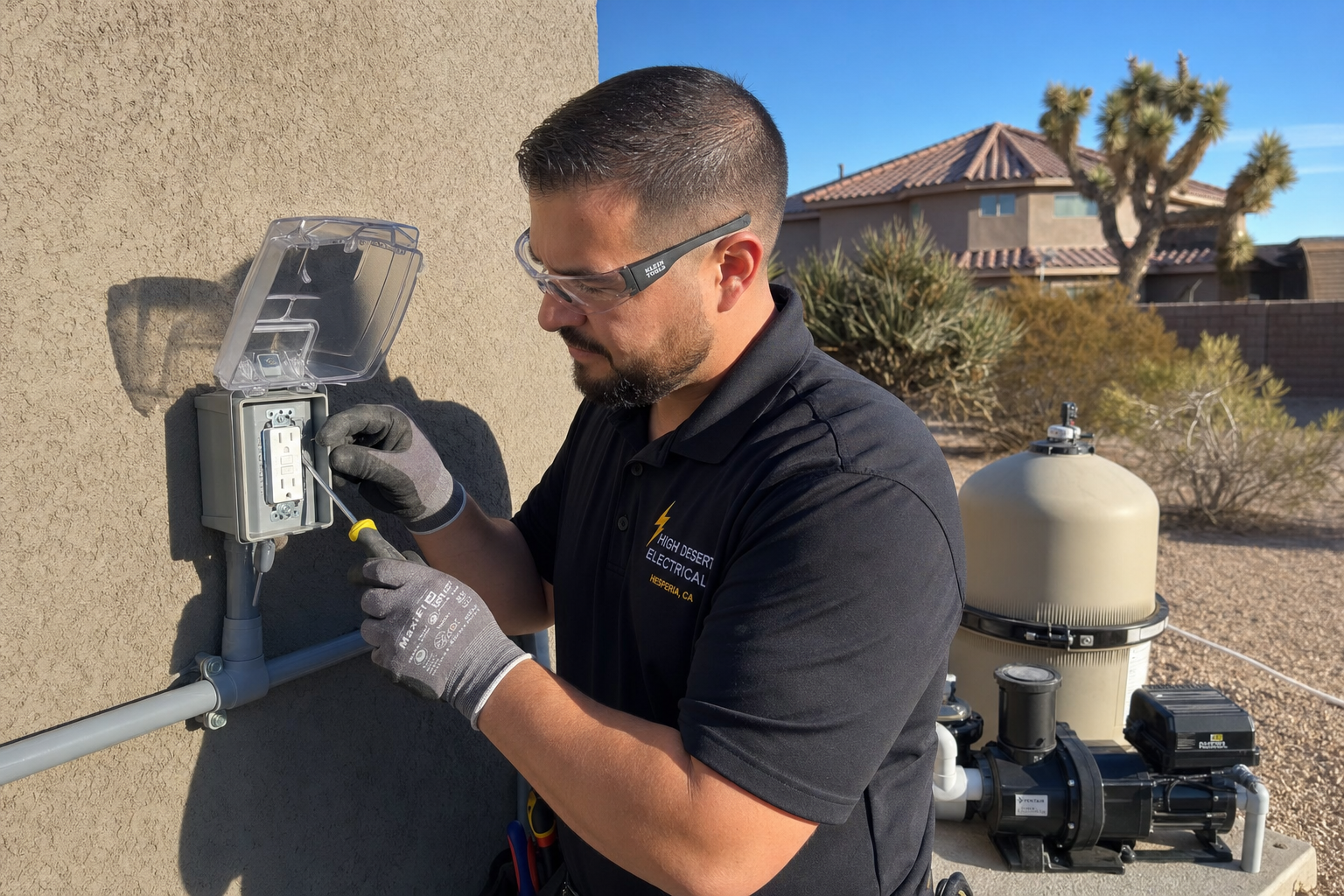
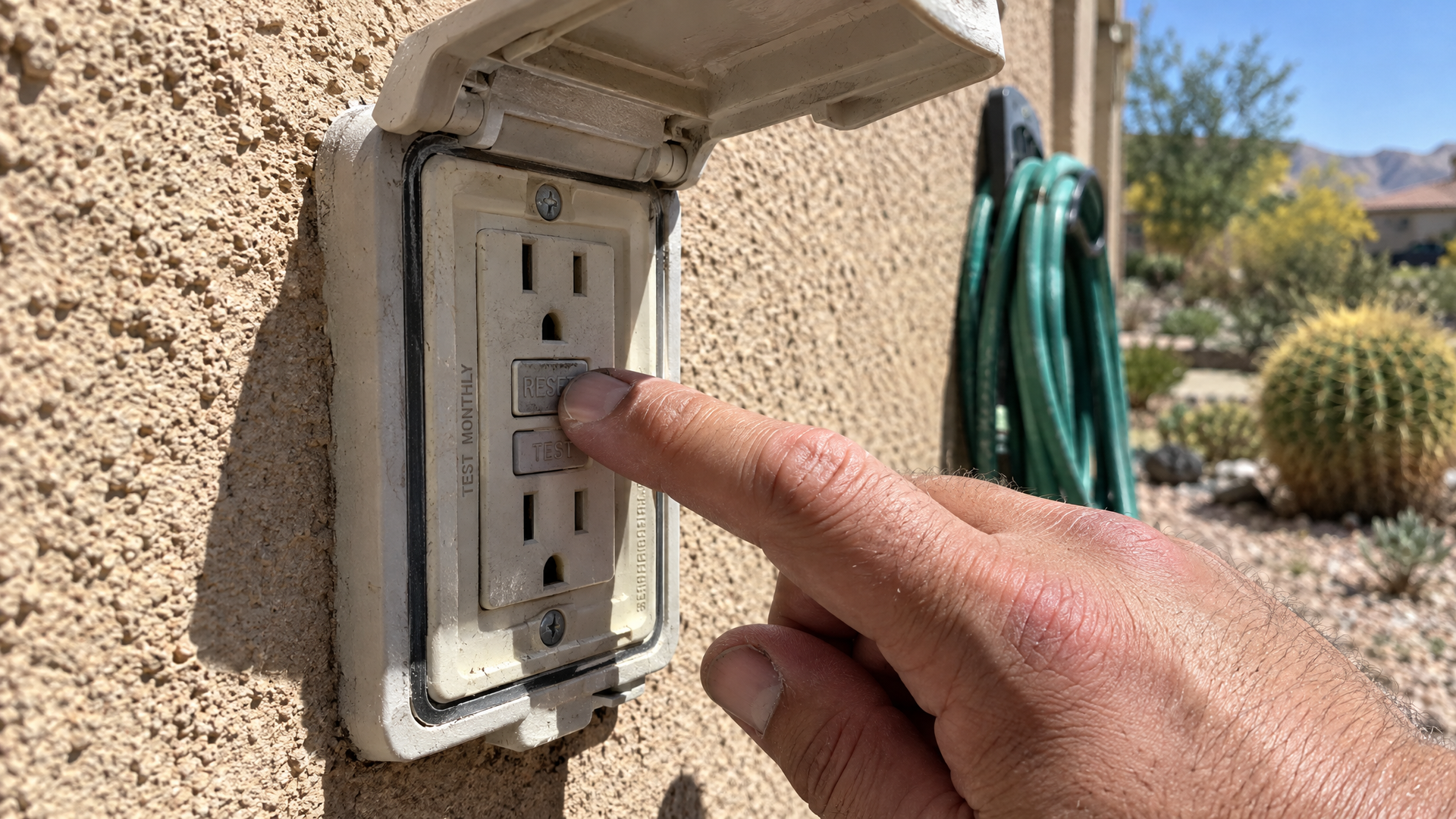
Code requires at least one 125V, 15 or 20-amp GFCI-protected receptacle located between 6 and 20 feet from the pool's edge, intended for maintenance equipment like vacuums and cleaning tools. Any receptacle within 20 feet of the pool wall needs GFCI protection regardless of its purpose, and outlets specifically serving pool pump or circulation equipment need to be at least 6 feet from the water's edge with proper grounding-type configuration.
What Does Pool Electrical Work Cost in Hesperia?
- GFCI receptacle installation or upgrade near a pool: $175–$300 per location
- Pool pump circuit with GFCI protection: $400–$800
- Equipotential bonding evaluation and correction: $500–$1,500 depending on scope
- Full pool electrical compliance upgrade (older installation): $1,200–$3,000+
We always start with an evaluation of your existing setup, since the scope of work depends heavily on how your original installation was wired and whether it predates current code.
FAQ
Does an inflatable or above-ground pool need GFCI protection?
Yes. Current NEC code explicitly extends GFCI protection requirements to storable and temporary pools, not just permanent in-ground installations. Cord-connected pumps need integral GFCI protection in the plug itself.
What is equipotential bonding, and is it different from GFCI protection?
Yes, they serve different purposes. Bonding connects metal components near the pool to equalize electrical potential and prevent shock. GFCI protection detects a fault and cuts power. Both are required under NEC 680.
Does my older pool pump need to be upgraded for GFCI compliance?
Possibly. Current code requires GFCI protection for all single-phase pool pump motors regardless of horsepower, a change from older code editions that only covered certain sizes. Have your setup evaluated if your pool predates recent updates.
How close to the pool can an electrical receptacle be installed?
General-purpose receptacles must be between 6 and 20 feet from the pool's inside wall, and any receptacle within 20 feet of the pool requires GFCI protection.
Can I install pool electrical work myself?
No. Pool electrical work involves serious electrocution risk and specific code requirements. California requires a licensed C-10 electrical contractor for this work, and it must be permitted and inspected.
Get your Hesperia, Victorville, or Adelanto pool electrical evaluated and brought up to current code.
Call (760) 905-9997 for a free estimate.