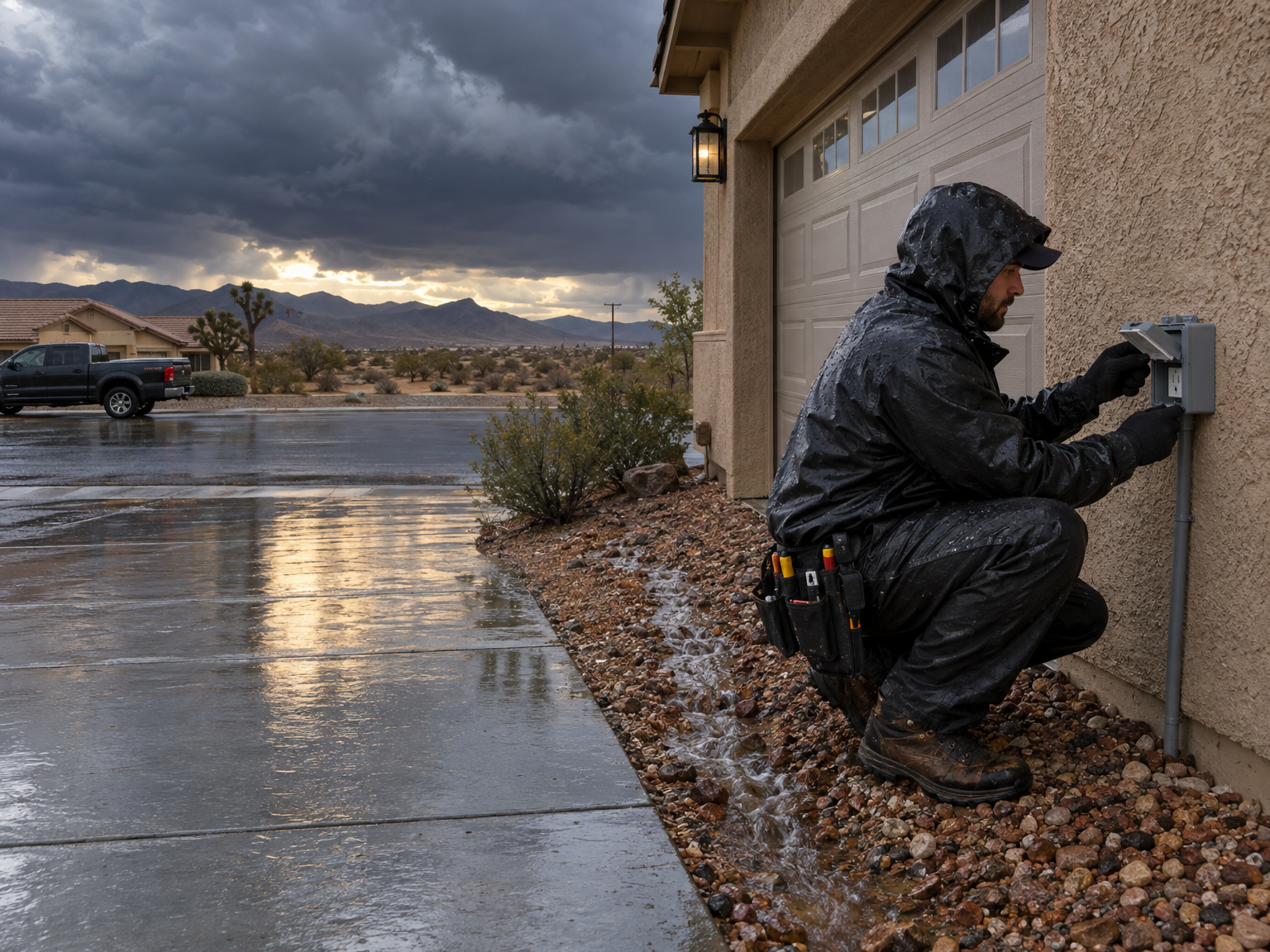
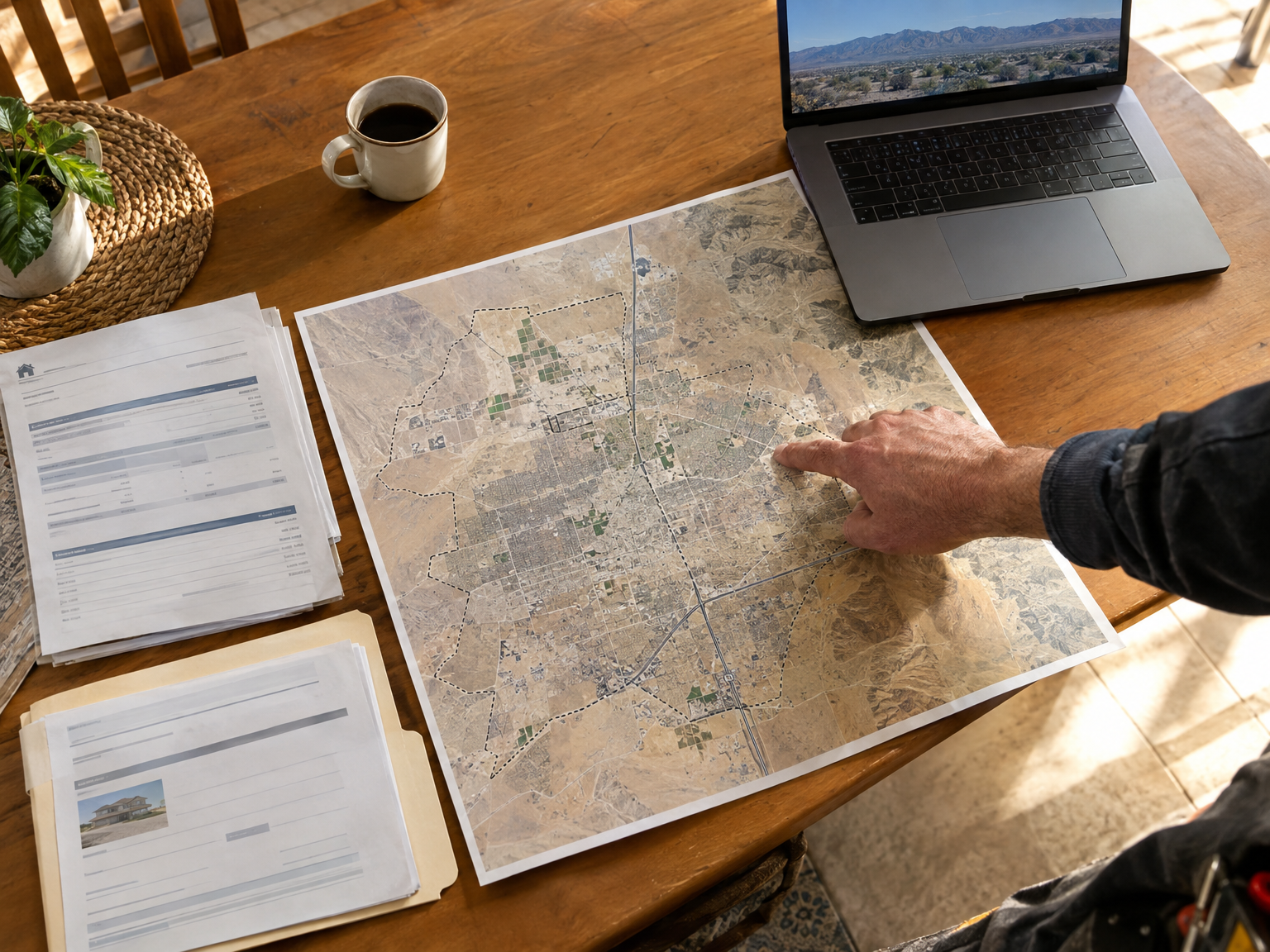
The remnants of Tropical Storm Rachel moved through San Bernardino County on October 10 and 11, with a Flood Watch for the Victor Valley and a National Weather Service forecast of 0.7 to 1 inch of rain for Hesperia. The San Bernardino County Sheriff warned that heavy rain could cause flash flooding in low-lying areas and roadways.
It may turn out to be just a preview. NPR reports that forecasters expect this winter to bring the strongest El Niño on record, with likely record rainfall and mudslides well into next year. In the High Desert, water doesn't soak in gradually. It runs fast through washes and across low lots, then sits. If you'd rather think about your electrical system now than at 2 a.m., here's what to do.
What water does to electrical systems
Water and electricity are a dangerous combination, and the hazard doesn't end when the water goes down. According to the Electrical Safety Foundation International, floodwater can contain chemicals, sewage, oil, and debris that damage electrical equipment, and returning power to water-damaged devices without a proper evaluation can cause a fire, shock, or electrocution.
ESFI also notes that even equipment that has dried out thoroughly can pose a long-term safety and fire risk if it hasn't been properly reconditioned.
Before the rain: what to do now
- Know where your main shutoff is, and make sure everyone in the house does. Label the breakers in your panel while you're at it.
- Check the area around the panel. Keep it clear, and keep anything stored near it up off the floor.
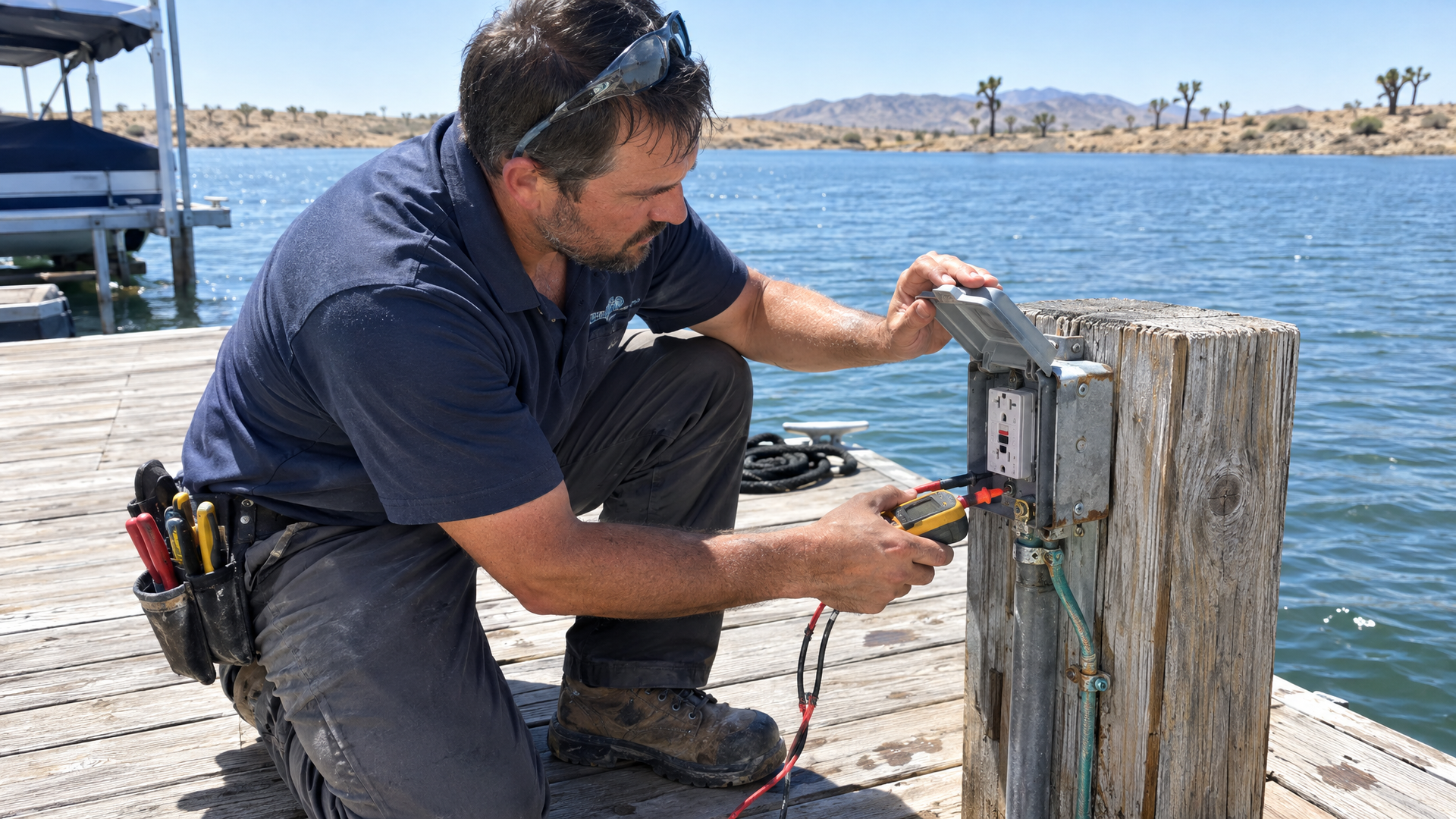
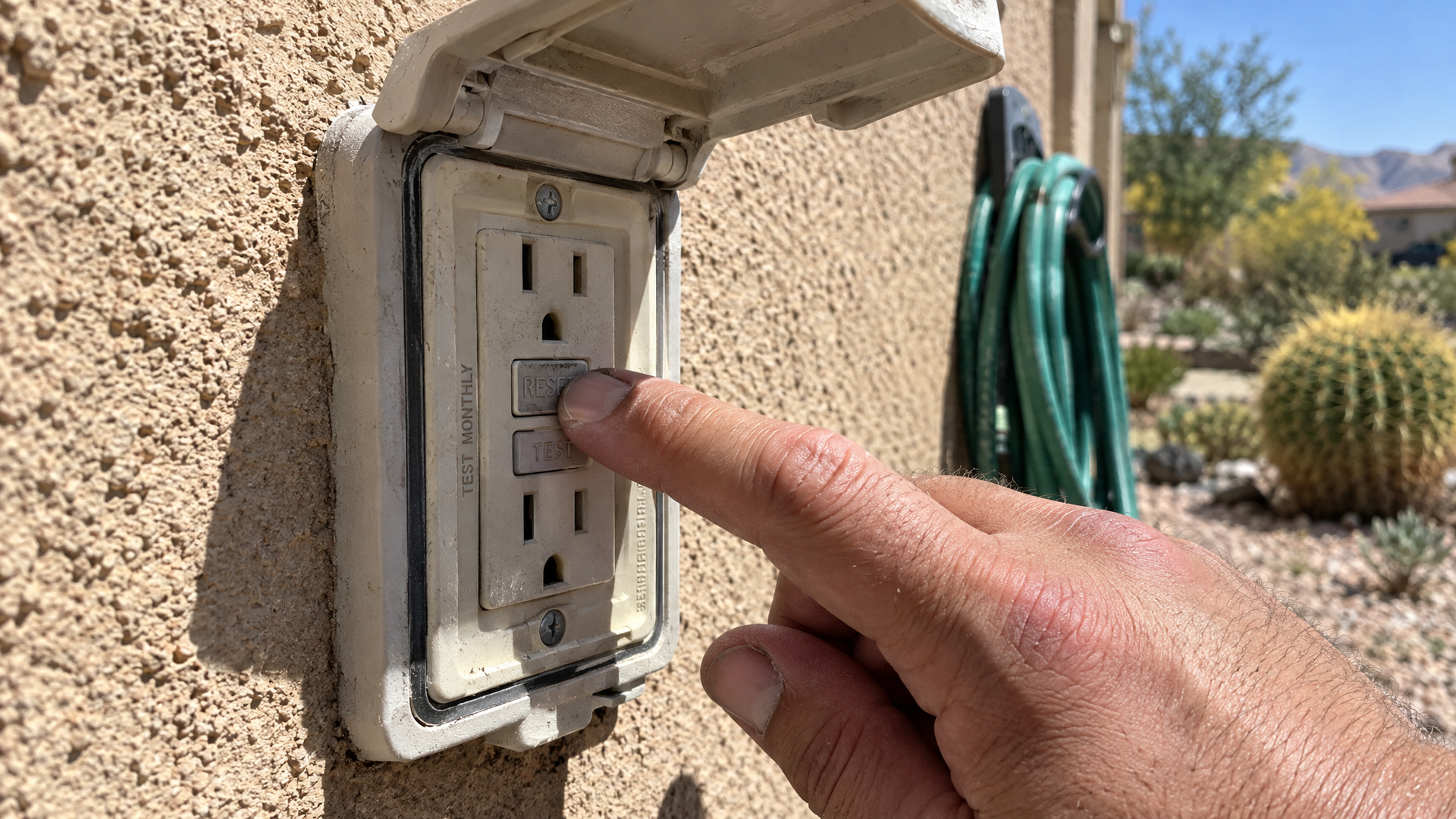
- Test your outdoor GFCI outlets. Press the test button, then reset. An outlet that won't reset needs attention before the storm, not after. See our guide to
why GFCI outlets trip in Hesperia.
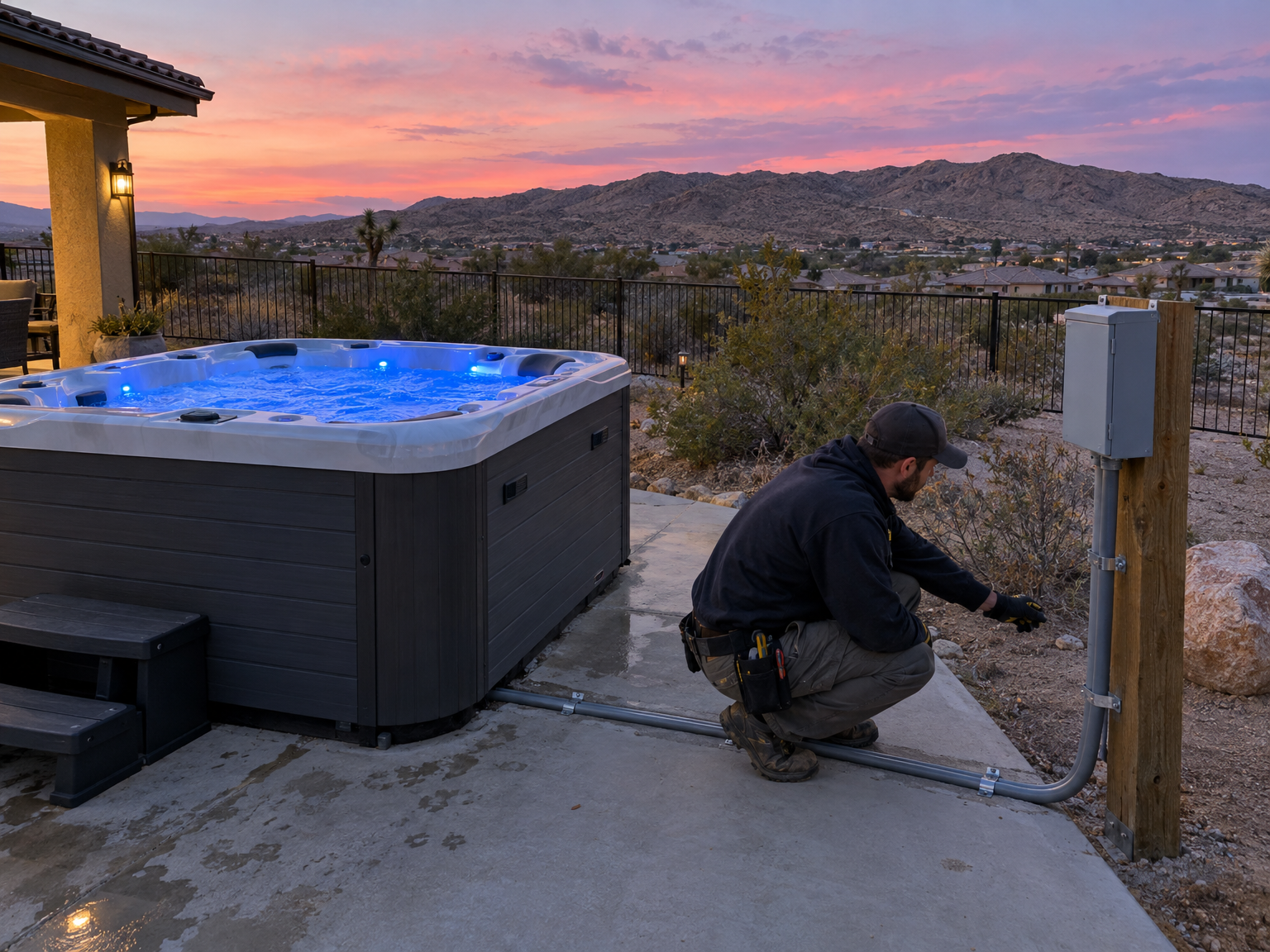
- Look at weatherproofing: cracked in-use covers on exterior outlets, loose conduit, and gaps around outdoor boxes.
- Move valuables off the garage floor, like power tools, battery chargers, and electronics.
- If you're in a flood-prone spot, ask about elevation. FEMA recommends raising electrical components above expected flood levels in flood-prone areas, so ask an electrician whether it's practical for your property.
- Have an outage plan. SCE high-wind shutoffs and storm damage can leave a High Desert home without power for hours. See our
generator installation guide, and remember that a generator should only connect to your house through a transfer switch.
- Visit
prepare.sbcounty.gov, San Bernardino County's storm preparedness site.
If water is coming into your home
- Don't touch switches or breakers if you're standing in water or your hands are wet, and don't enter a flooded area where wiring might be energized. ESFI warns that downed lines or submerged outlets can energize standing water.
- If you're told to shut the power off, flip each individual breaker first, then the main, according to ESFI, and only if you can reach the panel dry and safely.
- Stay away from downed power lines, especially near standing water. Call 911 first, then SCE at 1-800-611-1911.
- Leave if the water is rising. Your safety matters more than anything in the house.
After the water recedes
The guidance from ESFI and FEMA is consistent, and the first rule is the most important:
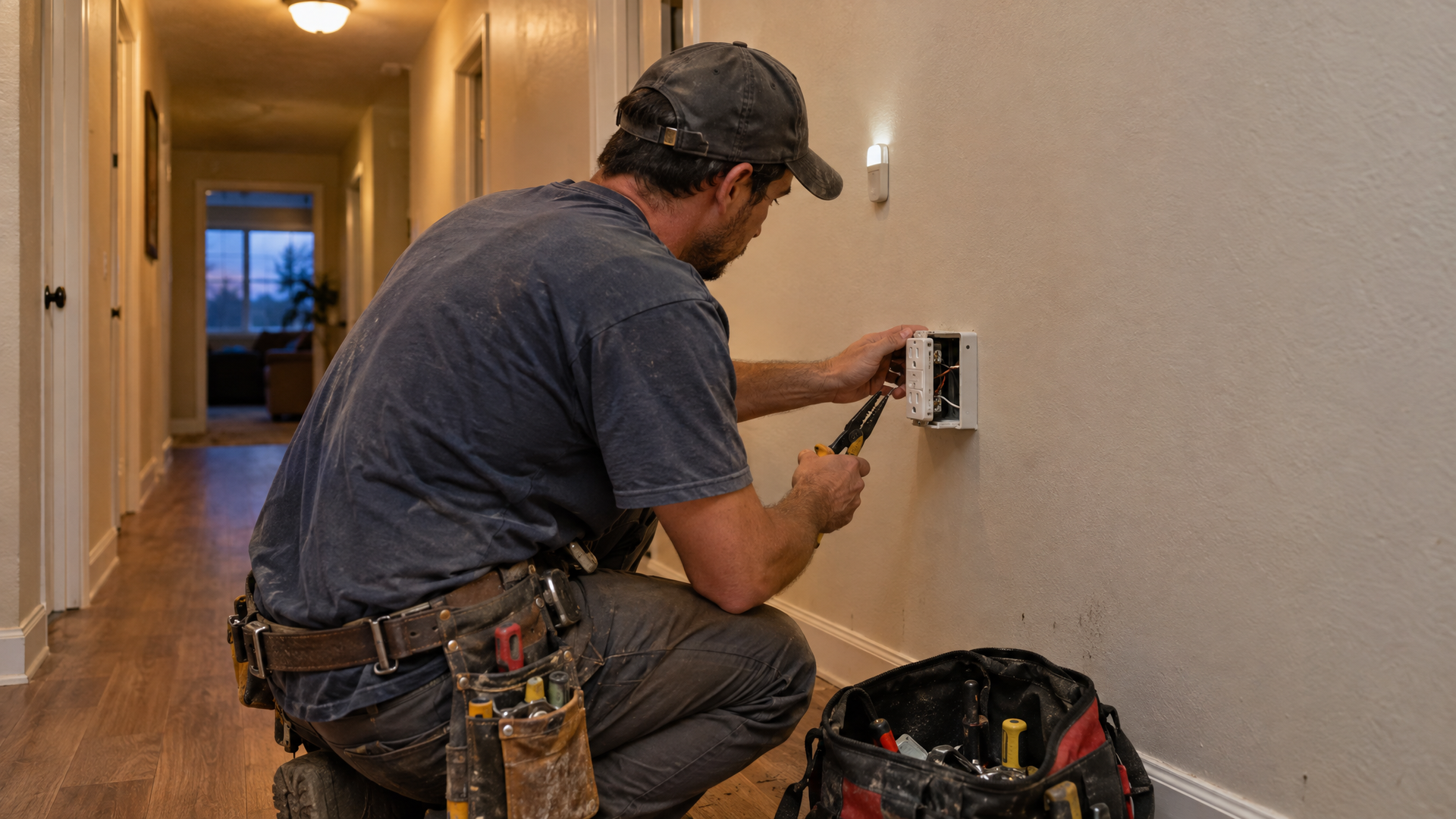
keep the power off until an electrician has inspected your system.
- Don't reset a breaker or replace a fuse with wet hands or while standing on a wet surface.
- Expect to replace submerged equipment. ESFI says circuit breakers, fuses, ground-fault and arc-fault devices, disconnects, and surge protection devices that have been submerged should be discarded, along with other components, depending on the damage. See ESFI's list of
water-damaged equipment that must be replaced.
- Wiring may need replacement, depending on the type of wire and how much water reached it.
- Don't turn on wet appliances. That includes washers, dryers, furnaces, heat pumps, refrigerators, and anything else that took on water. Have them inspected first.
- Have an electrician dispose of submerged breakers so they don't get reused.
- Ask about inspection and permits. Your utility or the City of Hesperia may require an inspection before service is reconnected, so ask when you call.
- Photograph the damage before anything is replaced, for your insurance claim.
ESFI's
flood electrical safety guidance has a short checklist you can keep handy.
When the water didn't "flood" you, but did get in
Not every storm leaves standing water in the house. Heavy rain can also find its way in through the roof, around windows, and through exterior walls. If you see water dripping from a ceiling light fixture, a ceiling fan, or an outlet, or find damp drywall around a panel, here's what to do:
- Turn off the breaker for that circuit, if you can do it safely, and stay away from the fixture.
- Don't use the circuit until an electrician has checked it.
- Call us. Water inside a light fixture or junction box is a fire and shock hazard.
Generators during an El Niño winter
- Never plug a generator into a wall outlet. It can backfeed the power lines and injure utility crews. A transfer switch installed by a licensed electrician is the safe way.
- Run it outdoors, well away from the house, doors, windows, and vents, since generators produce carbon monoxide. CDC guidance is at least 20 feet.
- Keep it dry. Don't run a generator or connected equipment in standing water or rain.
Questions about flood and storm electrical safety
Can I dry out a wet panel and keep using it?
No. ESFI recommends that water-damaged electrical equipment be evaluated by a qualified electrician, says submerged breakers and ground-fault devices must be replaced, and warns that equipment that has dried can still be a fire risk if it wasn't properly reconditioned.
Is it safe to reset a GFCI that trips after heavy rain?
One trip after a downpour can be moisture in the outlet or box. A GFCI that trips repeatedly, or won't reset, is telling you something is wet or wrong, so stop using it and have it checked.
Should I turn off my power if a flood is coming?
Follow official directions. If you're told to shut off power, flip the individual breakers, then the main, and never touch the panel with wet hands or while standing in water.
Want your panel, outdoor outlets, and backup power checked before the wet season?
Call Hesperia Electrical at (760) 905-9997 for a free estimate.
We're a licensed C-10 electrical contractor, and if floodwater reaches your electrical system, call us before you touch anything.