Most Hesperia homeowners have gotten the phone alert by now: CAISO issues a Flex Alert, asks the whole state to set thermostats to 78 and hold off running the dishwasher until after 9pm, because the grid is straining under everyone's AC at once. It happens statewide, it happens on the hottest afternoons, and it happens because millions of air conditioners kick on within the same few hours.
Your home's electrical panel goes through a smaller version of the exact same thing — except nobody sends you a warning first.
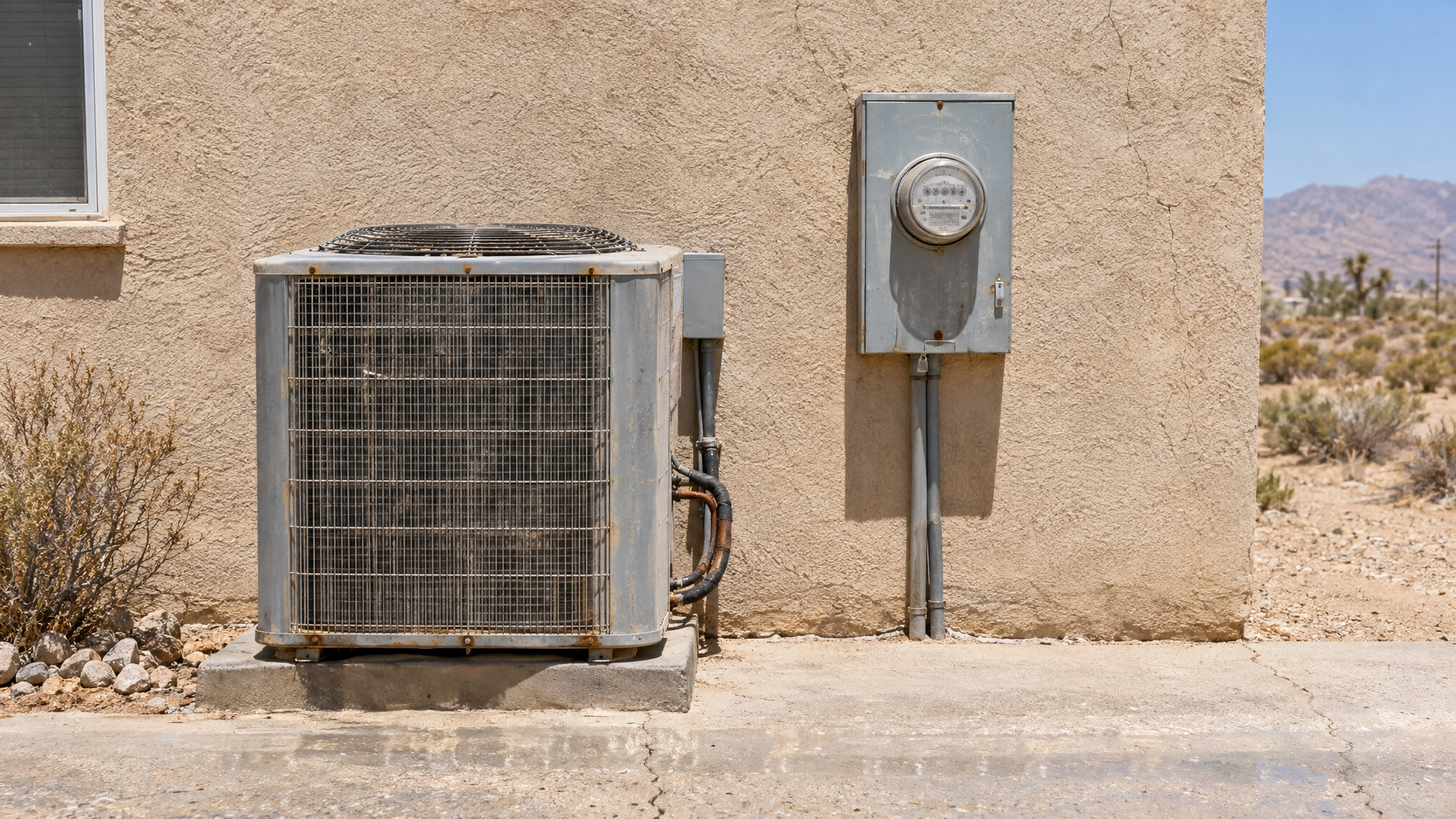
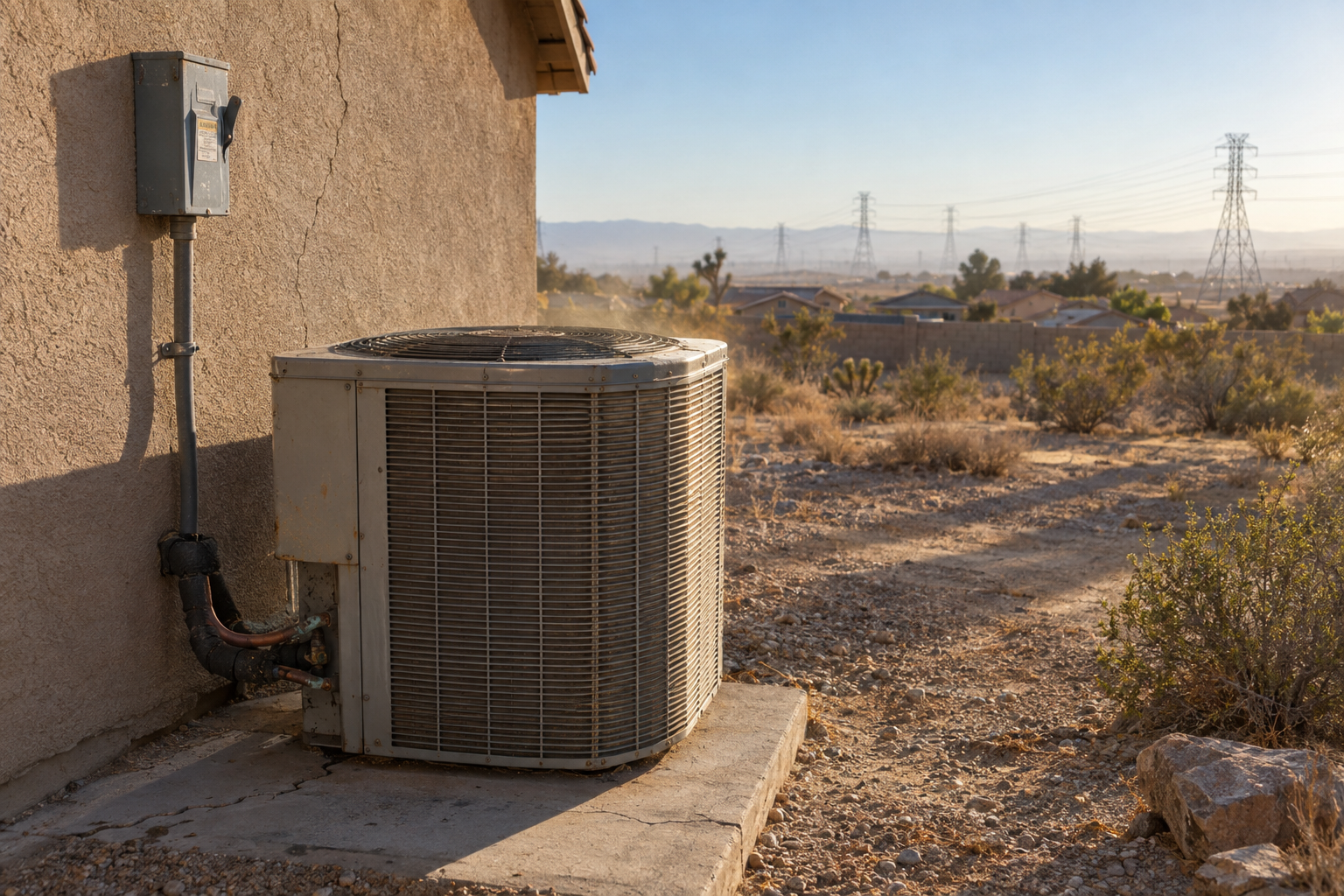
On a 110-degree Hesperia afternoon, your AC compressor is running close to constantly instead of cycling on and off the way it does in milder weather. Your refrigerator's compressor works harder too, since it's fighting a much bigger gap between the outside heat and the inside of the fridge. If you've got a pool pump on a timer, a second window unit in a bedroom, or anything else pulling real power, all of that is now happening at the same time your AC is drawing the most it ever draws. That's not a coincidence — heat drives every one of those loads up together, on the same panel, on the same afternoon.
Why does heat actually make appliances pull more power?
It comes down to how hard a compressor has to work against the temperature difference it's fighting. A refrigerator compressor doesn't run at a fixed rate — it runs until the inside reaches its set temperature, then shuts off until it drifts back up.
When the room around that fridge is 95 degrees instead of 72, the compressor has a bigger gap to close every single cycle, so it runs longer and cycles more often to hold the same internal temperature. Your AC compressor works the same way against the gap between outside air and your thermostat setting — the bigger that gap gets, the longer the compressor runs per cycle, and the less time it spends off. None of this shows up as a change in what's "plugged in." It shows up as a change in how long everything already plugged in stays actively drawing power.
How do you know if your panel is actually undersized?
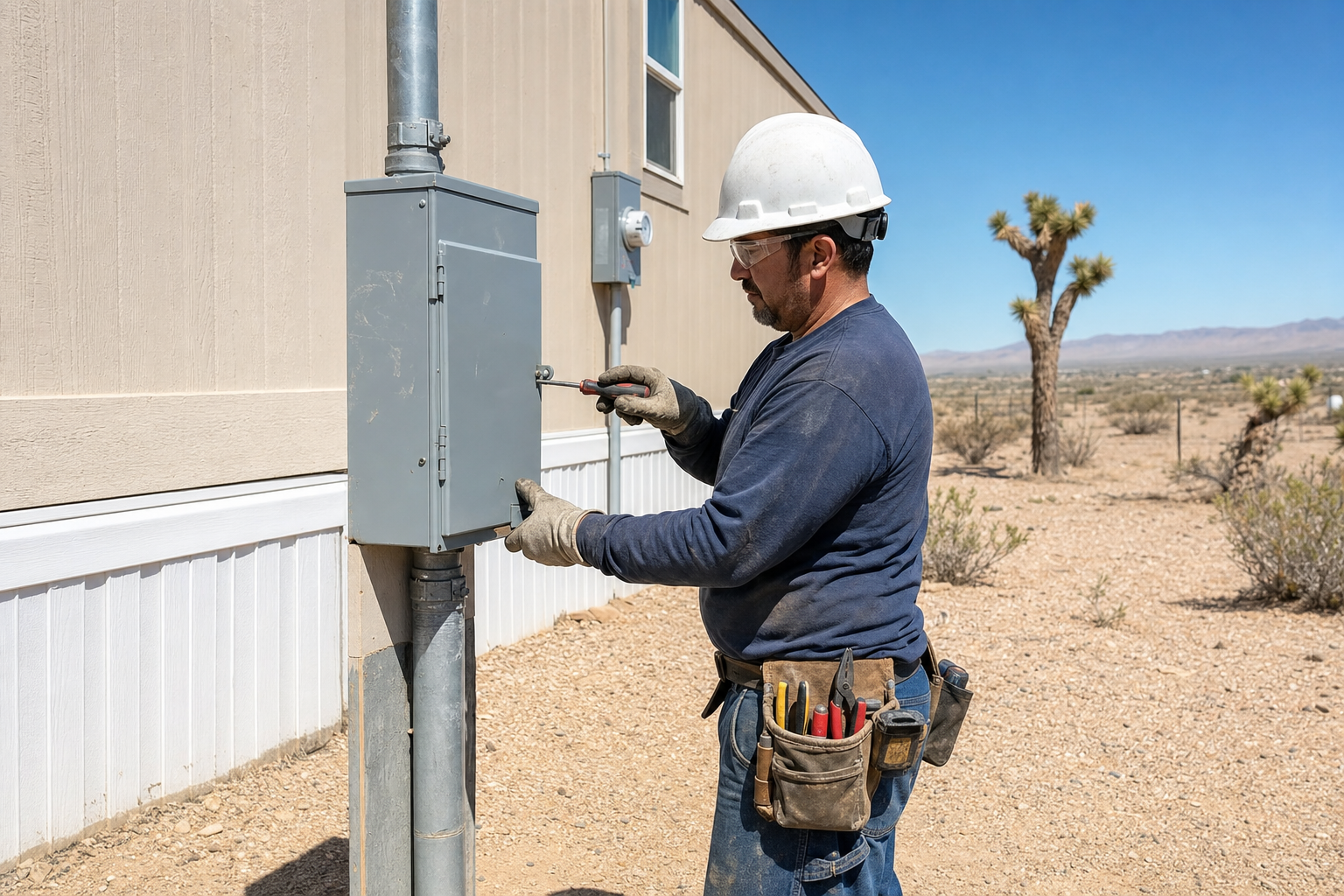
This is worth checking yourself before assuming anything. Open your panel door and look at the main breaker at the top — it'll have a number stamped or printed on it, usually 100, 150, or 200. That's your home's total amperage capacity. A lot of Hesperia homes built before central air was standard were wired with 100-amp service, which was genuinely adequate for the appliances of that era. It's a much tighter fit once you add central AC, a pool pump, an electric range, and everything else a modern household runs at once. A 150 or 200-amp panel gives real headroom for all of that running simultaneously on a heat wave afternoon; 100 amps often doesn't, especially once you're a decade or two into the home's life and appliances have been added one at a time without anyone re-running the math on total load.
What does SCE actually ask homes to do during a Flex Alert, and does it help your panel too?
CAISO's Flex Alerts typically run 4 to 9pm, the exact window when people get home, turn everything on, and the sun has spent all day heating up the house. The standard asks — thermostat at 78 or higher, holding off on the dishwasher and laundry until after 9pm, closing blinds on the sun-facing side of the house — aren't just about statewide grid math. They reduce the exact same combined load that's stressing your own panel at that moment. Pre-cooling your home earlier in the day, before the Flex Alert window starts, means your AC isn't fighting the worst of the heat and the peak demand hours at the same time — which takes real pressure off both the grid and your own wiring simultaneously.
A few things actually help here, and none of them require replacing anything:
Stagger what runs at once if you can — a pool pump timer set for early morning instead of mid-afternoon takes a real load off exactly the hours your AC is working hardest. If you're running a window unit alongside central air, that's worth checking on its own dedicated circuit rather than sharing one with anything else in the room.
But if your panel is tripping on hot days every single summer, staggering loads is a workaround, not a fix. That's a panel that's telling you it's undersized for how the house is actually being used now — which is a genuinely different problem than a one-off overload, and the fix looks like an upgrade, not a habit change.
A few things worth knowing before you call anyone
Does a tripped breaker mean something is broken?
Not necessarily. A single trip during genuinely extreme heat, especially with several appliances running at once, is often just the breaker doing its job. Repeated trips on hot days year after year point to a capacity issue rather than a one-time event.
Is 100-amp service actually a problem, or just older?
It depends entirely on what's running on it. A 100-amp panel serving a home without central AC or a pool can be perfectly fine. The same 100 amps trying to cover AC, a pool pump, and a full modern kitchen at once is a different situation.
Does upgrading my panel actually reduce my energy bill?
Not directly — a bigger panel doesn't make appliances use less electricity. What it does is stop the system from being pushed past its safe capacity, which is a safety and reliability question more than a cost-savings one.
Will pre-cooling my house before a Flex Alert really make a difference?
Yes, meaningfully. Getting your home cold before the 4-9pm window means your AC has less catching up to do exactly when demand — and your own panel's load — is highest.
If I have a 200-amp panel, can I stop worrying about this entirely?
It significantly reduces the risk, but a 200-amp panel with poor wiring, loose connections, or an aging breaker can still trip. Capacity is one factor; the physical condition of the panel and wiring is another.
If your Hesperia home's power keeps struggling on the hottest days, that's worth an actual look. Call (760) 905-9997.