There's a thread on one of the big electrician forums where a homeowner in another state describes exactly this situation: he'd just had a detached garage built, and the licensed master electrician who wired it told him no grounding electrode was needed at the subpanel. The electrician's reasoning was that city inspectors had actually made him remove ground rods on past jobs. Another electrician on the forum corrected him flatly — the rule hadn't gone anywhere, and skipping it is a real code violation, not an outdated leftover.
If a licensed electrician can get this wrong, it's worth understanding clearly if you're planning a detached workshop, shop, or garage on your Hesperia property — which, given how common large lots and detached structures are out here, comes up a lot.
Here's the actual rule. Under NEC 250.32, any detached building fed by a
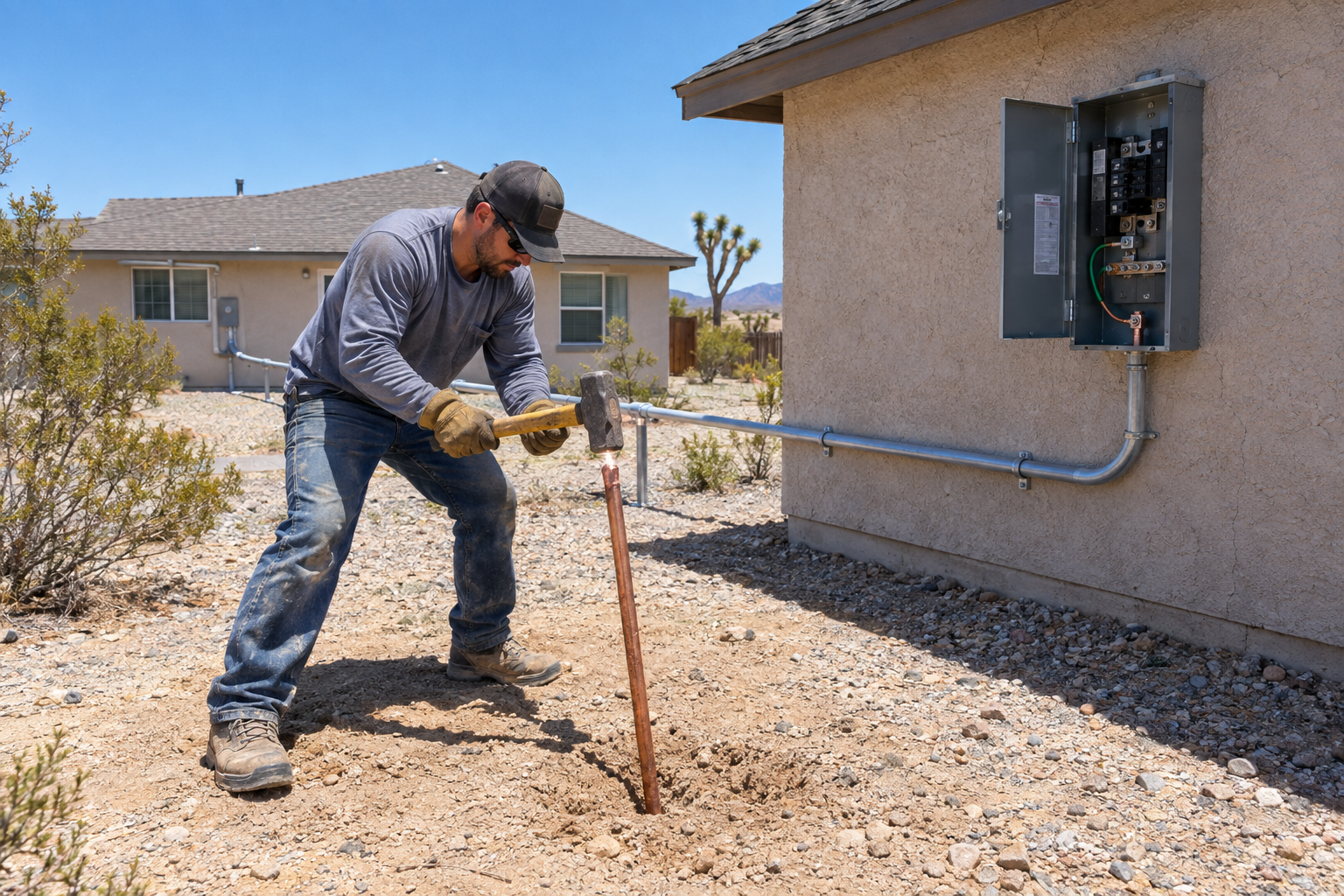
feeder — meaning a subpanel with its own breakers, not just a single circuit run out to a light and an outlet — needs its own grounding electrode system. In plain terms, that usually means driving two ground rods at the detached building itself, separate from whatever grounding your main house already has.
Why lightning, specifically, and not just a normal electrical fault?
This confuses a lot of people, because most electrical safety rules exist to protect against a wiring fault inside the system — a short, an overload, something failing. The grounding electrode requirement for detached buildings is different. It exists because a detached structure sitting some distance from the house has no short, low-resistance path back to the main house's grounding system if lightning strikes near it. Electricity from a lightning strike is going to reach the earth one way or another. Without a local grounding electrode at the detached building itself, that path could run straight through your subpanel, your wiring, and potentially through anything plugged in at the time — rather than dissipating harmlessly into two ground rods driven right there at the structure. The equipment grounding conductor running back to the main house handles everyday fault current just fine. It's not built to handle a lightning event across that distance, which is exactly the gap the local grounding electrode closes.
The 4-wire feeder change most homeowners have never heard of
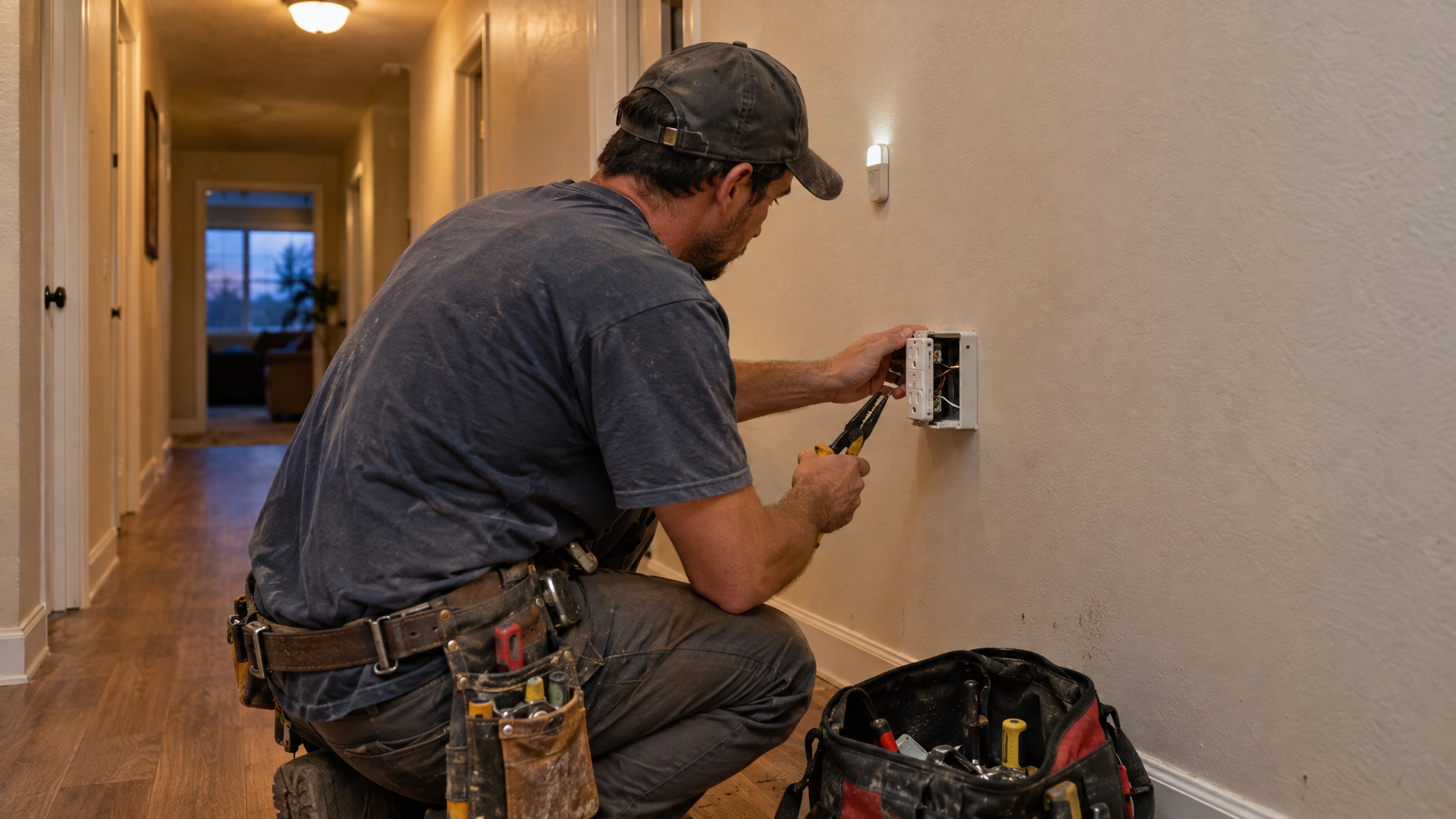
The other detail that trips up a lot of DIY and even some professional installs: the feeder to a detached subpanel has to be four wires — two hots, a neutral, and a separate ground — and at the subpanel itself, the neutral and ground have to stay isolated from each other. Older detached garages were often wired with three wires, bonding neutral and ground together the same way a main panel does. That allowance was removed from the code back in 2008, and it's still one of the most common things that fails an inspection on an older or DIY-wired detached structure today. Bonding neutral and ground together at a detached subpanel creates a parallel current path where the ground wire itself can carry current under normal operation — not just during a fault — which is exactly the opposite of what a ground wire is supposed to do.
What a typical Hesperia detached shop project actually looks like
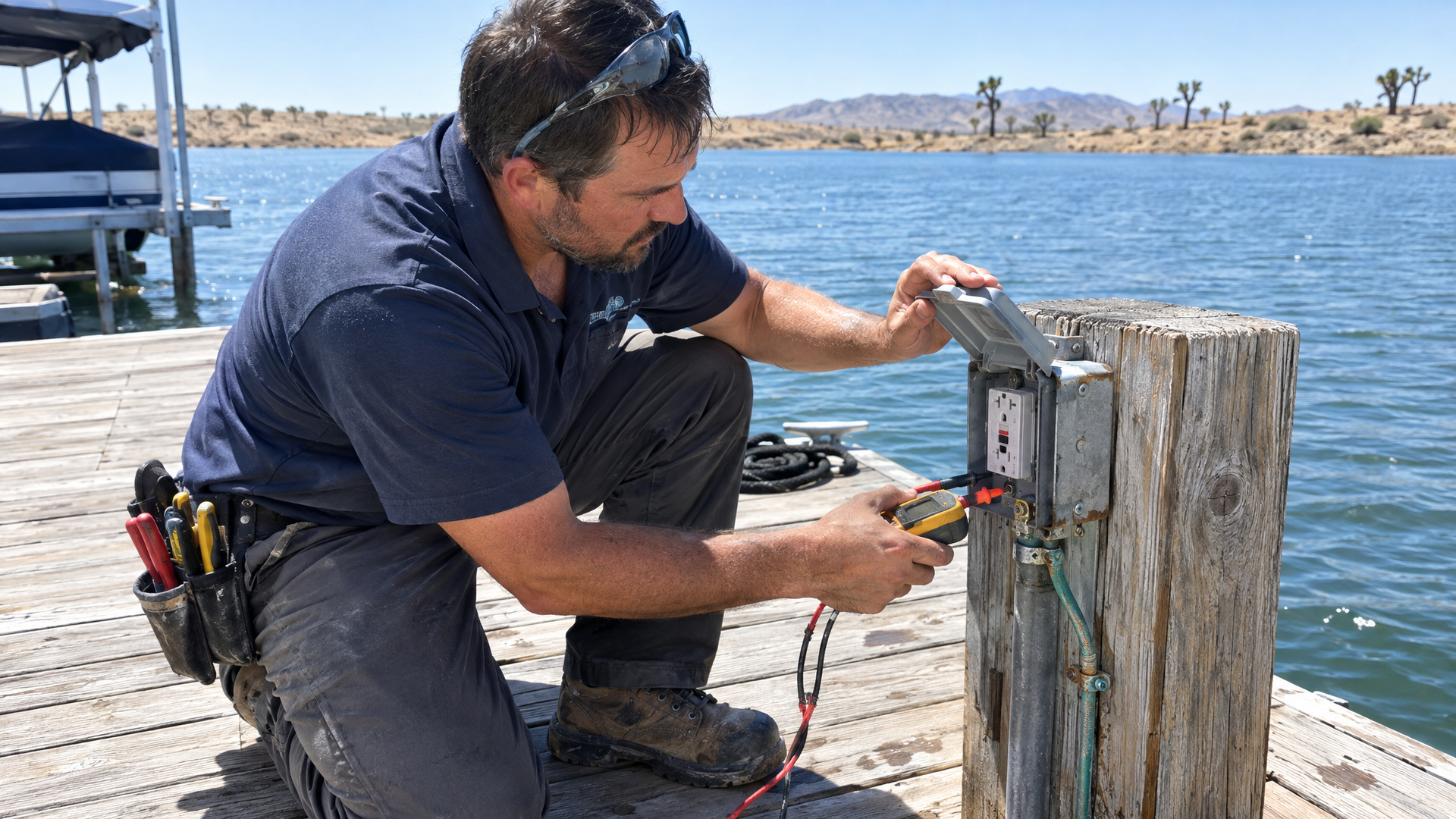
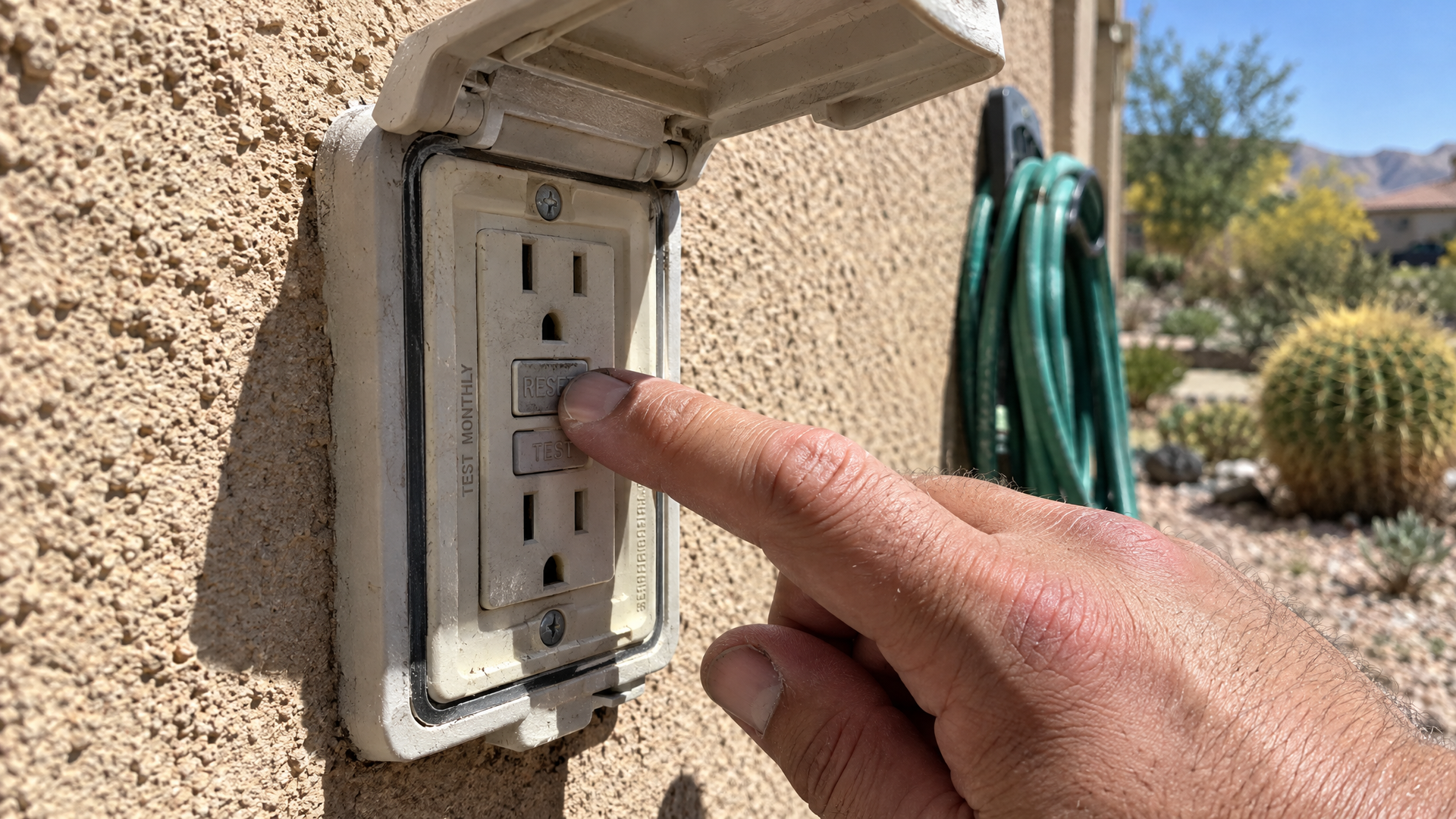
For a typical Hesperia workshop or garage — running some power tools, maybe a compressor, maybe an EV charger down the road — a 100-amp subpanel is the common sizing choice, with 60 amps being enough for lighter use like basic lighting and outlets. The feeder run itself is usually buried, either as direct-burial cable rated for underground use or as conductors pulled through conduit, and burial depth requirements depend on which method is used and whether the run crosses under a driveway or other vehicle traffic area. Every receptacle in the detached structure also needs GFCI protection, the same requirement that applies to garages generally.
Don't skip the permit, even for "just a garage"
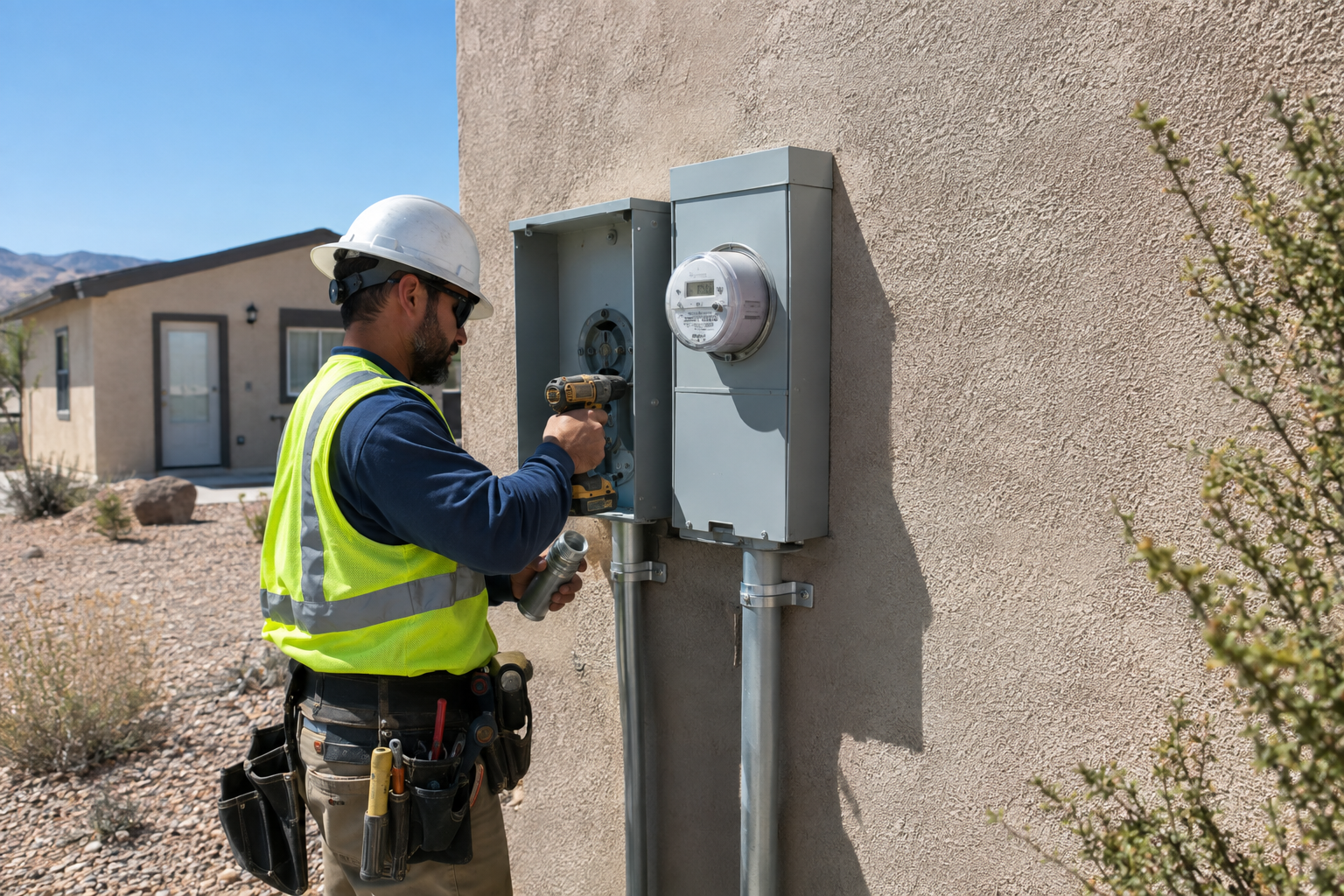
This is worth saying plainly, because it's a common shortcut: a detached subpanel absolutely requires a San Bernardino County electrical permit and inspection, the same as any other feeder installation. Beyond the legal requirement, the inspection is genuinely useful here specifically, since grounding and neutral-ground separation are exactly the kind of details that are invisible once the subpanel cover is back on and everything looks finished. An inspector catching a bonded neutral-ground connection or a missing grounding electrode before you've buried the feeder and closed up the walls is a lot cheaper than discovering it later.
What the whole project typically costs
The whole project, done correctly with the ground rods, the right feeder, and a permit, typically runs somewhere between $1,000 and $3,000 depending on distance from the house, how much trenching is involved, and whether you're running 60 or 100 amps out to the structure.
One more distinction worth knowing if you're trying to figure out whether any of this even applies to you: a single branch circuit run out to a detached structure — no subpanel, no additional breakers, just power for a light and an outlet — doesn't trigger the grounding electrode requirement. It's specifically once you add a subpanel with its own breakers that the wiring counts as a feeder under the code, and the ground rod requirement kicks in.
Planning a detached workshop or garage subpanel?
Get it wired to meet code the first time. Call (760) 905-9997.