It's the Friday after Thanksgiving. The hot tub you've wanted for three years is 30% off, and the dealer says it can be on a truck to Hesperia in two weeks. You say yes. You pour a slab, pick a spot by the patio, and sometime after that it occurs to you to ask what it takes to power it.
That's the backwards order, and it's the most common way a hot tub purchase turns into a delay. A full-size tub is one of the biggest single electrical loads a house will carry, and the electrical work has to be planned before delivery, not after.
What most hot tubs need
Requirements come from the manufacturer's nameplate, but the typical pattern is:
- A full-size 240-volt tub usually needs its own dedicated circuit, most commonly 50 amps with 6 AWG copper wire. Some larger or higher-output models call for 60 amps and heavier wire.
- A smaller 120-volt plug-and-play tub typically runs on a dedicated, GFCI-protected circuit, and it often limits how much heat you get while the jets are running.
- No sharing. A hot tub circuit shouldn't be shared with other loads, and extension cords aren't an acceptable way to power one.
Ask your dealer for the electrical specification sheet before you commit to a model. It tells your electrician exactly what to plan for.
The safety requirements that matter most
NEC Article 680 governs pools and spas, and these are the pieces it consistently requires:
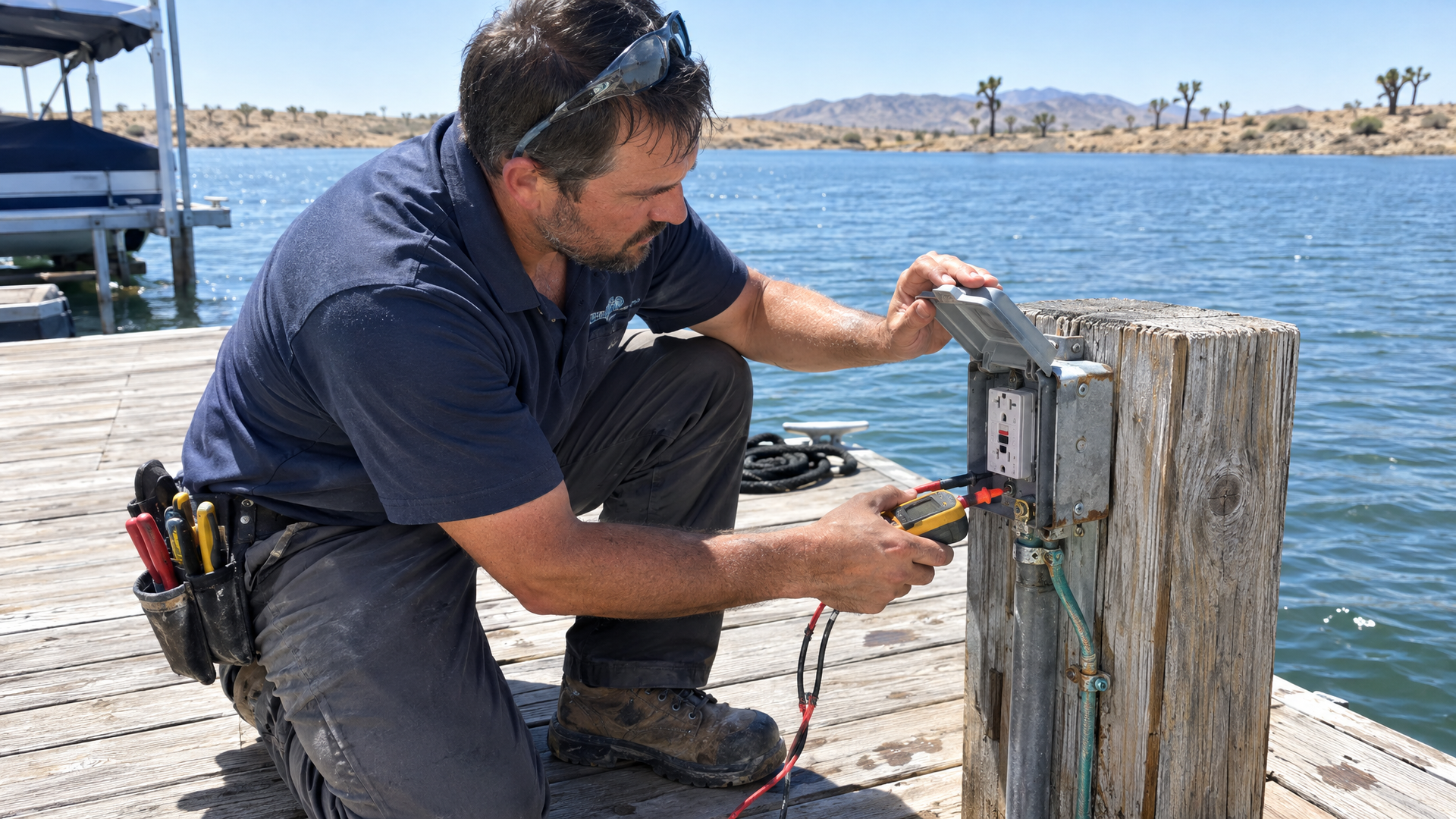
- GFCI protection. NEC 680.44 requires ground-fault protection on the outlet that supplies a spa or hot tub, including hardwired installations, and on receptacles within 10 feet of its inside walls.
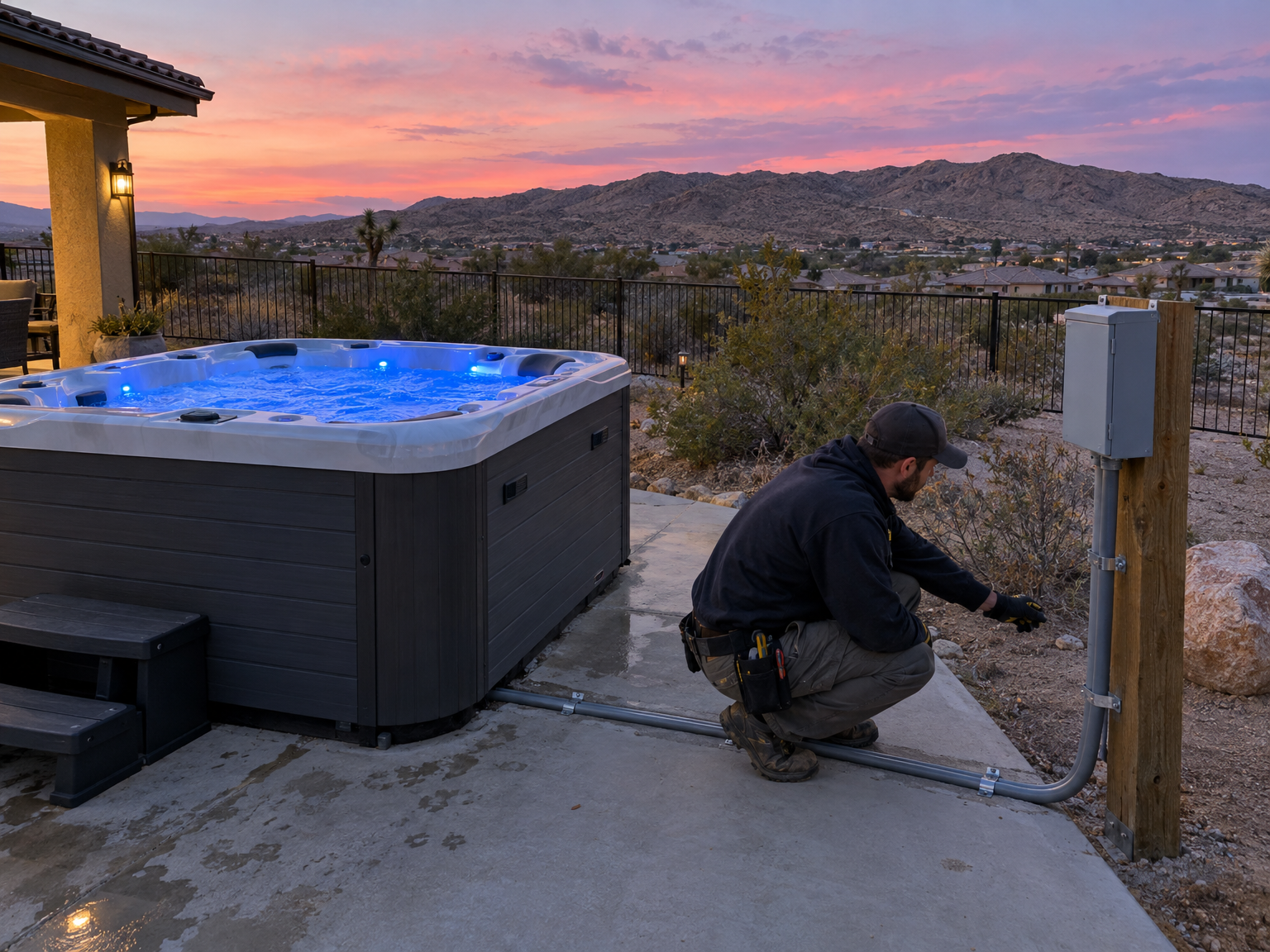
- A disconnect within sight of the tub. Installers commonly place a weatherproof spa disconnect (sometimes called a spa pack or spa panel) at least 5 feet from the tub's inside wall, where you can see the tub from the switch. Local inspectors may specify a maximum distance, so confirm it with the city before work begins.
- Receptacle distances. A general-purpose outdoor receptacle must be at least 6 feet from the inside walls of the tub.
- Bonding. Metal parts around a hot tub have to be bonded together so there's no voltage difference between surfaces you might touch. That's equipotential bonding, and it's a separate job from simply grounding the tub.
This is work for a licensed electrician. If you want the broader picture of how electrical codes are organized, see the
National Electrical Code.
Where to put it
- Overhead lines. There are required clearances between power lines and a hot tub. If your SCE service drop or any overhead line runs near where you're planning the tub, ask before you pick the spot, since moving a slab is expensive.
- Buried utilities. Running a circuit from the panel to the tub often means a trench. Call 811 (DigAlert) before anyone digs, so buried gas, water, and electric lines get marked.
- Distance from the panel. A longer run can require a larger wire size to keep voltage drop in check, so a tub on the far side of the lot costs more to wire than one near the panel.
- A detached garage or workshop. If the circuit would come from a subpanel, see our guide to
detached garage subpanel grounding.
Can your panel handle it?
A 50-amp tub is a big addition to a panel that's already running central air, and maybe an EV charger. Sometimes there's room, and sometimes the panel needs an upgrade or load management first. Our guide to
panel overload in Hesperia's heat explains why a load calculation matters before you add a big circuit.
Permits and inspection
New 240-volt circuits generally need an electrical permit, and in Hesperia that goes through the City's Building and Safety Division. An inspection follows, so don't fill the tub and use it until the work has been approved. Unpermitted electrical work can complicate insurance claims and home sales later, which is one more reason to do it right the first time. Check a contractor's license on the
CSLB license lookup.
Getting the timing right
- Choose the tub, and get its electrical spec sheet.
- Choose the location, with overhead lines and buried utilities in mind.
- Call an electrician before delivery, with the spec sheet in hand.
- Pull the permit and schedule the work and inspection.
- Have the circuit ready when the tub arrives, so it can be connected and tested the same day.
After the install
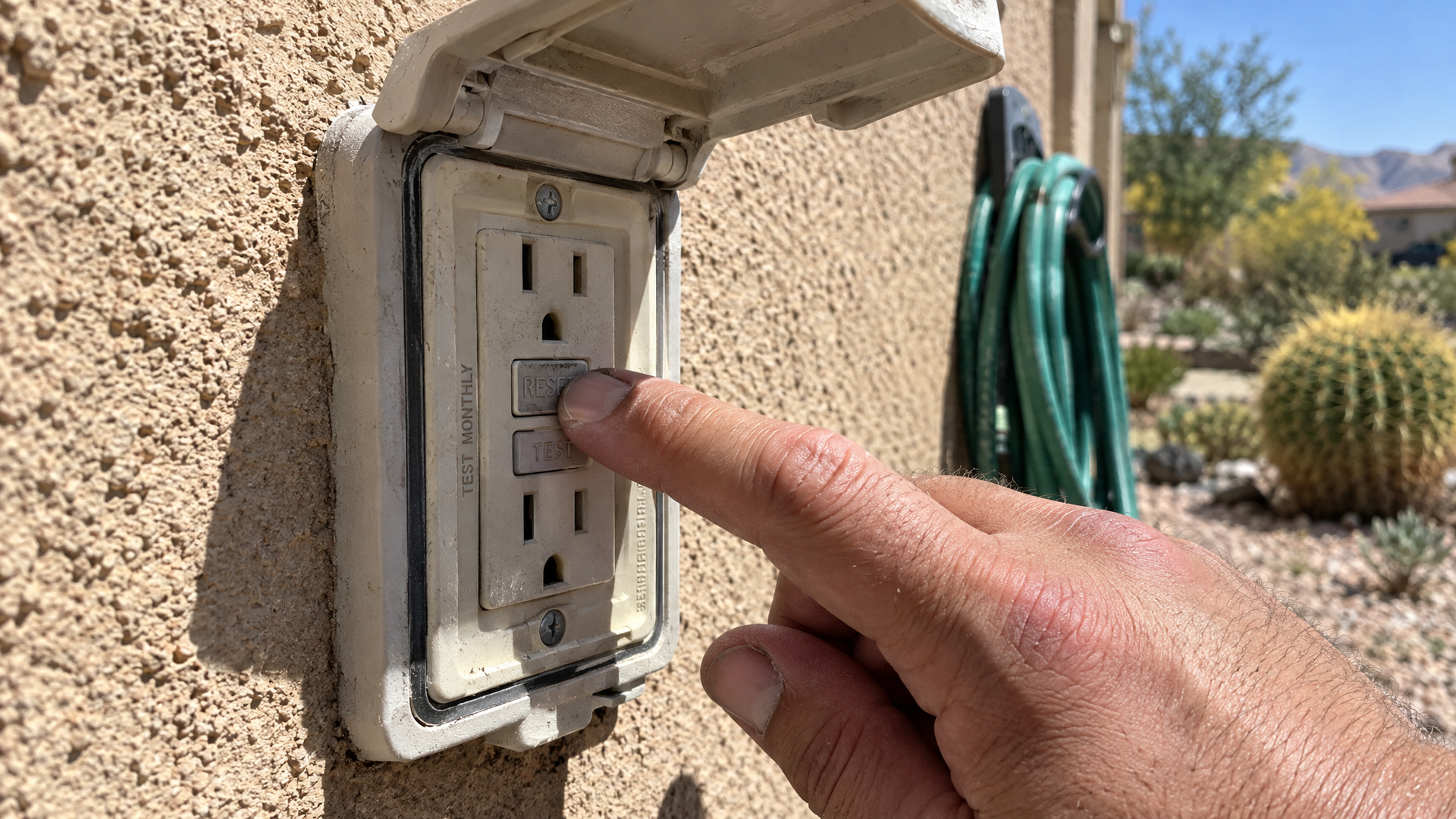
- Test the GFCI monthly. Press test, confirm the power cuts off, then reset.
- If it trips, treat it as information. Our guide to
why GFCIs trip explains what it's detecting.
- Think about storms. Outdoor equipment takes a beating in wet weather, and our
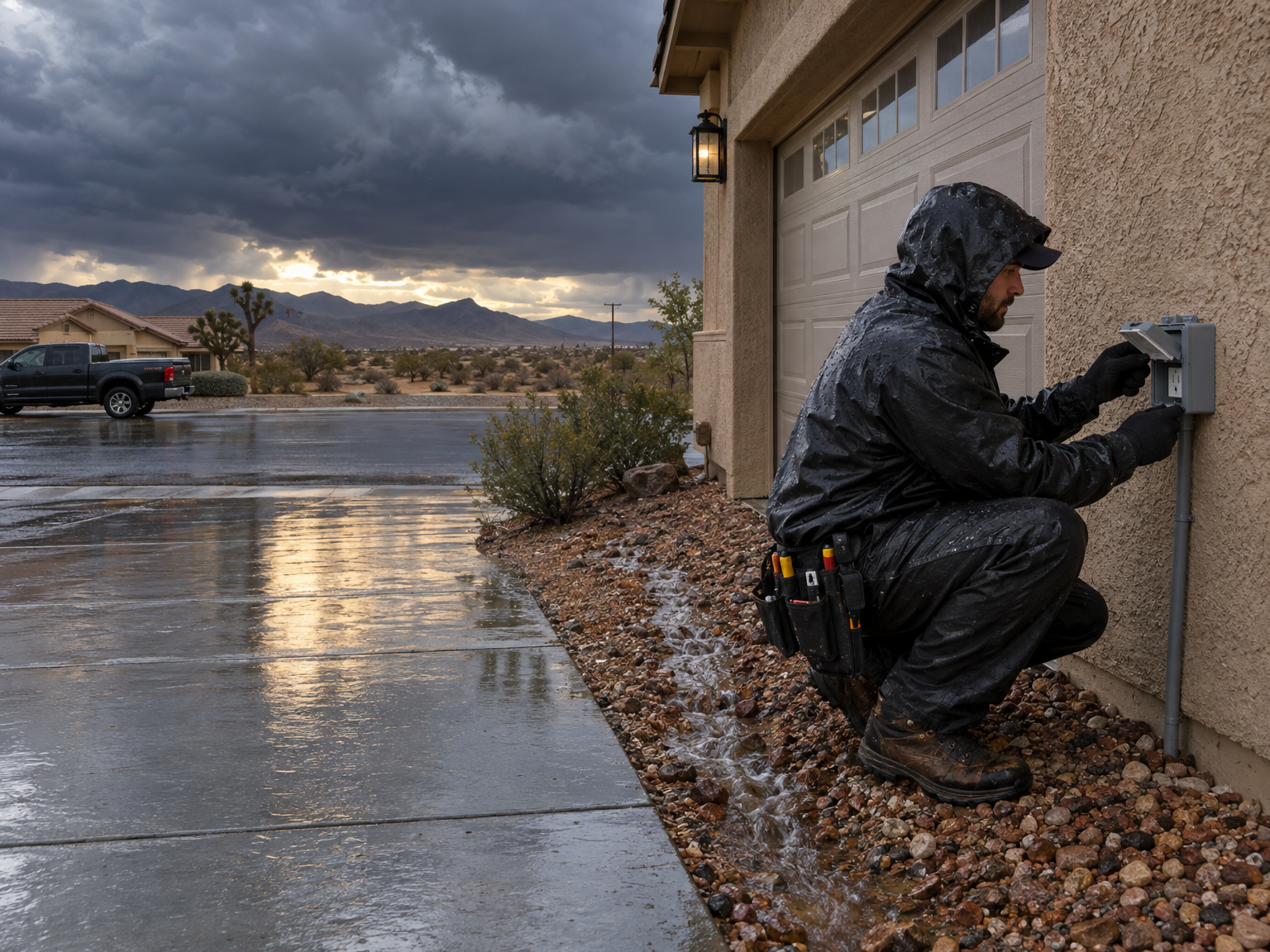
El Niño winter guide covers what to do if water reaches electrical equipment.
Questions about hot tub wiring in Hesperia
Can I plug a hot tub into a regular outlet?
Only a 120-volt plug-and-play model, and it still needs a dedicated, GFCI-protected circuit. A full-size 240-volt tub is hardwired through a disconnect, and an extension cord is never the answer.
Do I need a permit for a hot tub circuit?
A new 240-volt circuit generally does. Ask the City of Hesperia's Building and Safety Division about your specific project, including whether a 120-volt installation needs one.
How far from the house can the tub be?
Practically, as far as the wiring allows. Longer runs cost more and may need heavier wire to limit voltage drop, so plan the location with your electrician.
Buying a hot tub this holiday season?
Call Hesperia Electrical at (760) 905-9997 for a free estimate, and call before the delivery date.
We're a licensed C-10 electrical contractor, and we'll size the circuit, plan the disconnect, and handle the permit.