A GFCI outlet doesn't trip randomly. It's a genuinely simple device doing exactly one job: watching for electricity taking a path it shouldn't, and cutting power the instant it detects one. Every time it trips, it's telling you something specific found a way to leak current — you just have to figure out what.
What a GFCI Is Actually Measuring
It helps to understand the actual mechanism before troubleshooting one. A GFCI continuously compares the current flowing out through the hot wire against the current returning through the neutral wire. Under normal operation, those two numbers match exactly. The moment they don't — because some of that current is escaping through an unintended path, like a person, water, or a damaged wire touching a grounded surface — the GFCI detects the imbalance and cuts power in a fraction of a second. Most residential GFCIs are designed to trip at a difference of just 4 to 6 milliamps, which is a tiny amount of current, far below what would trip a standard circuit breaker. That sensitivity is the entire point: it's built to catch a shock hazard long before it becomes dangerous, not to wait for a full short circuit.
Cause One: Moisture
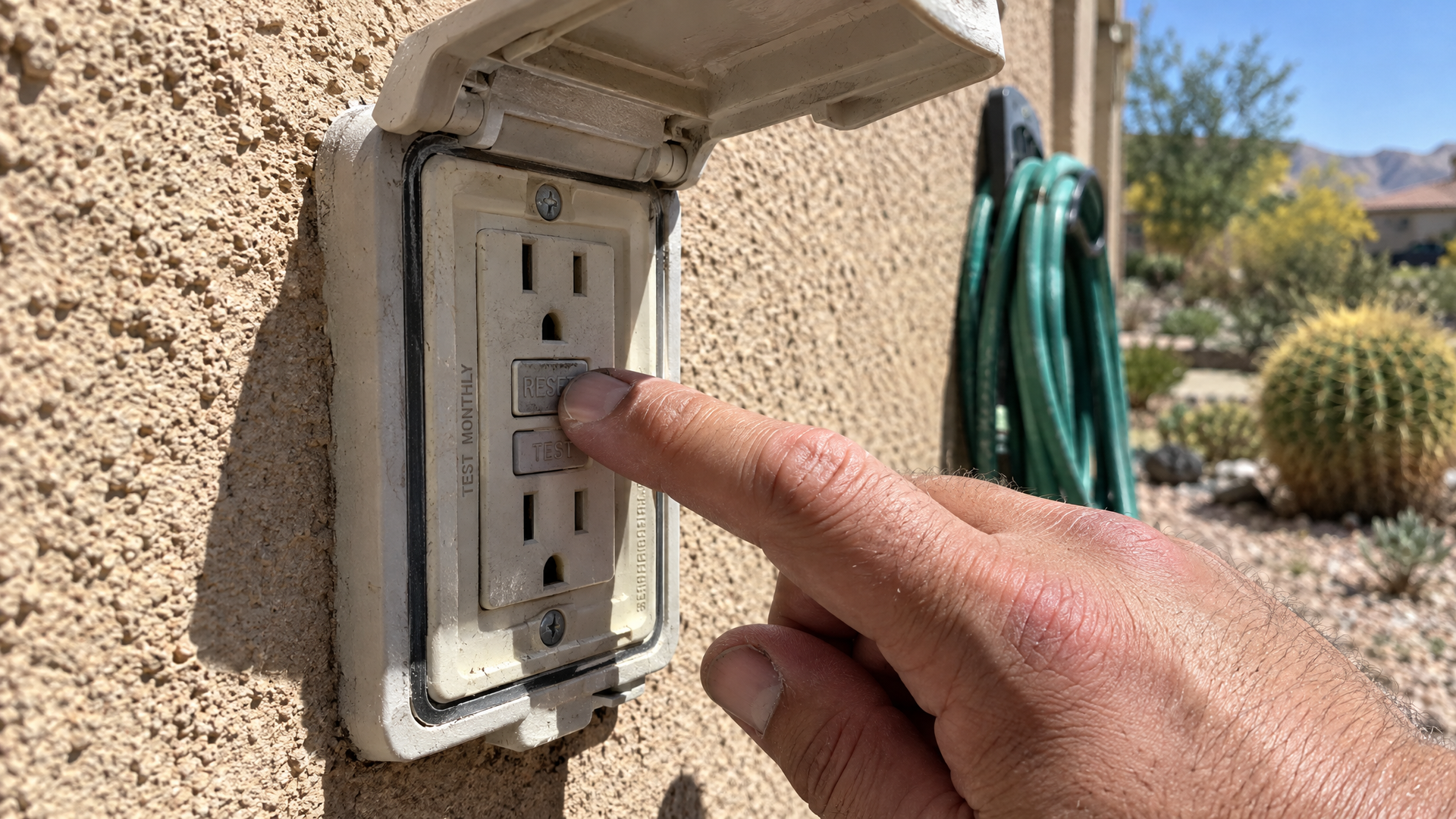
The most common cause, especially on outdoor, bathroom, and garage GFCIs, is moisture. Water finding its way into the outlet box — from a shower running nearby, a garage door left open during a dust storm followed by rare desert rain, or just years of humidity cycling in and out of a poorly sealed box — creates exactly the kind of unintended path a GFCI is built to catch. The fix here is often simpler than it sounds: cut power at the breaker, let the box dry out completely (a few hours, sometimes overnight), then reset. If it holds once dry, moisture was the whole story. Outdoor outlets specifically benefit from a proper in-use weatherproof cover, which keeps rain and irrigation overspray out of the box even while something's plugged in — a detail that's easy to overlook until the second or third time the same outlet trips after a sprinkler cycle.
Cause Two: A Faulty Appliance Somewhere Downstream
If it's not moisture, the next likely suspect is whatever's actually plugged in. A GFCI protects the outlet, but it's watching the entire circuit downstream of it, which means an appliance with a failing motor, a frayed cord, or internal moisture can trip a GFCI outlet in a completely different room. This surprises a lot of people the first time they encounter it — the GFCI in the garage trips because of something plugged in at an outlet in the kitchen, simply because they share the same protected circuit.
The cleanest way to find it: unplug everything on that circuit, reset the GFCI, then plug items back in one at a time. Whichever one trips it again is your answer, and it needs repair or replacement, not a workaround. This process of elimination is more reliable than guessing based on which appliance "seems old" or "seems fine," since a device can develop an internal ground fault well before it shows any other sign of failing.
Cause Three: Simple Age and Wear
Age is worth ruling out too, even when nothing seems obviously wrong. GFCI outlets have a working life of roughly 10 to 15 years, and they can fail from normal wear well before that if they've spent years exposed to heat, sun, or repeated moisture — a real factor for outdoor Hesperia outlets that sit through summer after summer of intense sun exposure and repeated heat cycling. An outlet that's simply worn out often trips with nothing plugged in at all and won't hold a reset no matter how dry or fault-free the circuit actually is. Testing the outlet monthly using its built-in test button is the standard recommendation precisely because it catches this kind of gradual failure before it becomes an inconvenient surprise.
What Not to Do
One thing worth saying plainly: never respond to a tripping GFCI by swapping it for a standard outlet just to make the tripping stop. That removes the shock protection the code requires in that location specifically because it's near water or a higher shock risk, and it defeats the entire purpose of having a GFCI there in the first place. Repeatedly resetting a GFCI without ever identifying the underlying cause is a similar mistake — it treats the symptom while leaving whatever's actually leaking current unresolved.
When to Stop Troubleshooting and Call Someone
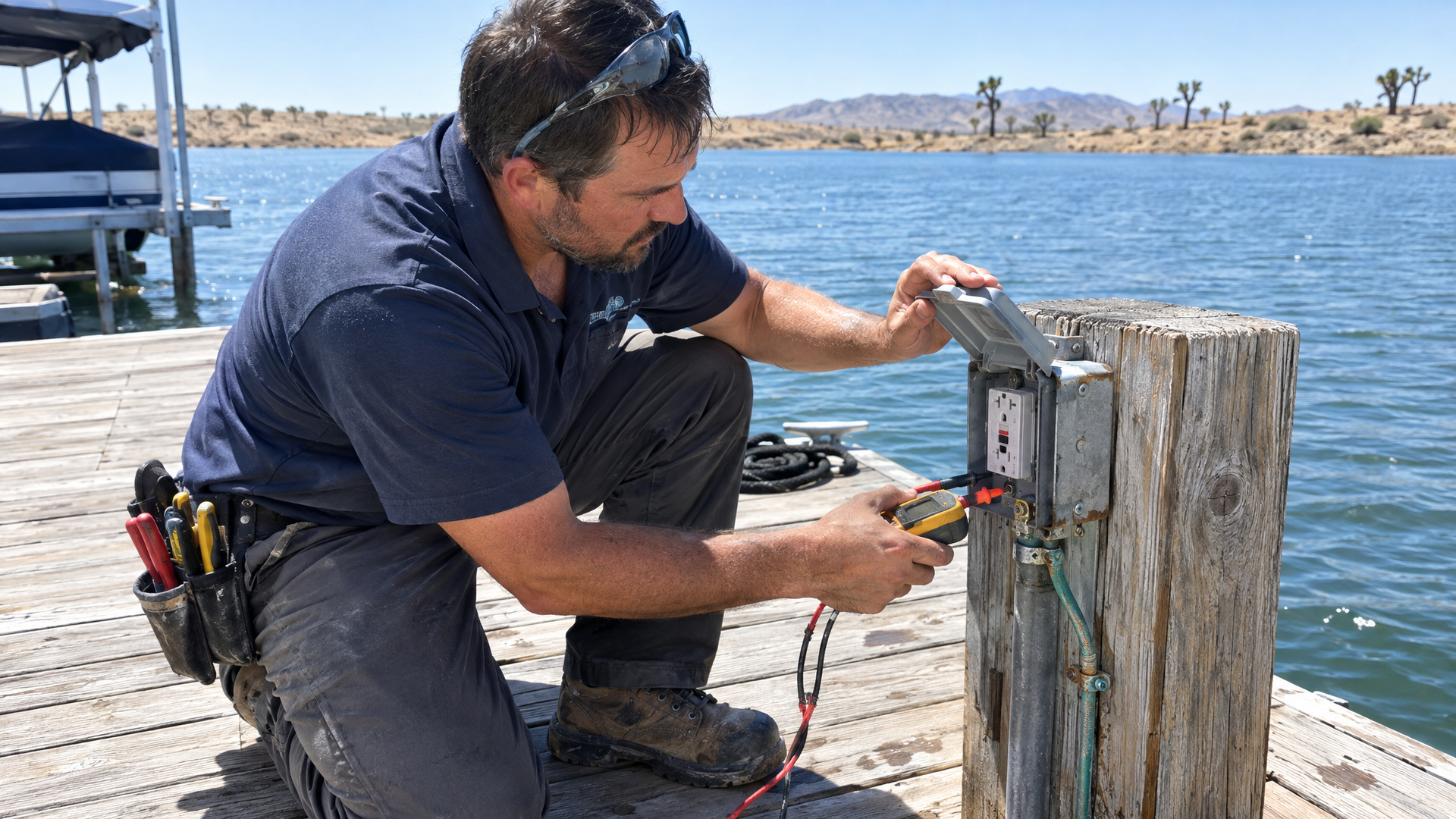
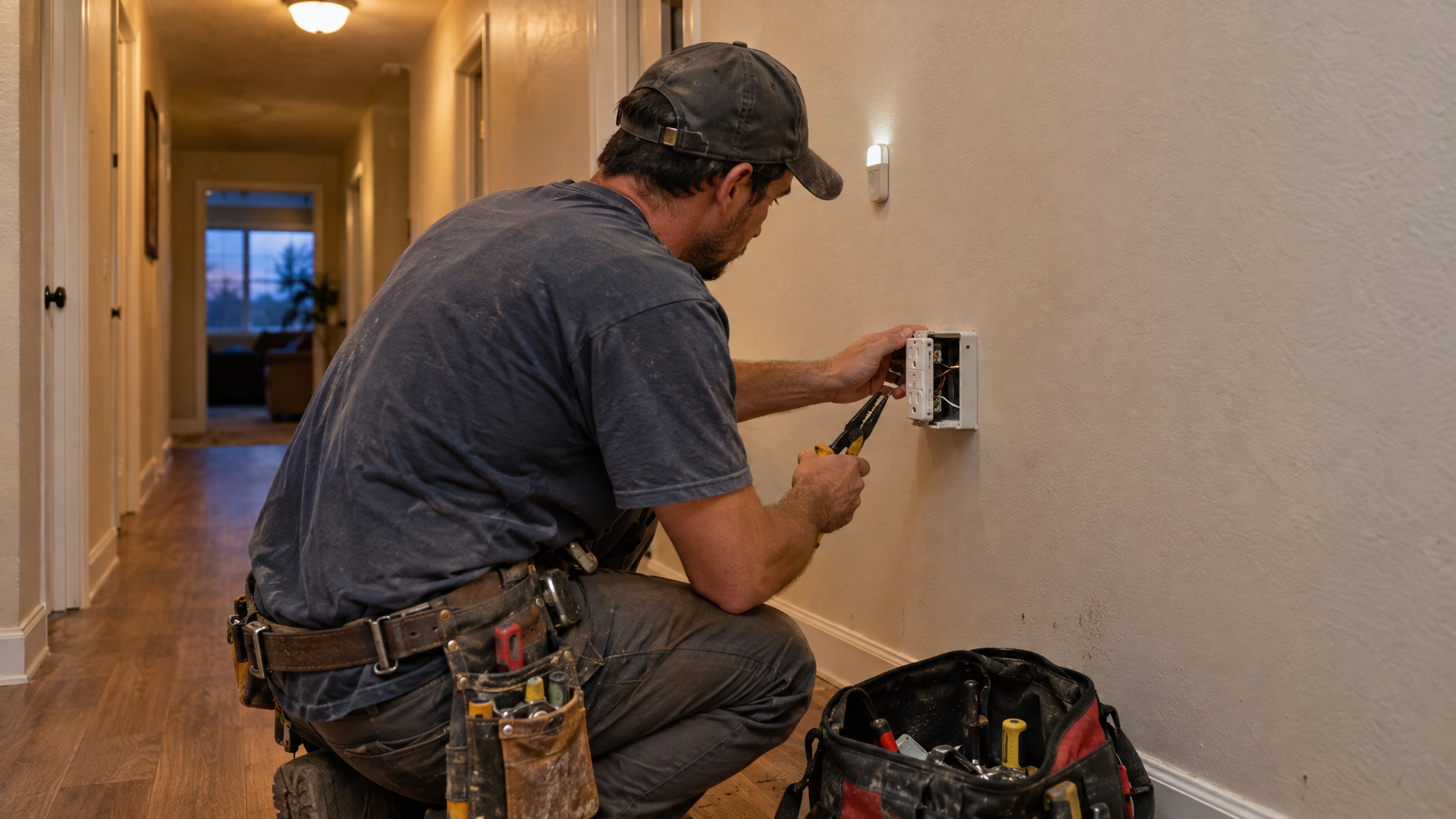
A few signs mean this stops being a DIY troubleshooting job and becomes a call-someone-now situation: any burning smell, a warm or discolored outlet, buzzing or crackling, or a GFCI that won't hold reset even after you've ruled out moisture and every connected appliance. At that point, the fault is likely inside the wiring itself — a loose connection or damaged insulation somewhere in the wall — which isn't something to keep resetting and hoping goes away on its own.
A Few Things Worth Knowing
Why does my garage GFCI trip when nothing's even plugged in there?
GFCIs protect an entire circuit, not just the one outlet. A faulty appliance plugged in elsewhere on the same circuit, even in a different room, can trip a GFCI outlet that appears to have nothing connected to it.
How often should I test my GFCI outlets?
Monthly, using the built-in test button. This catches gradual wear-related failure before it turns into an outlet that won't reset when you actually need it.
Is it ever okay to just leave a tripping GFCI unplugged instead of fixing it?
Only as a temporary measure while you diagnose the cause. A GFCI that keeps tripping is detecting a real electrical issue, and leaving it disconnected doesn't resolve whatever's actually causing the fault.
Can extreme heat really shorten a GFCI outlet's lifespan?
Yes. Sustained heat and UV exposure accelerate wear on outdoor GFCI outlets specifically, which is relevant given how much direct sun exposure outdoor outlets get through a Hesperia summer.
GFCI outlet in your Hesperia home that won't stop tripping, or won't reset at all? Call Hesperia Electrical at (760) 905-9997.