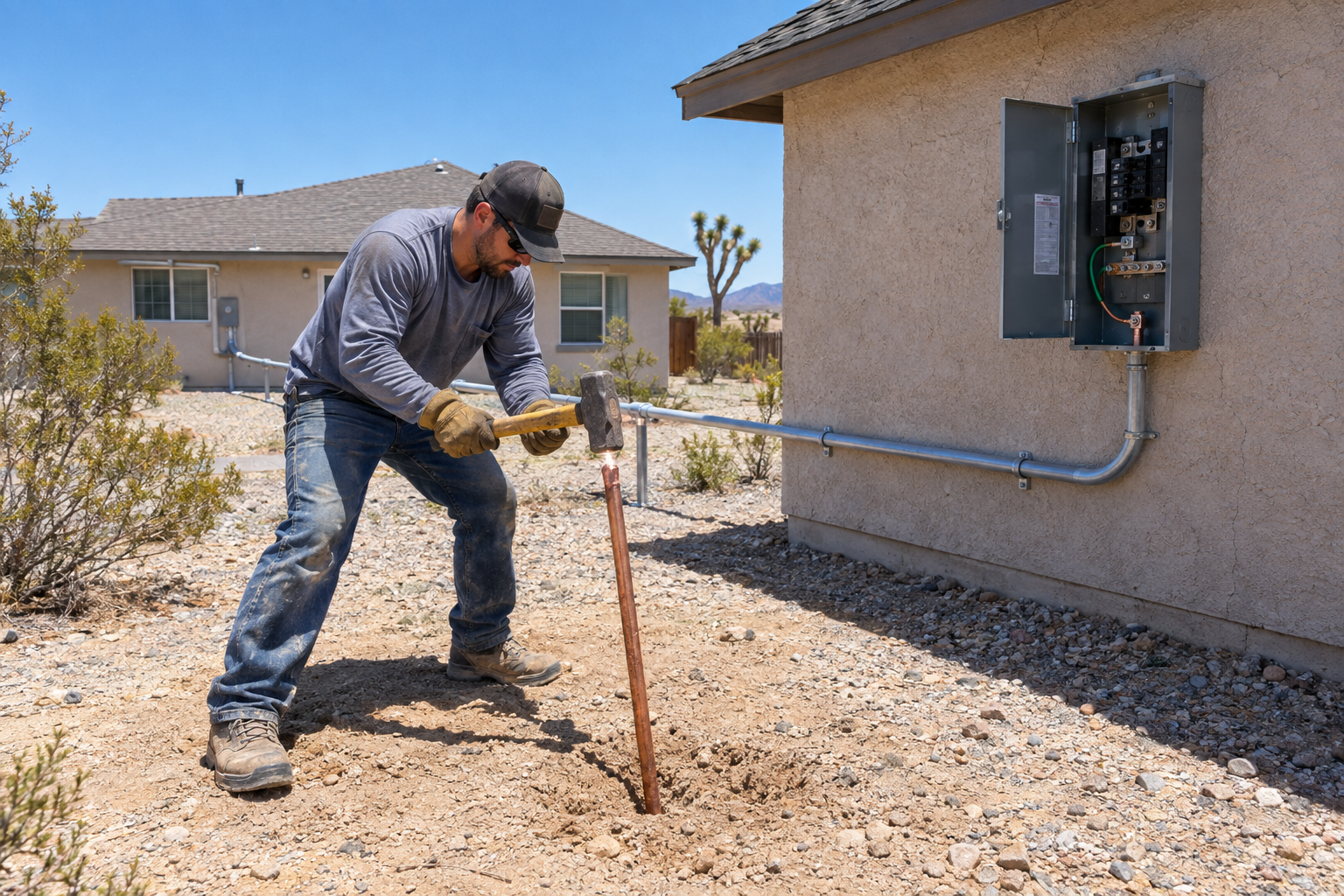
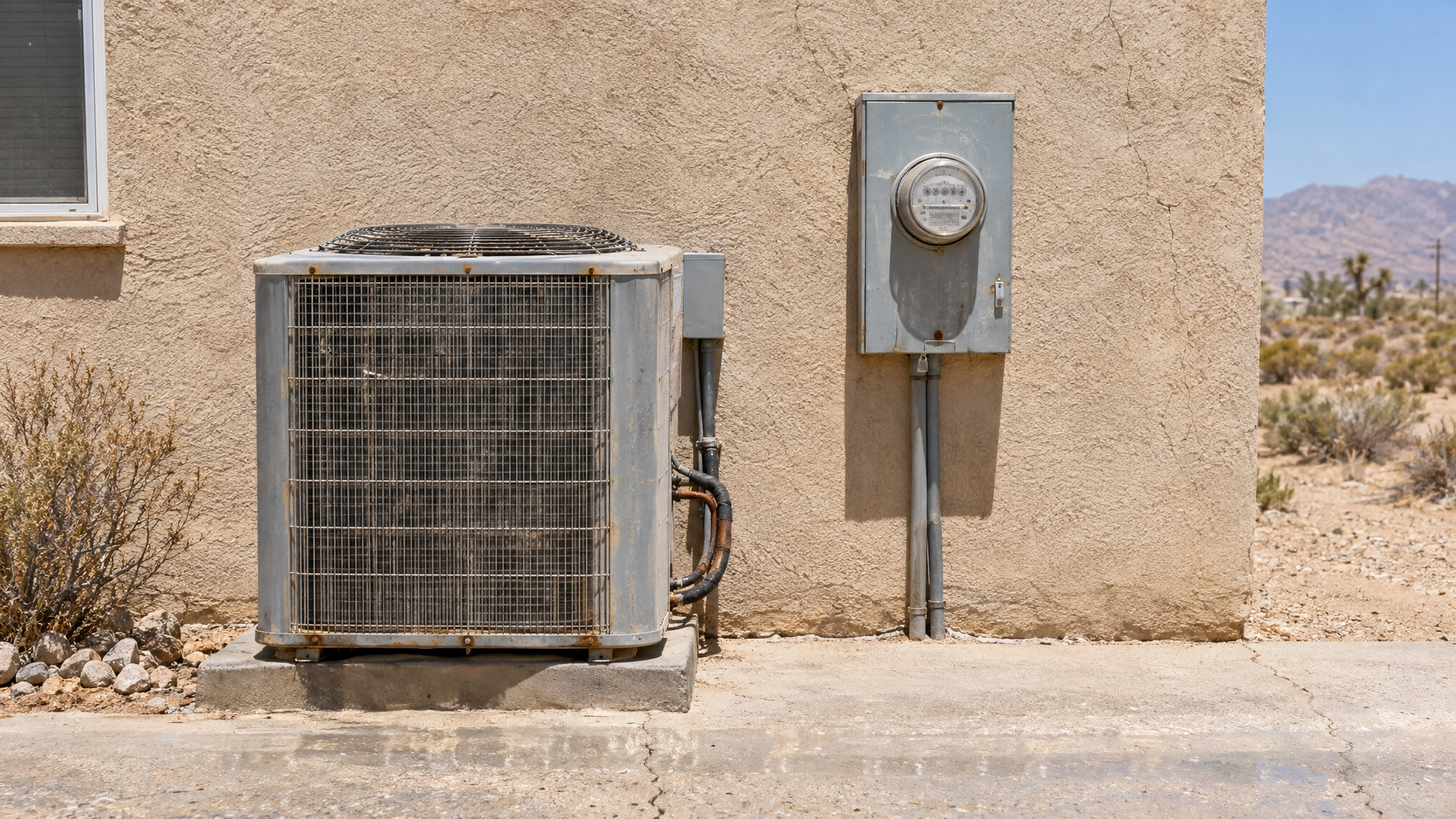
If you live in Hesperia, Victorville, Apple Valley, or Adelanto, your home takes more electrical abuse than most of California. Summer monsoon thunderstorms roll across the High Desert from June through September. Wind events kick power lines around. The grid up here runs longer distances over rougher terrain than anything down the Cajon Pass, and voltage spikes happen often enough that most homeowners have learned to unplug a TV before a storm rolls in.
The thing most homeowners haven't done — and the thing that actually solves the problem — is install a whole-home surge protector at the main panel.
Here's what it is, what it costs, why every High Desert home with a modern electrical load needs one, and what to look out for.
What a Whole-Home Surge Protector Actually Does
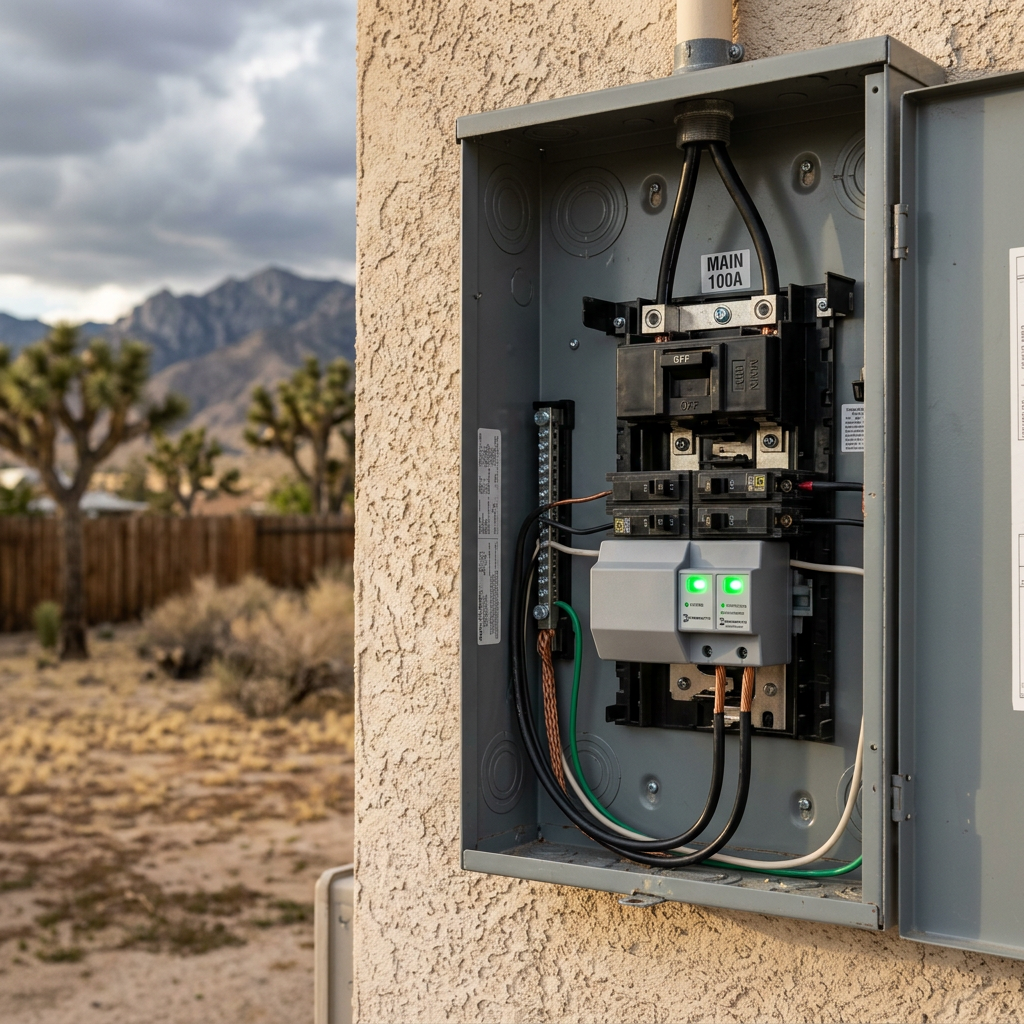
A whole-home surge protector — technically called a Type 2 Surge Protective Device, or SPD — is a small module that wires into your main electrical panel and clamps any voltage spike that comes in through your service entrance before it reaches the breakers. Think of it as a sacrificial first line of defense for your entire electrical system.
When a normal household runs on the standard 120/240 volts, an SPD ignores it. When a spike hits — from a nearby lightning strike, a transformer fault, a downed line, a generator transfer, or even your neighbor's HVAC compressor cycling on — the SPD diverts the excess voltage to ground in microseconds, before that energy can reach your refrigerator, your EV charger, your smart thermostat, or the $1,200 OLED in your living room.
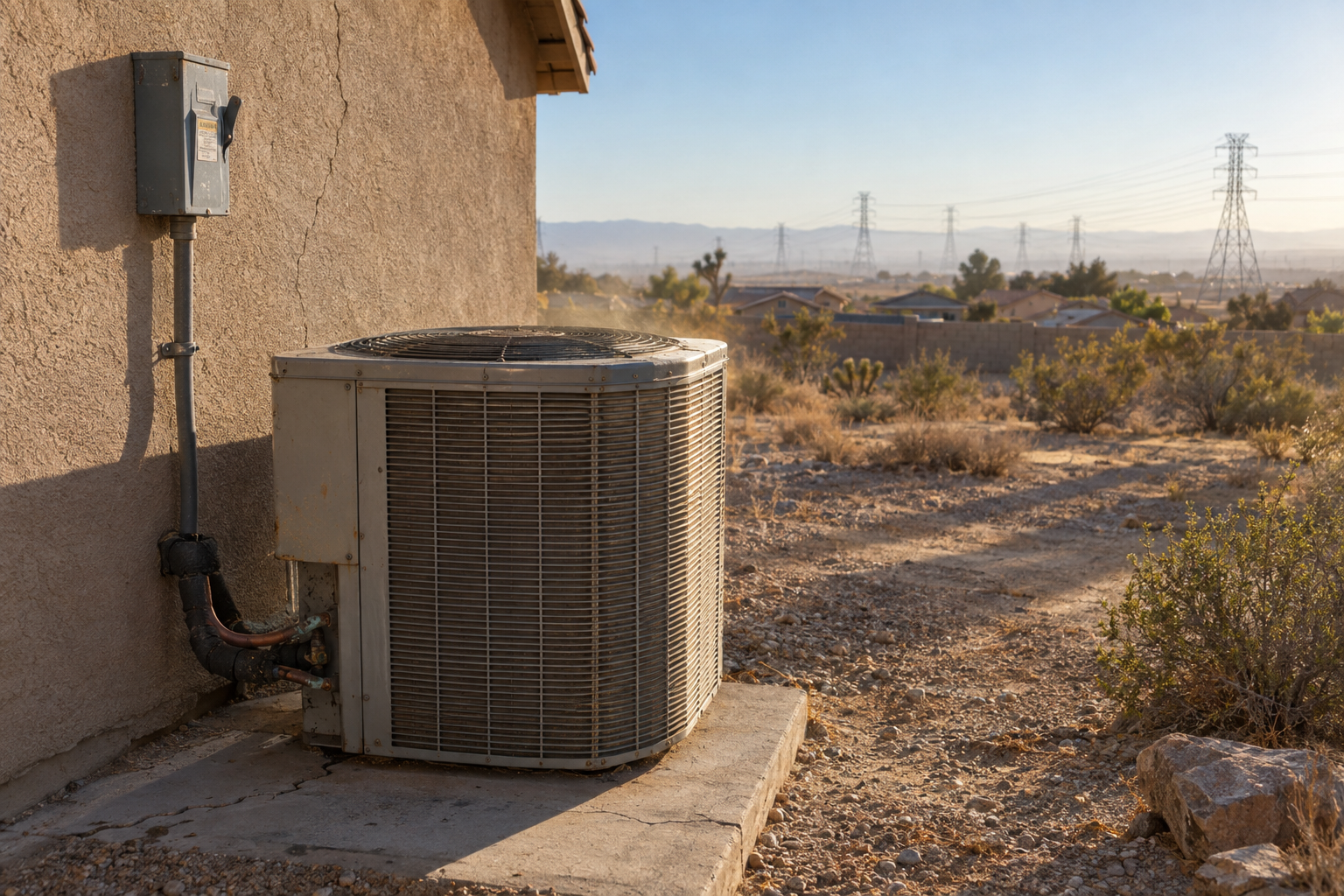
Your existing power strips and plug-in surge protectors are not the same thing. Plug-in protectors handle small downstream spikes only. They are completely overwhelmed by anything that comes in through the service entrance, and they don't protect anything that's hardwired — which in a modern Hesperia home includes the AC condenser, the furnace, the water heater (if electric), the pool pump, the well pump, the garage door opener, the dishwasher, the oven, the dryer, the microwave, the EV charger, the standby generator transfer switch, and your smoke alarms.
A whole-home SPD covers all of it.
Why the High Desert Is a Bigger Problem Than Most of California
Three things make Hesperia and the surrounding High Desert harder on residential electrical systems than coastal Southern California:
Lightning frequency. The Inland Empire sees more measurable lightning strikes per square mile than any other region of the state outside the Sierras. Summer monsoon moisture moving up from the Sea of Cortez collides with desert heat and produces afternoon thunderstorms most homeowners in San Bernardino County are familiar with. A direct strike is rare — but a strike anywhere within a quarter mile of your service drop can induce a damaging spike on your line.
Long, exposed grid runs. Power coming into Hesperia, Victorville, and Adelanto travels longer distances over more exposed terrain than coastal grids. More miles of wire means more chances for faults, transformer failures, downed branches, and animal-induced outages. Each of these events can produce a voltage transient that comes straight into your house.
Voltage instability during peak demand. When the High Desert hits 105°F and every air conditioner in the region kicks on at the same time, grid voltage swings happen. Brownouts, sags, and the recovery spikes that follow them are slow killers of motors, electronics, and HVAC equipment.
If you've ever had a refrigerator fail right after a thunderstorm, an inverter board pop on your AC condenser, a garage door opener stop responding after a power outage, or a smart TV start glitching after a power flicker — that's surge damage. Most of the time it doesn't fry the device immediately. It degrades it. Each spike shaves life off everything plugged in.
What Whole-Home Surge Protection Costs in Hesperia, CA
For most single-family homes in Hesperia, Victorville, Apple Valley, or Adelanto, professional installation of a quality Type 2 SPD runs
$300 to $750 installed, including the device, labor, and any minor panel modifications.
Pricing varies by:
Device tier. Entry-level Type 2 SPDs from Eaton, Square D, Siemens, and Leviton run $80–$150 for the unit itself. Mid-tier devices with higher joule ratings, faster response times, and longer warranties run $150–$300. High-end residential SPDs with monitoring, audible alarms, and replaceable modules run $250–$500. The mid-tier is the sweet spot for most High Desert homes.
Panel compatibility. If your panel is recent (Square D QO/Homeline, Eaton CH/BR, Siemens, GE) and has a knockout in a clean spot, the install is straightforward — typically 45 minutes to an hour. If your panel is older, full, or doesn't have a clean way to add a two-pole breaker, the labor goes up and sometimes a panel upgrade is the smarter play.
Permitting. California requires a permit for any work on the main service panel, including SPD installation. Permit fees in the City of Hesperia, Victorville, and unincorporated San Bernardino County typically run $80–$150 for a residential electrical permit. We pull the permit and handle the inspection on every job.
Warranty support. Most quality whole-home SPDs include manufacturer-backed connected equipment warranties — typically $25,000 to $75,000 of coverage on damaged appliances and electronics if a surge gets through. That coverage requires the device to be installed by a licensed electrician and properly registered. It's not optional paperwork; it's how the warranty actually pays out if you ever need it.
For a typical Hesperia home with $20,000–$50,000 worth of electronics, appliances, and hardwired equipment, the math on whole-home surge protection works out fast. One transformer fault that takes out an HVAC condenser pays for the install ten times over.
Where Whole-Home Surge Protection Fits — and Where Plug-In Strips Still Matter
Surge protection is layered. The right setup for a High Desert home looks like this:
Layer 1 — Type 2 SPD at the main panel. This is the whole-home surge protector. It clamps the big spikes coming in through the service entrance.
Layer 2 — Type 3 plug-in surge protectors at sensitive devices. Even with a Type 2 at the panel, premium electronics — your home theater, your gaming PC, your home office network gear, your kitchen appliances with electronic boards — benefit from a second-stage plug-in surge protector. These handle small downstream transients that the panel-level device intentionally lets through.
Layer 3 — UPS (battery backup) for critical electronics. For computers, networking gear, and home office equipment, an uninterruptible power supply gives you both surge protection and ride-through during the brief power flickers that come with High Desert wind events.
The mistake most Hesperia homeowners make is buying expensive plug-in surge strips and skipping the panel-level protection entirely. That's like locking every interior door and leaving the front door wide open. The big spikes — the ones that actually destroy hardwired equipment — only get stopped at the panel.
When You Specifically Need Whole-Home Surge Protection
Some homeowners can get by without a Type 2 SPD. Most can't, especially in 2026.
You should prioritize installing one if any of these apply:
- You have an
EV charger (Level 2 240V) — these are expensive to replace and sit on a hardwired circuit
- You have a standby or portable generator with a transfer switch — generator-to-grid transitions create transients
- You have a smart panel, smart thermostat, or whole-home automation system
- You have rooftop solar with a microinverter or string inverter — these are particularly vulnerable
- Your home has a well pump or pool equipment
- Your HVAC was installed in the last 10 years (modern variable-speed condensers are expensive and electronics-heavy)
- Your home is in an unincorporated High Desert area with longer service drops
- You've had unexplained electronics failures after storms or outages
- You're remodeling or upgrading the panel anyway
The 2020 National Electrical Code (Article 230.67) actually requires a surge protective device on all new and replacement service panels for one- and two-family dwellings. If you've had a panel upgrade since 2020, your electrician should have included one — but in older homes that haven't been touched, the SPD is almost always missing.
What to Look For in a Quality Whole-Home Surge Protector
Not all SPDs are equal. The cheap ones don't last and don't actually clamp hard enough to protect modern equipment. Ask your electrician for:
A Type 2 device rated for at least 40 kA per phase (kiloamps of surge current capacity). 60 kA or higher is better for High Desert lightning conditions.
A clamping voltage of 600V or lower. Lower clamping voltage means the device starts diverting energy sooner. For 120/240V residential, you want a tight clamping spec.
A response time under 1 nanosecond. Modern SPDs respond in picoseconds, but anything labeled "fast" without a spec is suspect.
Visible status indicators. Two green LEDs (one per phase) tell you the device is healthy. After a major surge event, an SPD can sacrifice itself protecting your home — the LED goes red or off, and you know to call for a replacement module.
A manufacturer-backed connected equipment warranty. Real coverage, not marketing language. $25,000–$75,000 is typical for residential mid-tier devices.
UL 1449 4th Edition listing. This is the current safety standard. Older listings are obsolete.
We typically install Eaton CHSPT2ULTRA, Square D HEPD80, Siemens FS140, or Leviton 51120-1 in High Desert homes — all UL 1449 4th Edition listed, all with strong warranties, all serviceable if they take a hit.
Why Hire a Licensed Electrician Instead of Installing It Yourself
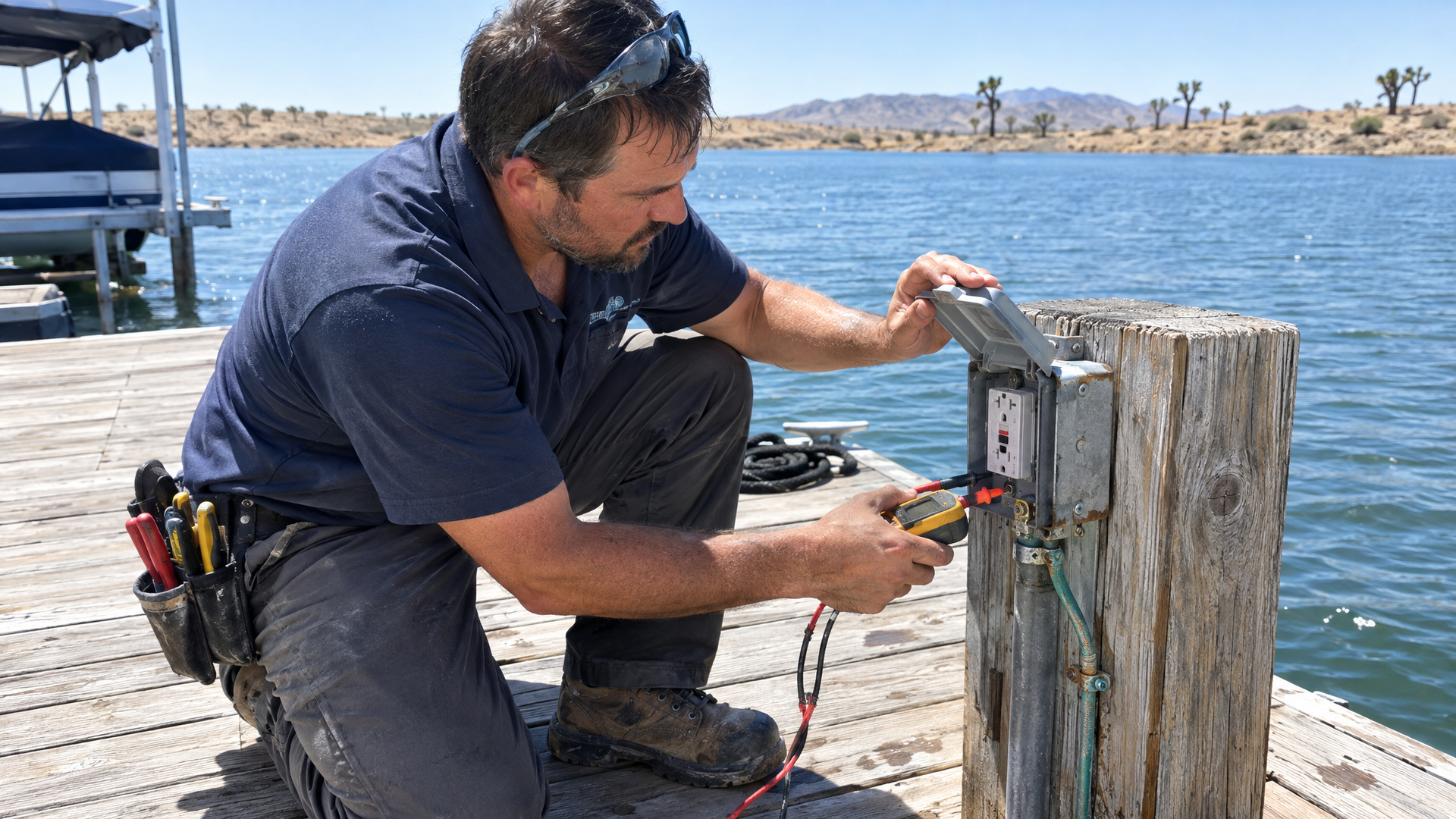
Whole-home SPDs are technically simple — two phase wires, a neutral, and a ground, landed on a two-pole breaker. The installation is also working inside a live service panel where the bus bars are energized at 240V regardless of whether the main breaker is off, the load center cover is off, and a slipped screwdriver can produce an arc flash that puts a homeowner in the hospital.
This is one of those jobs that doesn't look hard until something goes wrong. Beyond safety, an unpermitted installation can create insurance problems if the device fails to protect your home — the manufacturer connected equipment warranty almost always requires a licensed electrician to install, and the home insurance claim almost always asks who did the work.
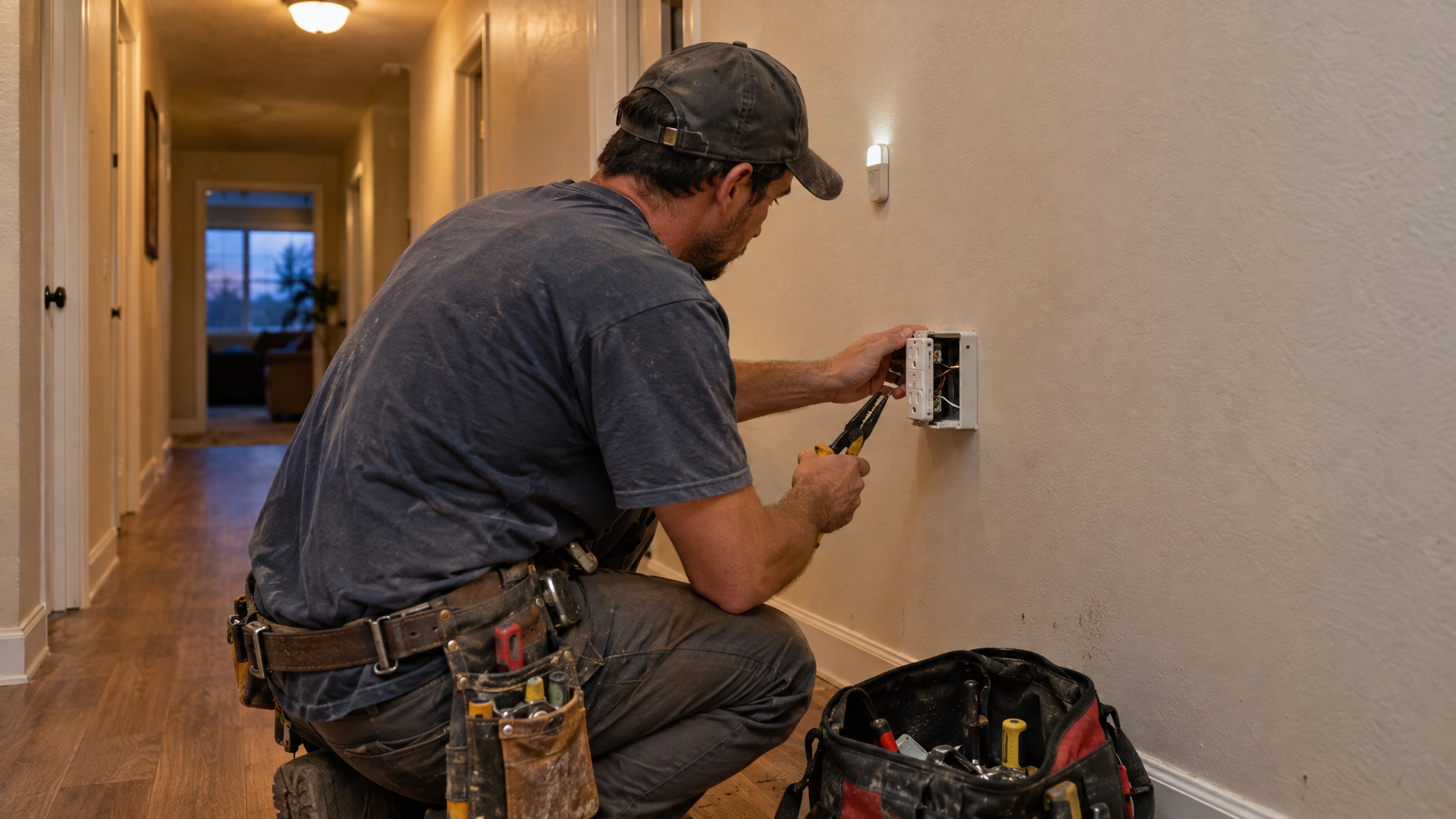
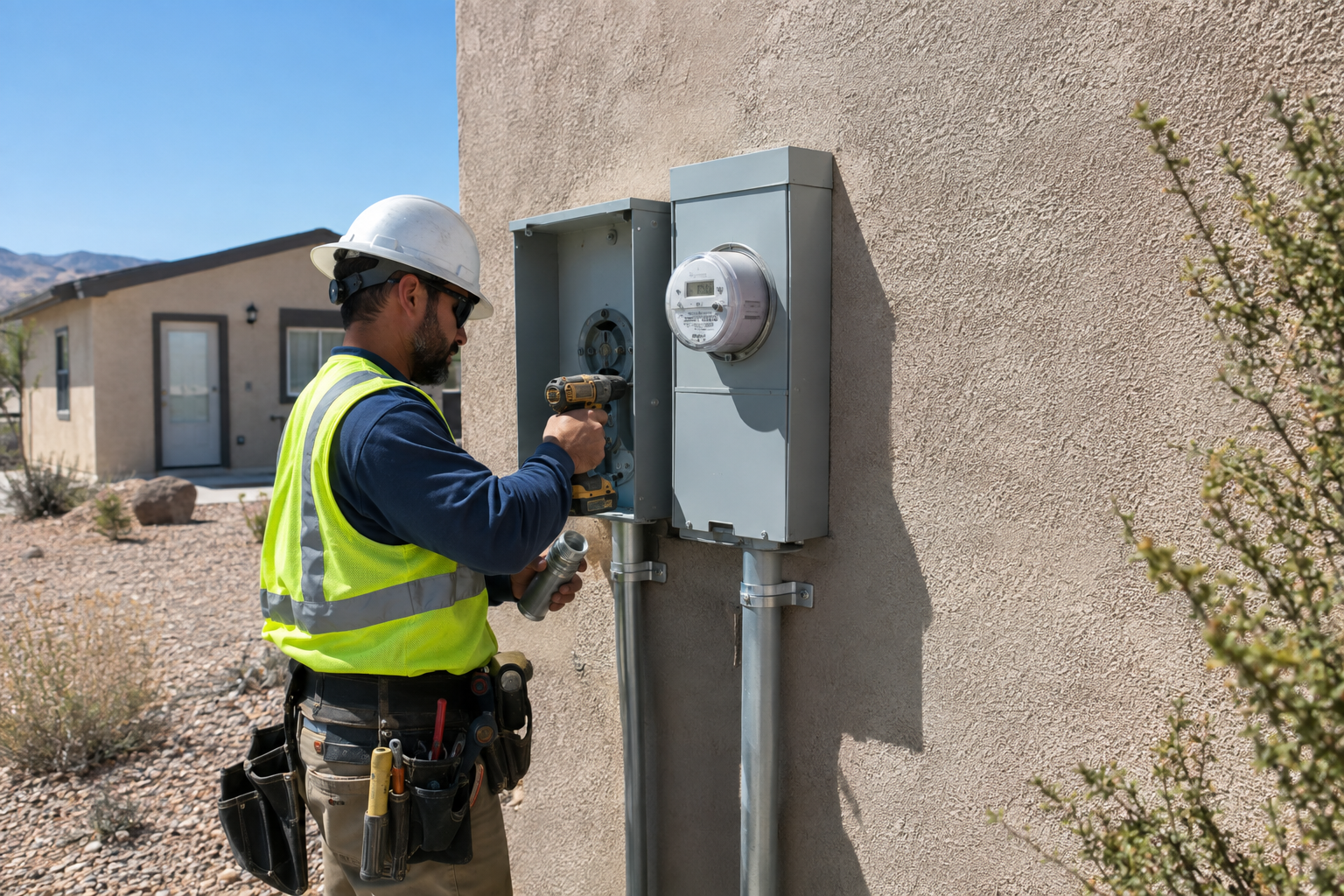
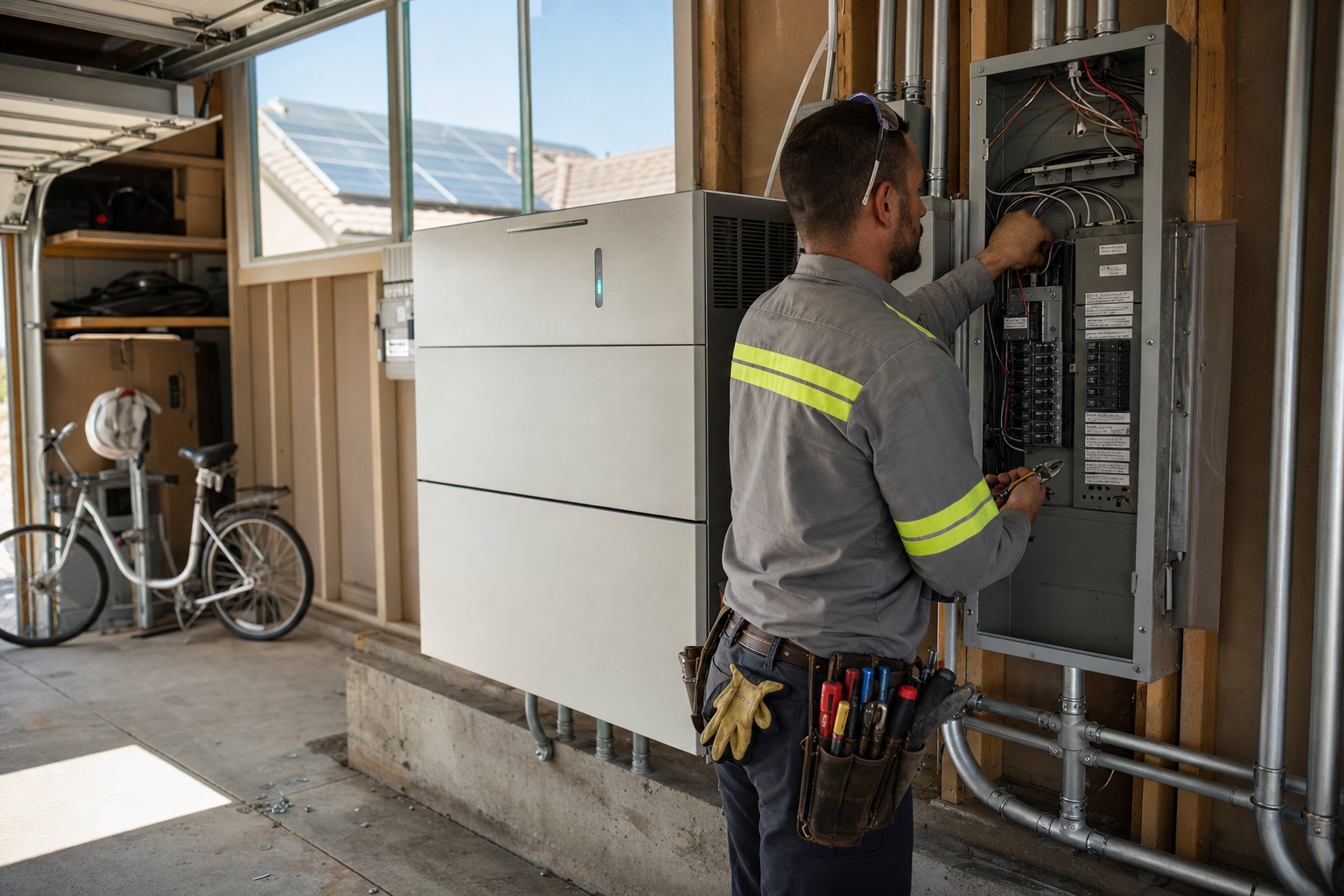
Hesperia Electrical pulls the permit, lands the device cleanly on the right breaker location, registers the manufacturer warranty in your name, and inspects the panel for any other issues while we're inside it. Most installs take under an hour on-site.
Frequently Asked Questions
How long does a whole-home surge protector last in Hesperia? A quality Type 2 SPD has a typical lifespan of 5 to 10 years under normal conditions, but the actual life depends on how many surges it absorbs. A device that lives through a major lightning event near your home may need replacement immediately. The status LEDs tell you when it's time.
Will a whole-home surge protector stop a direct lightning strike? No surge protector stops a direct strike on your service drop or your roof. A direct strike produces hundreds of thousands of volts and millions of amps — nothing residential is designed to handle that. What an SPD stops is induced surges from nearby strikes, which are vastly more common and still damaging.
Do I still need power strips with a whole-home surge protector? Yes, for sensitive electronics. The whole-home device handles the big spikes; plug-in strips handle the small downstream transients. Layered protection is the correct approach.
Will my home insurance give me a discount for installing one? Some insurers do, some don't. Call your agent and ask — and ask whether your policy specifically excludes surge damage to electronics, because some California homeowner policies do.
Can a whole-home surge protector damage my electronics if it fails? A quality UL 1449 4th Edition device fails safe — it disconnects itself from the line and notifies you with a status indicator. Cheap, off-brand devices can fail in ways that create new problems.
What's the difference between a Type 1 and Type 2 SPD? Type 1 is rated for installation before the main breaker (line side), typically used in commercial applications or where lightning exposure is extreme. Type 2 is installed after the main breaker (load side) and is the standard for residential. For nearly all Hesperia, Victorville, and Adelanto homes, Type 2 is the right choice.
Do I need a permit for surge protector installation in Hesperia? Yes. California requires a permit for any modification to the main service panel. The City of Hesperia building department issues residential electrical permits and handles inspection. We pull the permit on every job.
What if my panel is full and there's no room for a two-pole breaker? This is common in older Hesperia homes that haven't been upgraded. In that case, a
panel upgrade or sub-panel install often makes more sense than trying to squeeze in a surge protector — and the new panel will typically include a built-in or factory-installed SPD that meets current code.
Do whole-home surge protectors work with rooftop solar? Yes, and they're especially important for homes with solar. We typically recommend an additional SPD at the inverter for solar-equipped homes — the inverter is one of the most expensive components in any residential electrical system.
Can you install one if I have a Zinsco, Federal Pacific, or Pushmatic panel? These older panels have known safety issues independent of surge protection. We will not install an SPD into a
Zinsco or Federal Pacific Stab-Lok panel — the right move is a panel upgrade. Pushmatic panels can sometimes be retrofitted; we'll evaluate it during the estimate.
How quickly can you install one? For most Hesperia, Victorville, Apple Valley, and Adelanto homes, we can have the device installed within 1 to 3 business days. Same-day install is sometimes possible — call early.
Get a Free Quote on Whole-Home Surge Protection in the High Desert
If you have an EV charger, a standby generator, rooftop solar, modern HVAC, or just a house full of expensive electronics, a whole-home surge protector is the cheapest insurance policy you'll buy this year. Hesperia Electrical is licensed (C-10), insured, and based right here in the High Desert at 17229 Lemon St Bldg A, Hesperia, CA 92345.
Call
(760) 905-9997 for a free quote. We serve Hesperia, Victorville, Adelanto, Apple Valley, Phelan, Oak Hills, and Spring Valley Lake — typically same-week scheduling, permit included, manufacturer warranty registered in your name.