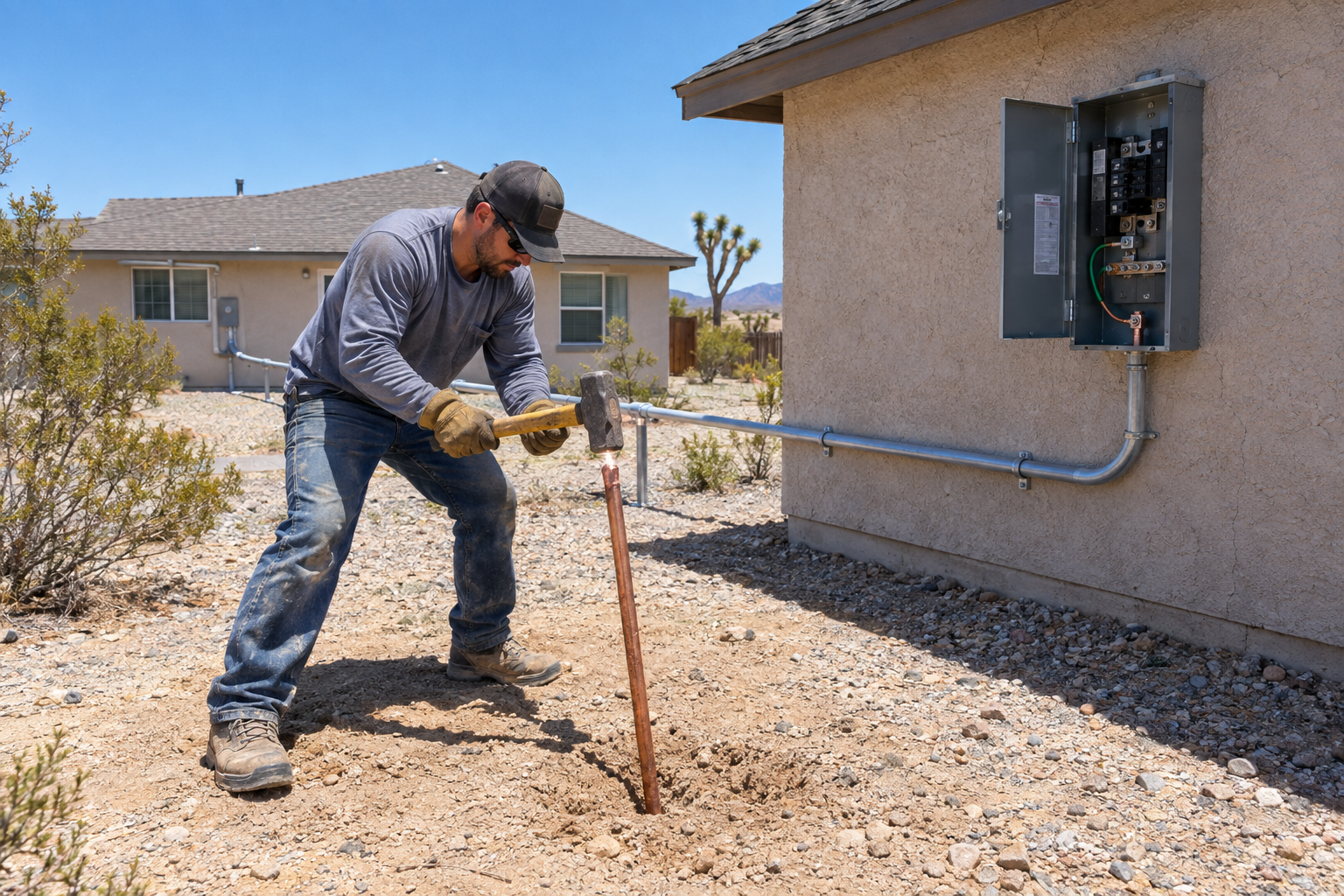
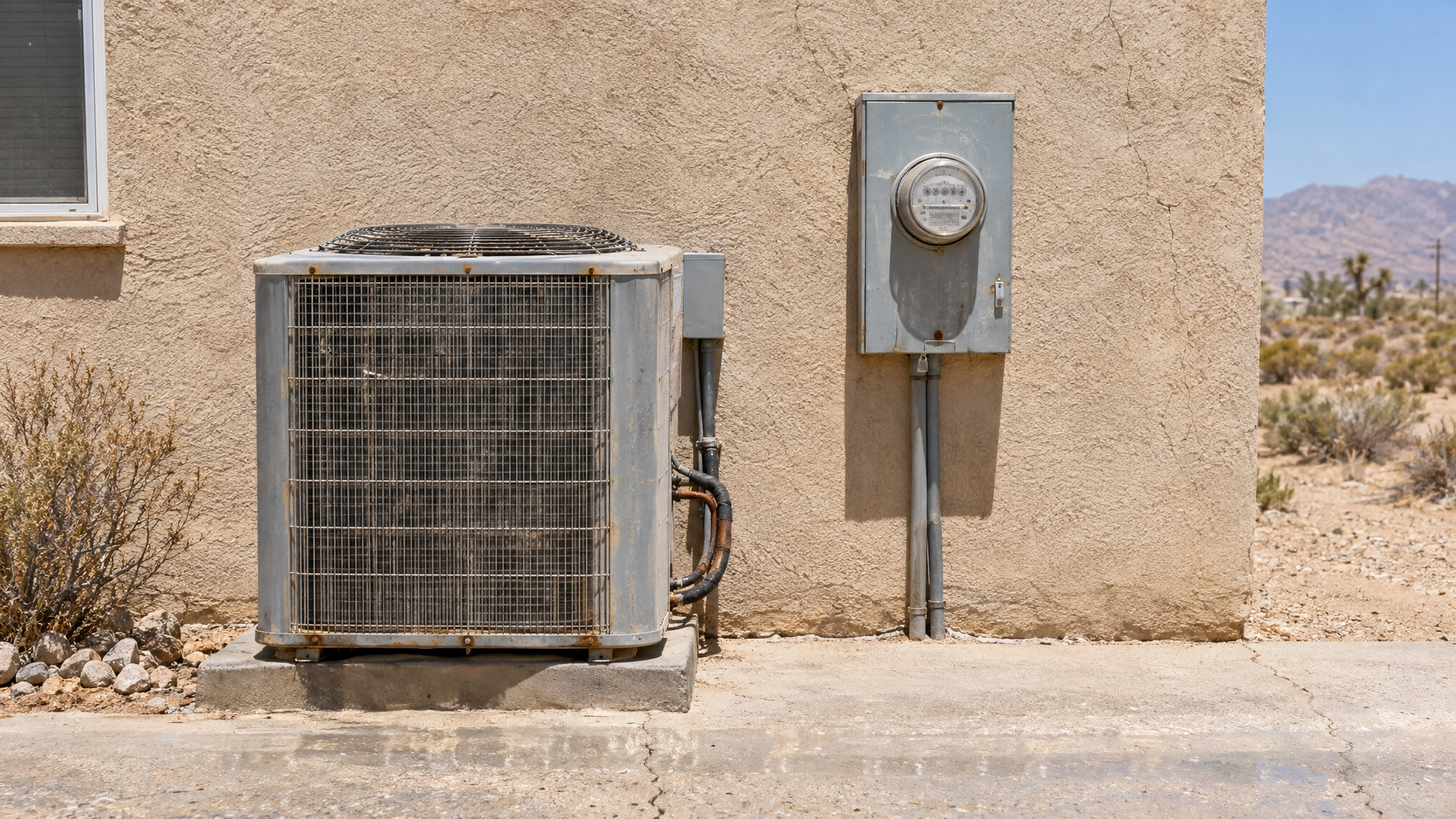
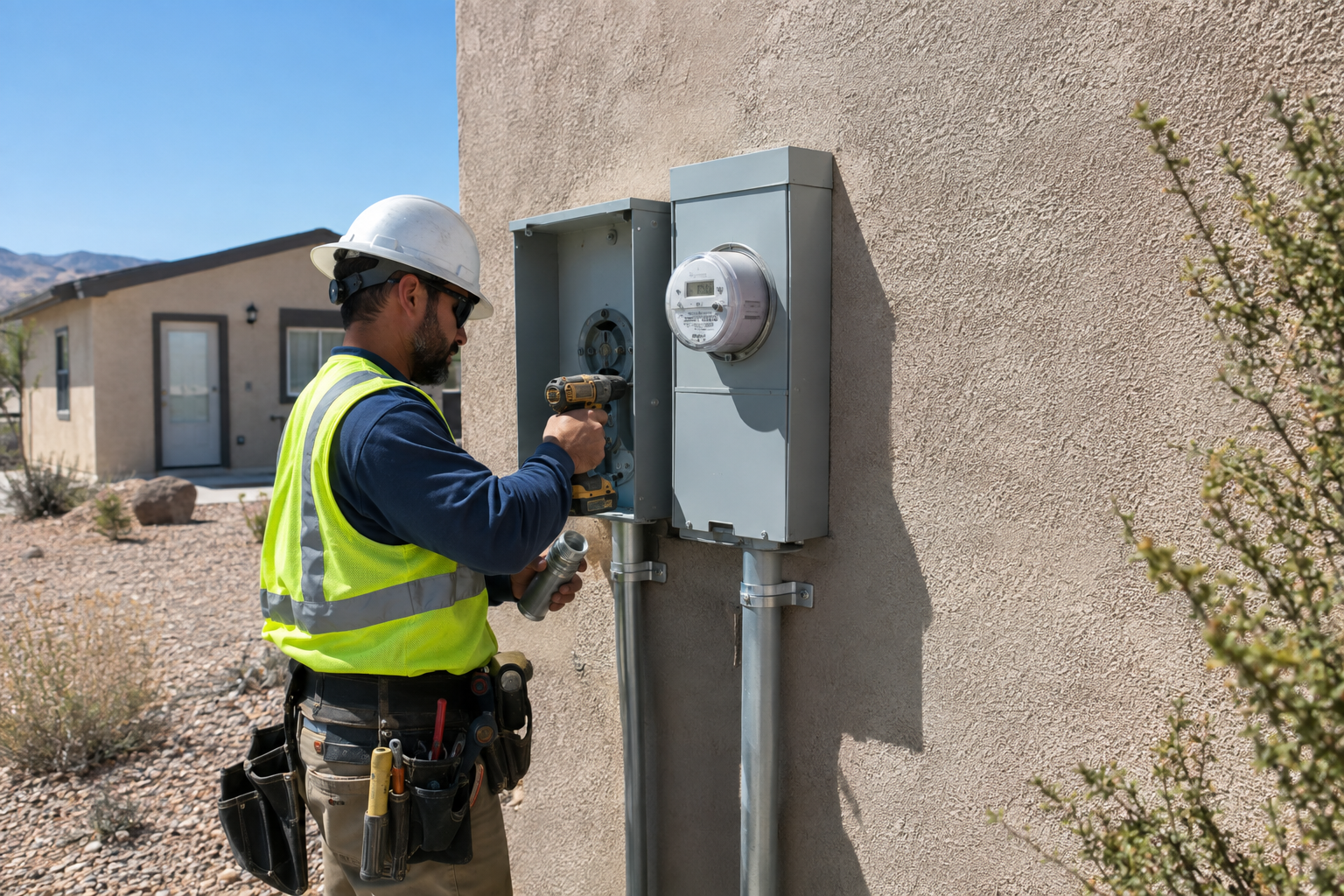
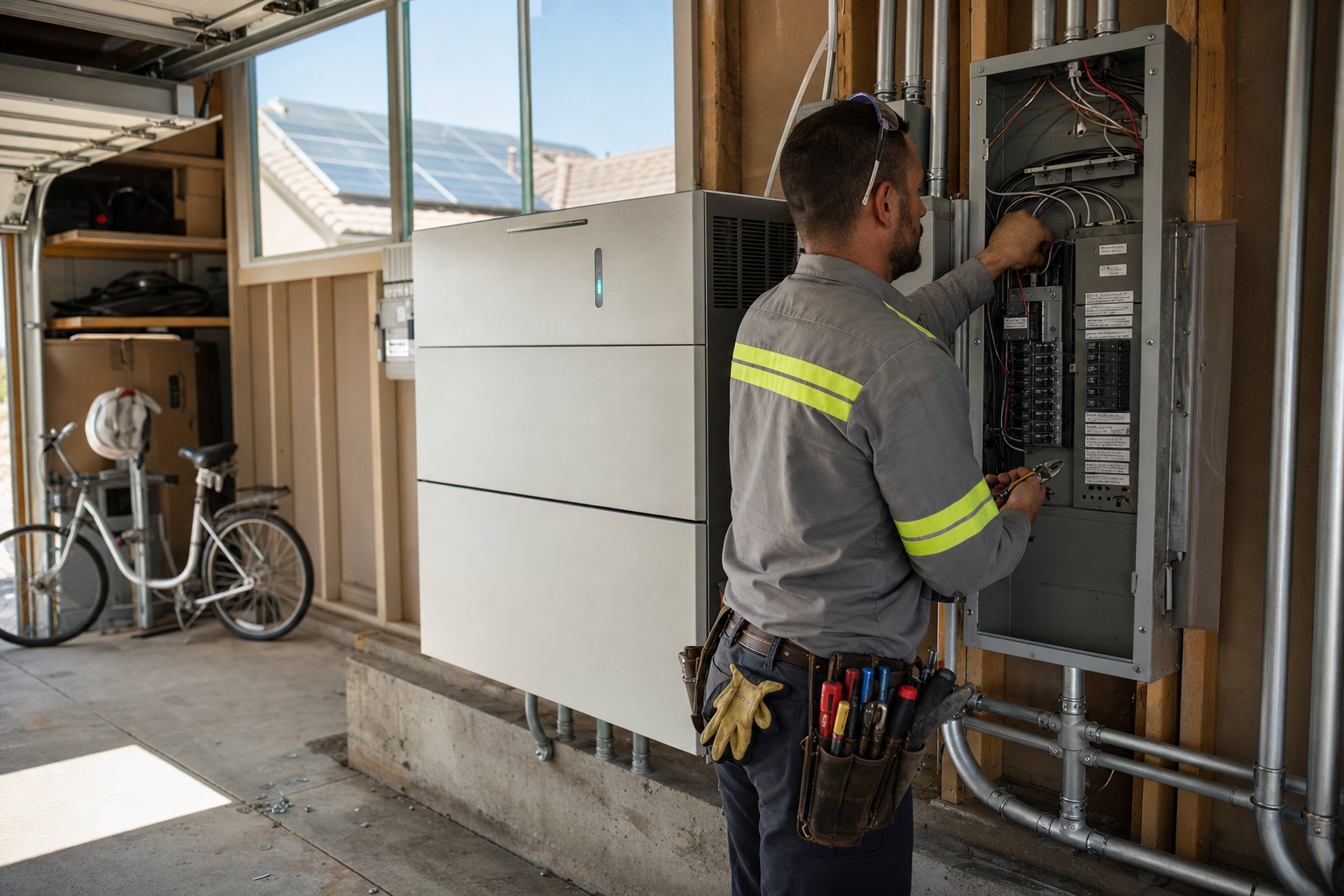
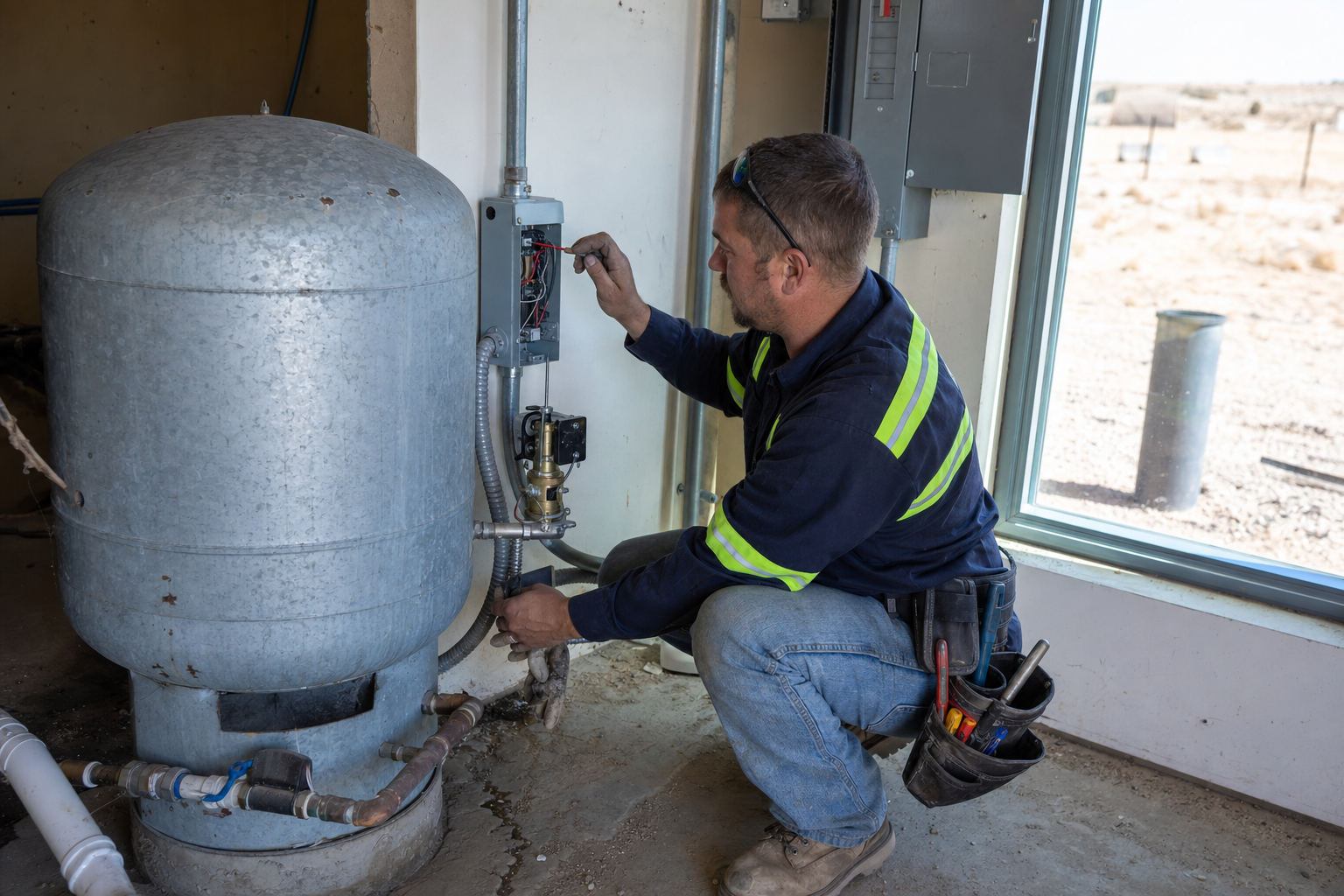
The High Desert is one of the fastest-growing regions in California. Hesperia, Victorville, and Adelanto are adding new residents steadily, driven by lower housing costs relative to the rest of Southern California and improving infrastructure connecting the area to Los Angeles and the Inland Empire. With that growth comes massive demand for electrical work: panel upgrades in older homes that weren't built for modern loads, EV charger installations as High Desert residents adopt electric vehicles, rewires in 1970s and 1980s construction that's now pushing 50 years old, and new circuits for additions, ADUs, and home-based businesses.
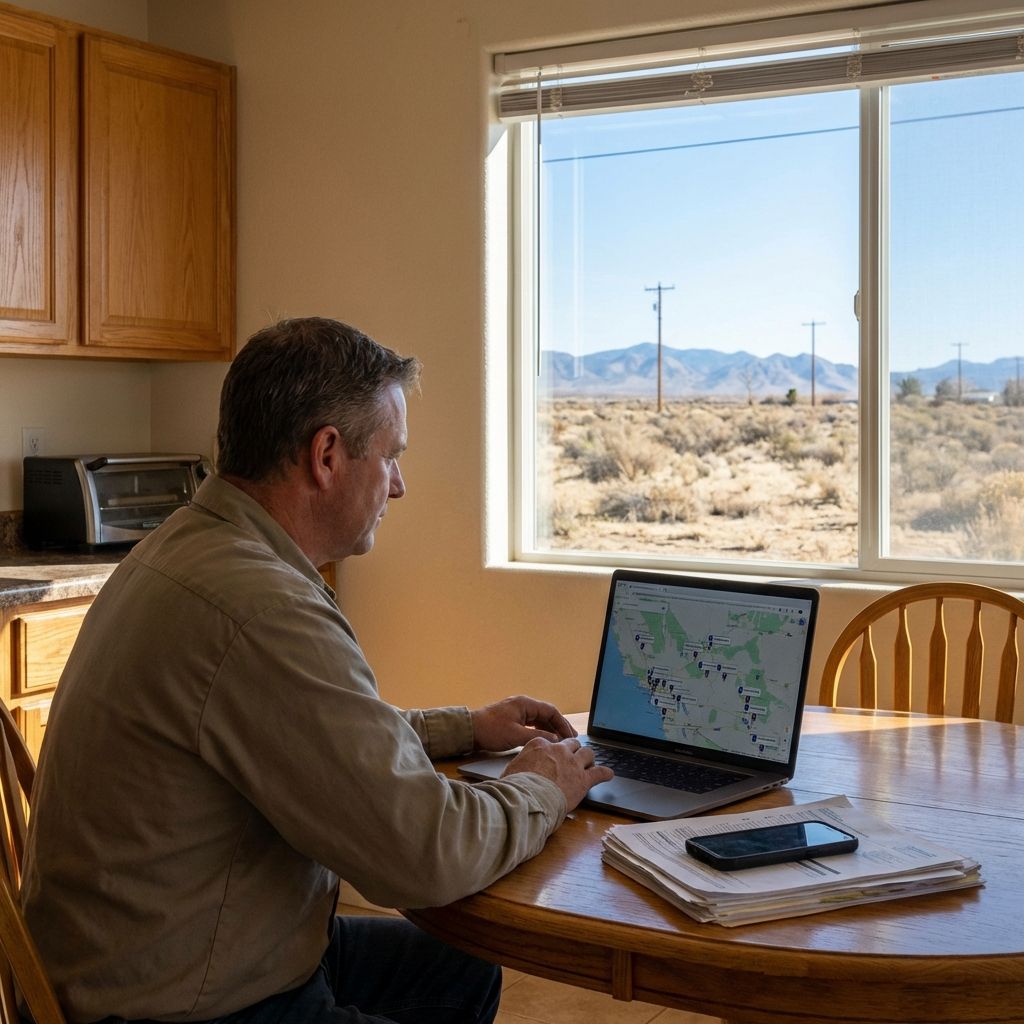
That demand is also drawing in contractors of very uneven quality. The Hesperia, Victorville, and Adelanto market includes excellent licensed professionals and unlicensed operators who advertise the same way. Knowing exactly what to verify before anyone opens your panel is not overcaution — it's how you protect your home, your family, and your investment.
Here's what to check.
1. California C-10 License: The Non-Negotiable Starting Point
In California, any electrical work valued at $500 or more — including materials and labor — must be performed by a contractor holding a valid
C-10 Electrical Contractor license issued by the
California Contractors State License Board (CSLB). This is not optional, and it's not a formality. Unlicensed electrical work creates immediate risks: failed inspections, voided homeowner's insurance policies, and liability that falls entirely on you if something goes wrong after the work is done.
The CSLB maintains a free online license lookup at
cslb.ca.gov where you can search any contractor by name, license number, or business name. A valid C-10 license will show:
- Active license status
- Contractor's legal business name
- Workers' compensation coverage status (or a valid exemption)
- Any disciplinary actions or complaints on file
Ask every electrician for their license number before scheduling an estimate. Then verify it yourself at cslb.ca.gov. A legitimate contractor expects this and welcomes it. A contractor who hesitates, provides a license number that doesn't check out, or tells you a license isn't required for your specific job is someone you should remove from your list immediately.
Hesperia Electrical CA License #1120740 — verify it directly at cslb.ca.gov.
2. Insurance: What to Request and Why It Matters in San Bernardino County
A valid CSLB license confirms a contractor is authorized to work. Insurance confirms that you're protected if something goes wrong during the job. Two documents matter:
General liability insurance — typically $1 million per occurrence minimum for residential and commercial electrical work. This covers property damage during the project: a fire caused by a wiring error, damage to walls or ceilings during installation, or harm to adjacent structures. Without it, you're bearing that risk yourself.
Workers' compensation insurance — required by California law for any contractor with employees. If a worker is injured at your property and the contractor doesn't carry workers' comp, California law can hold the property owner liable for medical costs and lost wages. The CSLB license lookup will indicate whether a contractor carries workers' comp or has a valid sole-owner exemption. Pay attention to this.
Request both certificates in writing before work begins. A professional electrical contractor emails these without hesitation. A contractor who can't produce them — or who tells you they "have insurance" without documentation — is a contractor worth walking away from.
3. The High Desert Housing Reality: Why Experience With Your Specific Home Type Matters
Not all electrical work in the High Desert is the same. The region's housing stock spans several distinct eras and types, each with different electrical considerations:
Older High Desert homes (1970s–1980s construction): Much of Hesperia and Victorville's established residential base was built during the region's first major growth period. Homes from this era frequently have 100-amp panels that weren't designed for the loads modern households create — multiple large appliances, air conditioning systems running hard through desert summers, home office equipment, and now EV chargers. Many also used aluminum wiring on branch circuits, which requires specific handling: aluminum wiring isn't inherently dangerous when properly maintained and terminated with compatible devices, but it requires an electrician who knows how to work with it. Ask directly whether the contractor has experience with aluminum wiring if your home was built between roughly 1965 and 1975.
1990s–2000s tract construction: The High Desert's second major growth wave produced large tracts in Hesperia, Victorville, and Adelanto. These homes typically came with 150–200 amp service, but 20–30 years of use in a high-demand climate takes a toll. Panels from this era are reaching an age where connections loosen, breakers fail, and the overall system warrants inspection.
New construction and growing areas: The current growth wave is producing new builds throughout the High Desert. New construction electrical in California follows the 2022 California Electrical Code (based on the National Electrical Code), which includes requirements for arc-fault circuit interrupters (AFCIs), tamper-resistant receptacles, and pre-wiring for EV charging in new residential garages. An electrician working on new construction or substantial renovations needs to be current on these requirements.
Ask any prospective electrician: "What's the typical panel size you see in homes from the 1980s in this area, and what do you look for when evaluating whether it needs an upgrade?" An experienced High Desert electrician answers this question without effort. Someone without genuine local experience gives you a generic answer.
4. EV Charger Installation: A Growing Hesperia Priority With Real Technical Requirements
Electric vehicle adoption is accelerating throughout the Inland Empire and High Desert. The combination of longer commutes to the Los Angeles basin (many High Desert residents commute via the 15 Freeway) and lower home prices that make the upfront cost of an EV more accessible has created strong demand for home charging installations.
A Level 2 EV charger (the standard home charging setup, delivering 240V power for fast overnight charging) is not a simple outlet installation. Done correctly, it involves:
- Load calculation — verifying your existing panel has capacity for the new dedicated circuit without creating a hazard. A 40-amp dedicated circuit for a Level 2 charger is a meaningful load addition, particularly in older 100-amp homes.
- Panel evaluation or upgrade — if your panel doesn't have capacity, the EV charger installation needs to be paired with a panel upgrade. A contractor who installs the charger without addressing an undersized panel is cutting a corner that will cost you later.
- Permit from the City of Hesperia, City of Victorville, or City of Adelanto — EV charger installations require a building permit in all three jurisdictions. The permit process includes an inspection by the local building department. This protects you: the inspection confirms the work meets code before you start relying on it daily.
- SCE coordination — if a panel upgrade is involved, the work requires coordination with Southern California Edison for a service upgrade and meter reconfiguration. Contractors who have done this process in the High Desert know the local SCE service center's requirements and timelines. Contractors who haven't done it in this specific SCE territory may underestimate the process.
Ask: "Will you pull the permit for the EV charger installation, and have you coordinated panel upgrades with SCE in the Hesperia/Victorville service area before?"
5. Permit Requirements Across Hesperia, Victorville, and Adelanto
The High Desert's three main cities each have their own building departments, which matters for any permitted electrical work. Most significant electrical projects — panel upgrades, new circuits, EV charger installs, rewires, and service changes — require permits.
City of Hesperia Building and Safety Division handles permits for work within Hesperia city limits.
City of Victorville Building and Safety Department handles Victorville.
City of Adelanto has its own permitting process as well. Unincorporated areas of San Bernardino County in the High Desert fall under
San Bernardino County Building and Safety.
Why this matters practically: a contractor who primarily works one city may be unfamiliar with the permit intake process, inspection scheduling, and code interpretation in another. Ask any contractor whether they've pulled permits specifically in your city recently. A contractor who works regularly across all three High Desert cities — and says so with specifics — has a genuine operational footprint in the area.
The consequences of skipped permits are real. Insurance claims for electrical fires in unpermitted systems are frequently denied. Buyers' home inspectors routinely flag evidence of unpermitted panel work. The short-term savings from skipping a permit are vastly outweighed by the long-term exposure it creates.
6. Summer Heat and Electrical Systems: A High Desert-Specific Risk Factor
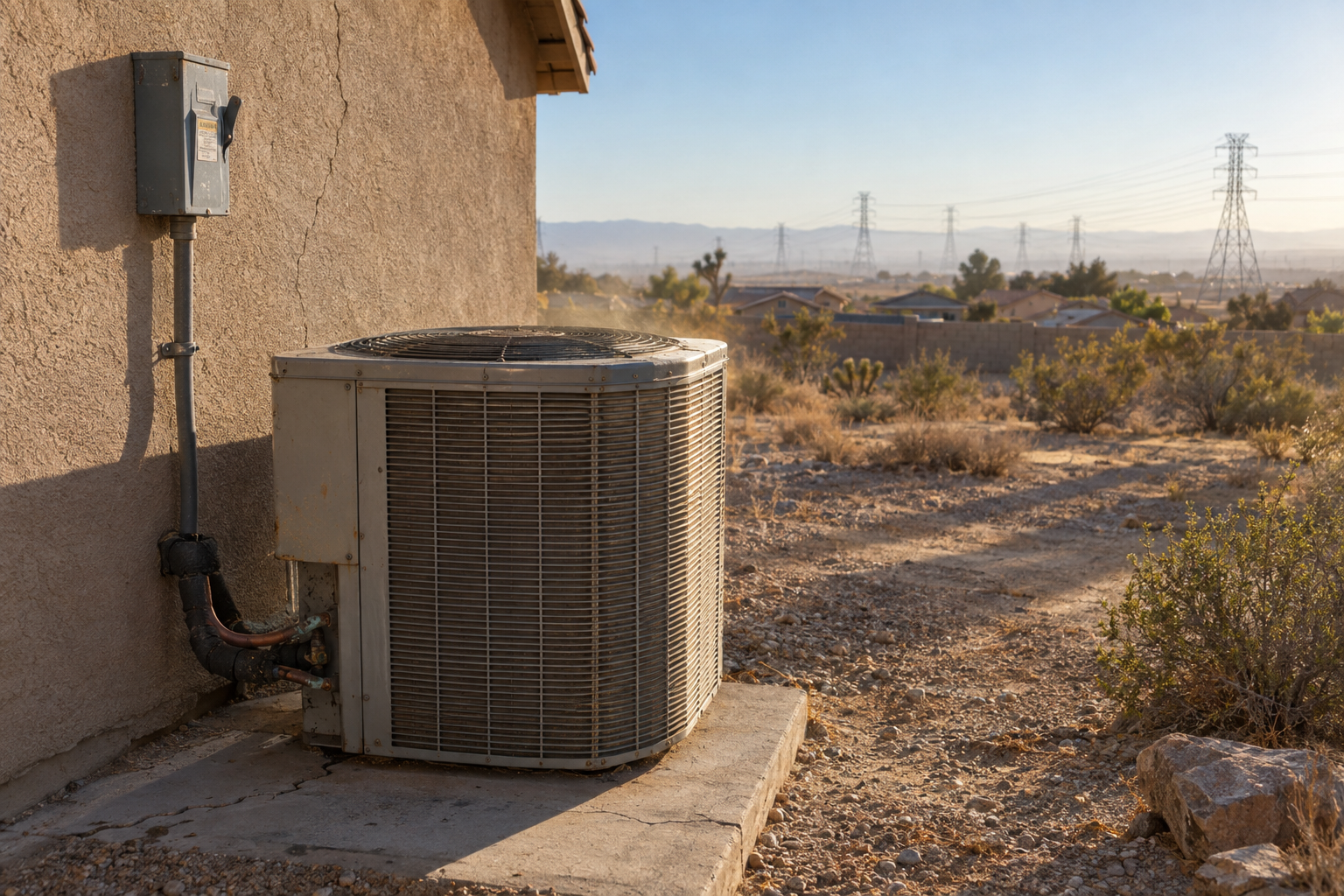
This is something many homeowners don't consider: the High Desert's summer heat — consistently reaching 105–110°F in Hesperia and Victorville from June through September — puts real stress on electrical systems. Heat accelerates the degradation of insulation on wiring, increases resistance in connections, and causes electrical panels to run warmer, which shortens the lifespan of breakers.
Homes in the High Desert that run air conditioning heavily through summer are placing sustained high loads on their electrical systems for four to five months per year.
This makes the condition of your panel, your connections, and your wiring more important here than in milder climates — and it makes the quality of electrical work more consequential. A loose connection that might go years without causing a problem in a temperate climate becomes a real hazard when that connection is heating and cooling with desert temperature swings.
Ask any electrician you're considering: "When you do a panel evaluation in a High Desert home, what heat-related issues do you look for specifically?" An experienced local electrician has opinions on this based on what they actually see in service calls.
7. Getting a Comparison-Ready Quote
Electrical quotes for the same project can vary by 30–50% in the High Desert market. Understanding why helps you evaluate the differences rather than defaulting to the lowest number.
Legitimate reasons quotes vary:
- Panel brand and breaker quality (Square D QO vs. Siemens vs. off-brand alternatives)
- Whether the permit fee is included or passed through separately
- Whether SCE coordination time is built in
- Crew experience level and supervision
- Whether the quote includes a full load calculation or assumes your existing panel is adequate
Ask for itemized quotes that specify: the work scope, panel brand and size (if applicable), permit handling, timeline, warranty on parts and labor, and what happens if additional issues are discovered during the job. A contractor who provides this level of detail is one who has thought through your job. A contractor who gives you a single number with a handshake is one whose surprises you'll be managing mid-project.
Get a minimum of three quotes. Then compare them on the specifics, not just the total.
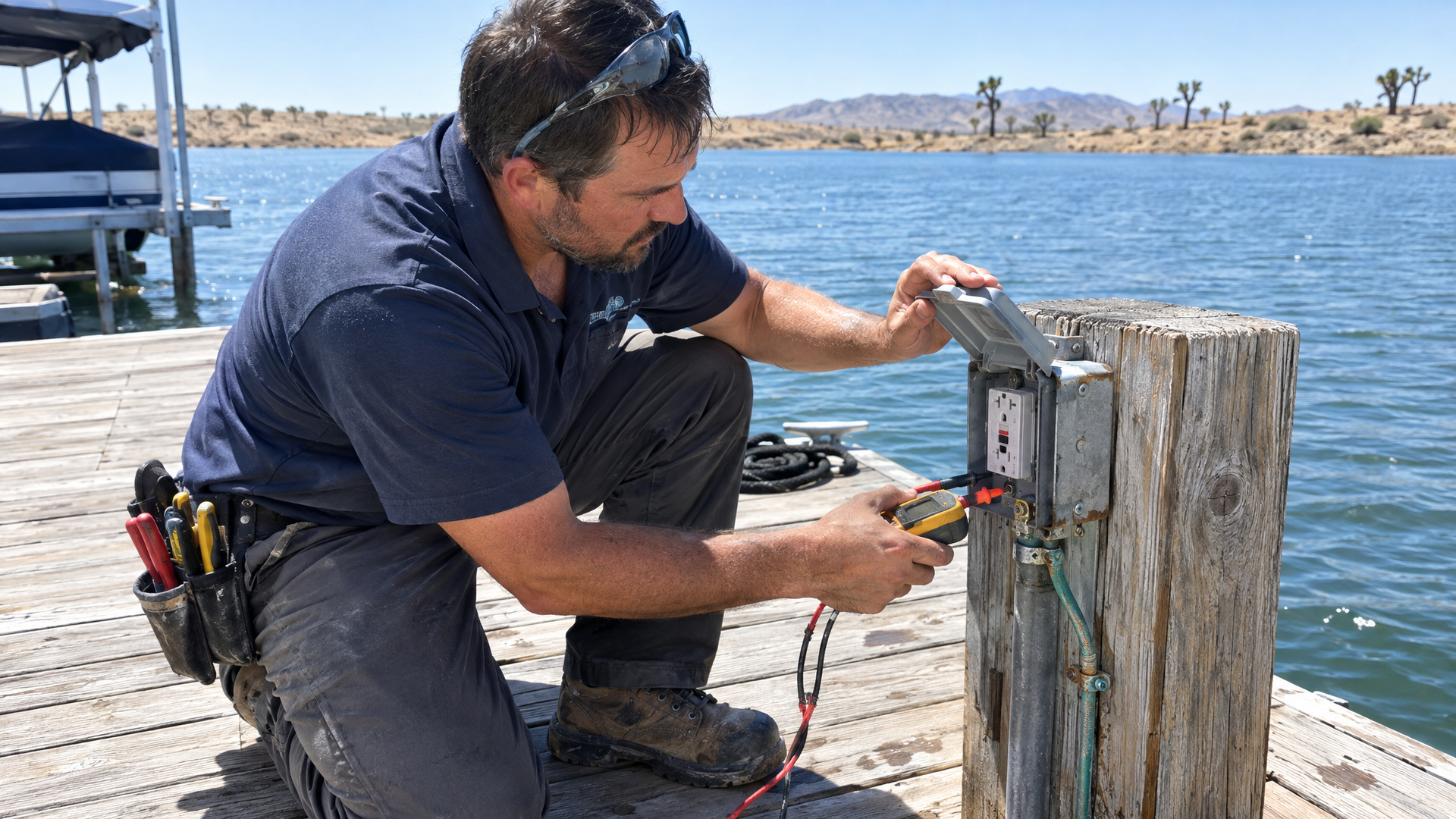
Hesperia Electrical serves Hesperia, Victorville, Adelanto, and the surrounding High Desert with licensed, insured electrical work — panel upgrades, EV charger installations, rewires, outlets, lighting, and commercial services. CA License #1120740. We pull permits, coordinate with SCE, and stand behind our work.
Call for a free estimate. No runaround, no inflated quotes — just honest electrical work done right.