When
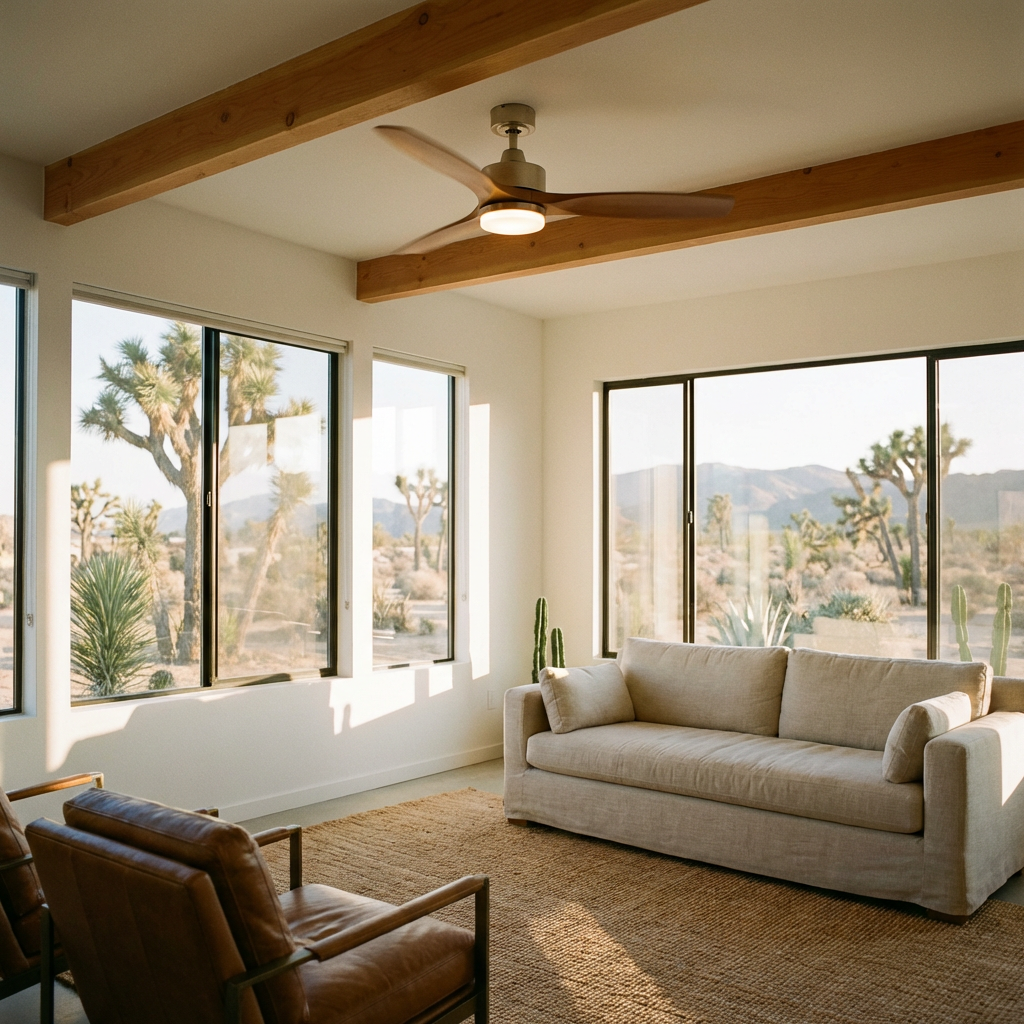
summer hits the High Desert and temperatures in Hesperia push past 105°F, a ceiling fan isn't a luxury — it's a utility bill management tool. A properly installed ceiling fan running on low while your HVAC cycles can reduce the perceived temperature in a room by four to six degrees, which means your system runs less and your SCE bill reflects it.
The problem is most ceiling fan installations go sideways before the fan ever turns on. Here's what High Desert homeowners need to know before they pick up a screwdriver.
Why Ceiling Fan Installation Trips People Up
The box says "easy installation" and comes with a diagram that assumes your existing wiring is exactly right. In Hesperia homes — especially the tract builds along Mariposa Road, the older blocks near Main Street, and the established neighborhoods off Bear Valley Road — that's rarely the case.
Three things go wrong most often:
1. No existing box, or the wrong box A standard electrical box stapled to a ceiling joist is not rated to hold a spinning ceiling fan. Fans require a fan-rated box — either a brace-mounted box that spans between joists or a fan-rated pancake box secured directly to a joist. Install a fan on a standard light box and you'll get wobble at best, a fan on your floor at worst.
2. No dedicated wall switch wiring Most people want independent control of the fan and the light kit. That requires a two-wire switch leg — one for the fan motor, one for the light. A lot of ceiling fixtures in Victorville and Adelanto homes were wired with a single switch leg. You can work around it with a remote kit, but a proper dual-switch setup requires running new wire, which means opening up the wall.
3. Aluminum wiring Homes built in Hesperia during the 1960s and early 1970s — including many of the original builds near the Civic Plaza area — frequently used
aluminum branch circuit wiring. Connecting a ceiling fan to aluminum wiring without proper CO/ALR-rated connections is a fire hazard and a code violation. It requires a licensed electrician familiar with High Desert-era construction.
What the Installation Actually Involves
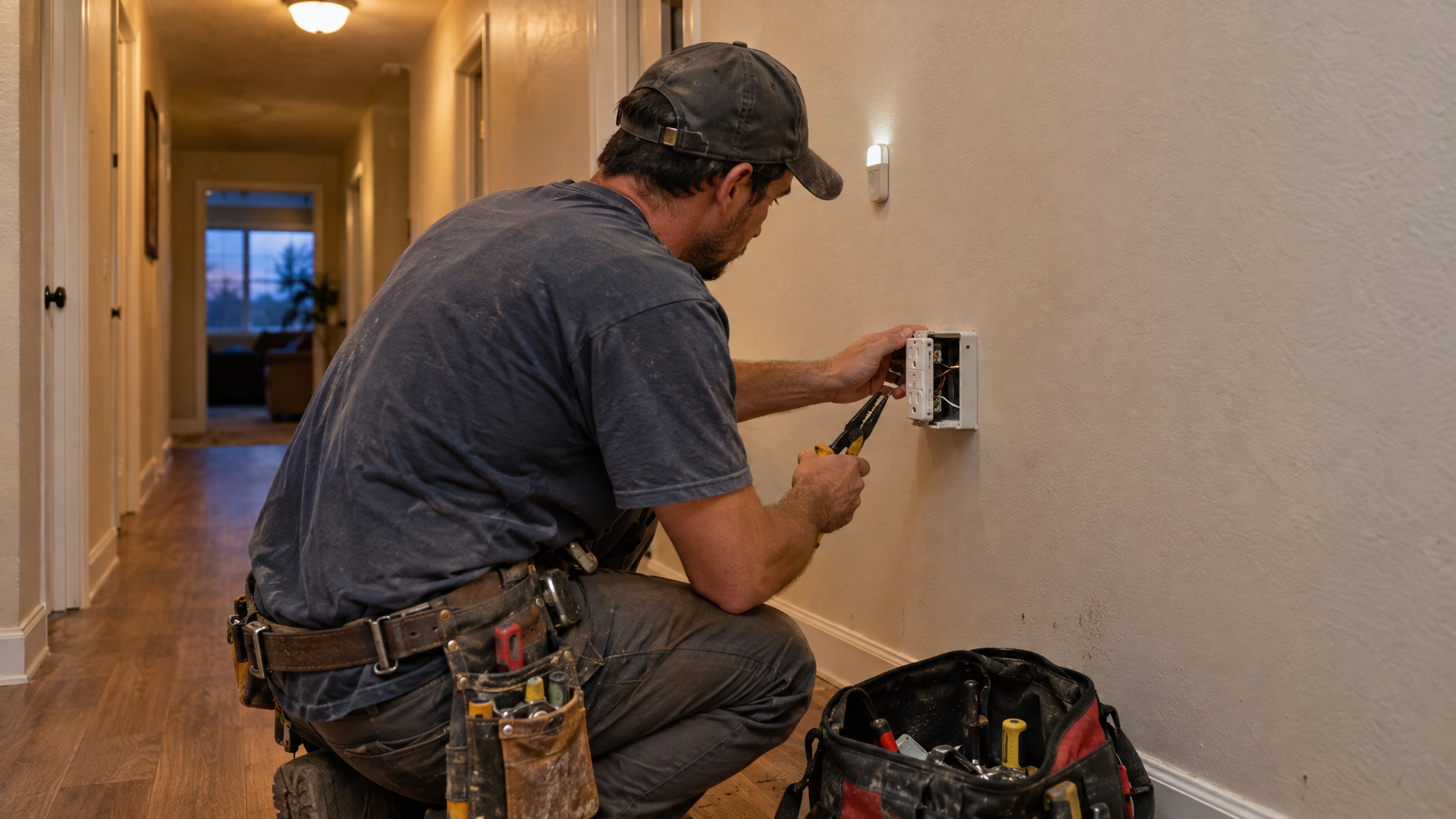
A straightforward ceiling fan installation where an existing light fixture is being replaced typically takes 45 minutes to 90 minutes. It involves:
- Shutting off the circuit at the
breaker panel
- Removing the existing fixture and assessing the box
- Installing a fan-rated box if needed (brace mount or joist mount)
- Connecting the fan wiring — black to black, white to white, green or bare copper to ground
- Securing the mounting bracket, hanging the motor, attaching the blades
- Installing the light kit and canopy
- Restoring power and testing direction, speed, and light function
A more involved installation — new location, no existing wiring, dual switch leg needed — adds time and typically requires permit-pulling through the City of Hesperia Building and Safety Division. Hesperia Electrical handles permits as part of the job. You don't have to manage that process yourself.
Ceiling Fan Sizing for High Desert Rooms
Getting the fan size wrong is one of the most common mistakes in DIY installs. A 42-inch fan in a great room does almost nothing. An oversized fan in a small bedroom feels like a wind tunnel.
General sizing guide for High Desert homes:
- Rooms up to 75 sq ft (small bedroom, office): 29–36 inch fan
- Rooms 76–144 sq ft (standard bedroom, dining room): 42–48 inch fan
- Rooms 145–225 sq ft (master bedroom, larger living room): 52–56 inch fan
- Rooms over 225 sq ft or open floor plans (great rooms common in newer Hesperia builds off Olive Street): 60+ inch fan or dual fans on the same circuit
High ceilings — anything over 9 feet — require a downrod to bring the fan to the optimal 8–9 foot operating height. Most fans ship with a short downrod; you'll need to spec the correct length for vaulted ceilings that are common in the newer builds near Oak Hills.
When a Permit Is Required
Most straight replacements — swapping a light fixture for a ceiling fan at an existing, properly wired location — don't require a permit in Hesperia. New wiring runs, panel circuit additions, or installations at new locations do require a permit through the City of Hesperia Building and Safety Division.
If you're adding fans to a new build, finishing a garage, or wiring a covered patio addition in Adelanto or Victorville, that work needs to go through the proper permitting channel. Unpermitted electrical work affects homeowner's insurance claims and can complicate a home sale when the buyer's inspector flags it.
Hesperia Electrical pulls permits for every job that requires one. It's included in the estimate — not an add-on fee.
What Ceiling Fan Installation Costs in Hesperia
For a straightforward replacement at an existing location with correct wiring already in place, ceiling fan installation in Hesperia typically runs
$85–$175 depending on ceiling height and whether a new fan-rated box is needed.
Installations requiring new wiring, dual switch legs, or permit work run higher — generally
$200–$450 depending on scope.
Hesperia Electrical provides free estimates before any work starts. Call
(760) 905-9997 and we'll tell you exactly what your installation involves and what it costs before we schedule anything.
Ready to Schedule?
We serve Hesperia, Victorville, Adelanto, and the surrounding High Desert communities. Same-week scheduling available for most ceiling fan installations.
📞
Call (760) 905-9997 for a free estimate.
Frequently Asked Questions
Do I need a permit to install a ceiling fan in Hesperia? For a straight swap at an existing fixture location, usually no. If new wiring is required — new circuit, new location, panel work — yes. Hesperia Electrical handles permit applications as part of the job.
Can you install a ceiling fan where there's currently just a light fixture? Yes, but we'll need to assess the existing box. Standard light boxes aren't rated for fans and need to be replaced with a fan-rated box before installation.
My home has aluminum wiring — can you still install a ceiling fan? Yes. Aluminum wiring requires CO/ALR-rated connections and a licensed electrician who knows what to look for. It's not a job for a handyman or a DIY install. We handle aluminum wiring regularly in older Hesperia and Victorville homes.
Can you install a ceiling fan on a vaulted ceiling? Yes. Vaulted and cathedral ceilings are common in the newer builds off Oak Hills Road and in parts of Victorville. They require angled mounting kits and the correct downrod length — both of which we bring to every job.
How long does ceiling fan installation take? A standard replacement runs 45–90 minutes. A new installation with wiring work can take 2–4 hours depending on scope.
Do you install the ceiling fan I already bought, or do I need to buy through you? Either works. You can supply your own fan or we can recommend models suited to your room and ceiling type. We install both.